

Reuse Rotisserie Chicken Containers With This Genius Garden Solution
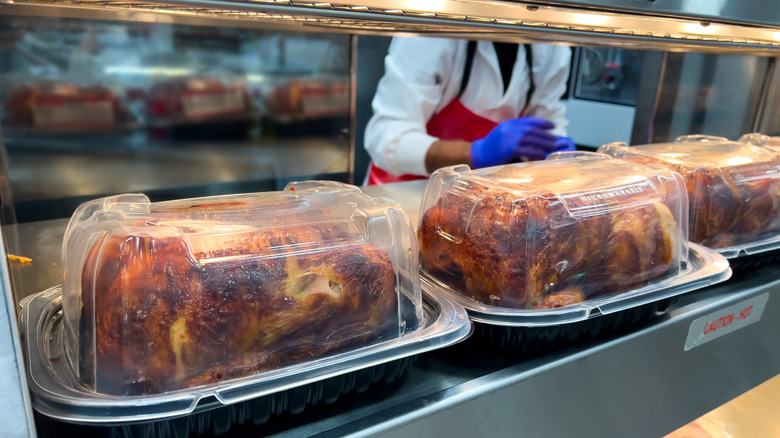
There is a lot to love about rotisserie chicken. For one, it's easy to use — just buy it from the store and serve it warm (if you can resist eating it on the way home, that is). It's also useful and can be repurposed for many different recipes. But the chicken itself isn't the only thing that can be repurposed here; the hard plastic container that it's sold in can also be given a new life — and give new life to plant seeds.
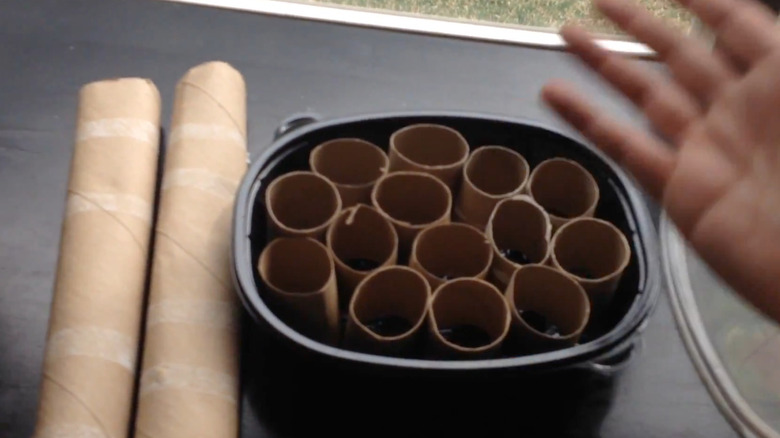
The durable plastic and its lid are excellent for seed starting because they'll create a greenhouse-like effect, keeping your seeds warm and trapping moisture to help them germinate. It's also more cost-effective (and less wasteful) than buying a massive seed-starting tray. You don't want to just toss some soil in your container, add your seeds, and hope they sprout, though. Instead, chop up toilet paper or paper towel rolls and use them as your pods. This will make them easy to fish out when the seeds are adequately grown and are ready to be transplanted outside. You may need to spray the soil with water frequently, depending on where you place them; in general, it's recommended to sprout seeds in a warm location — like near a window — and to thin the sprouts as needed.
Other types of containers that can be used for seed starting
If you don't buy rotisserie chicken — or opt for Costco's, which comes in a bag — fear not; there are many other kitchen "leftovers" you can use to start seeds. One of them is an excellent biodegradable option: egg cartons. Simply pop your seeds and soil into them, and you'll have an easy-to-plant seed kit that can go straight into the ground.
You can also use all types of takeout containers to start your seeds. Ones with a lid will lock in moisture, but you could also get creative with where you put your container (such as in a warm, humid room) and forego a lid entirely. If you use takeout containers or trays with solid bottoms, take our advice and poke some holes into them before adding your seeds. Otherwise, the water might not drain well and lead to mold. Plastic fruit containers will also work just as well; many of them (like the ones that house strawberries or blueberries) already have holes, so be sure to put a plate underneath them to trap any stray soil or water.