

Why You Might Want To Rethink Buying Seafood At The Counter
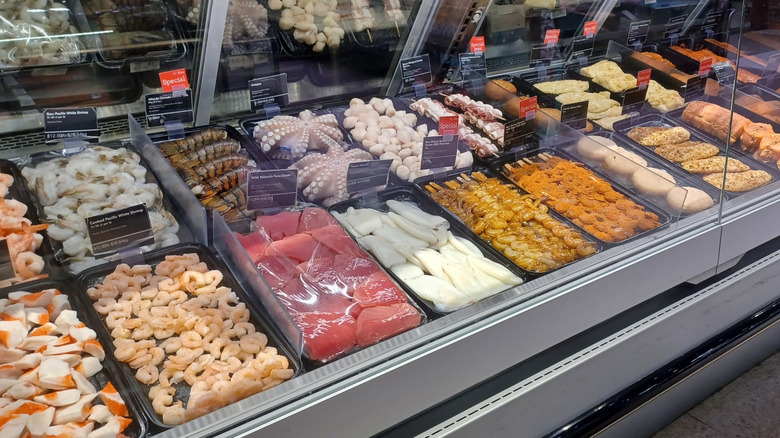
With a dazzling array of fish, crustaceans, and bivalves laid out on ice behind the glass, the seafood counter certainly seems like the best place to pick out your marine proteins, particularly if you are shopping at one of the grocery chains with the best fresh seafood offerings. For those in the know, however, there is another part of the store where you can often score the same products at a lower price: the freezer aisle. If you don't need to cook it right away and have a little while to let the seafood thaw in your refrigerator before using it, buying frozen can mean much better deals.
Many assume that, when buying fresh from the counter, the product is of higher quality — perhaps even that it has never been frozen. But much of the seafood on offer arrived at the store frozen and was simply thawed in the back before being put on display — which isn't actually a bad thing. Many fish these days are flash frozen as soon as they are hauled on board to ensure that they taste fresh and delicious when they reach the market. Unless you live right next to the ocean, the only way to get really fresh fish is to freeze it before it makes the trip inland.
From a food safety perspective, freezing is also an important part of ensuring that seafood is good to eat. A long, cold freeze kills any parasites and bacteria that may be in the fish, which is, in fact, the only actual regulation regarding what qualifies as "sushi-grade" fish. To be served raw in the U.S., fish must first be frozen solid.
Frozen fish may actually taste more fresh
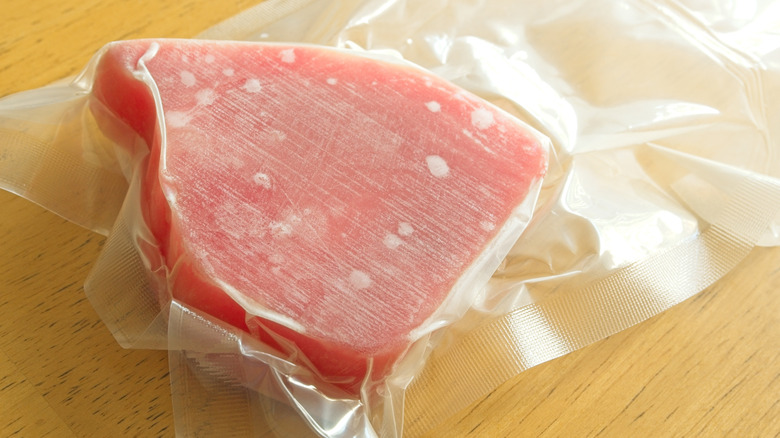
Beyond both price and food safety, there is also a question of taste with regard to whether to buy your fish fresh or frozen. Again, the accolades may go to the frozen options. Research has shown that the average piece of "fresh" fish on display in many stores may actually have been out of the water for as much as two weeks. Over that time, the fish is constantly deteriorating, even if it is kept very cold. Everyone knows the smell of fish that has been too long on the shelf, and no one wants to bring that back to their kitchen.
Buying seafood frozen allows you to thaw it only just before you are ready to use it. This ensures that it is as fresh as possible when it hits the pan, not only improving the flavor and aroma of your dish, but also its nutritive qualities. Just like flash frozen vegetables contain higher levels of nutrients than the ostensibly fresher options that have traveled to the grocery store unfrozen, so too is this true for fish. Nutrients degrade over time as food begins to decompose, so freezing it as fresh as possible and only unfreezing it before cooking maximizes the available nutrients.
Shopping in the freezer aisle is a great choice for finding more affordable seafood options, but there are occasions when buying fresh is non-negotiable. For items like whole clams still in the shell, there's just no way to freeze them. But for a lot of fish, frozen is the way to go. At the least, it's worth doing your research and perhaps even having a peek at the freezers before hitting the counter. Often you will find much better deals for the exact same seafood.