

The Absolute Best Method To Prevent Dark Bread Bottoms
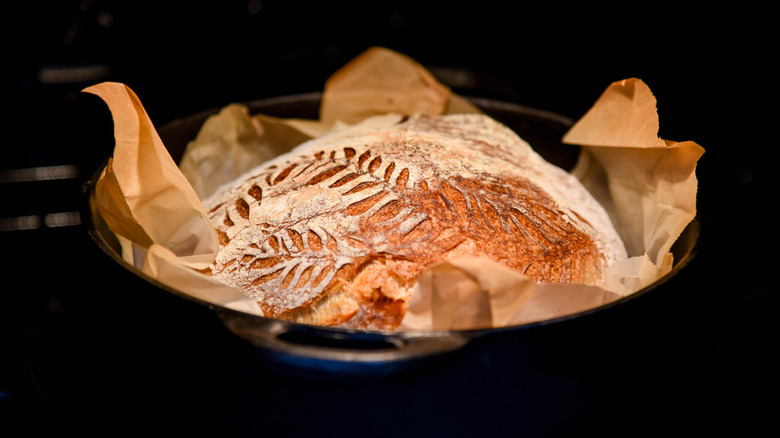
Pulling a fresh, perfectly golden loaf of bread out of the oven is one of the most rewarding experiences you can have as a baker. But even if the bread looks perfect on the outside, there can still be some issues lurking beneath the surface. For example, an overly dark bottom.
There are a number of reasons for uneven coloring on a loaf's crust. A proofing issue is often the culprit, but steam also plays a big role when baking bread, as do ingredients like sugar and even the temperature of the oven. But more often than not, a burnt bottom is simply caused by the bread coming into direct contact with a hot Dutch oven or stone. Luckily, this is the simplest issue to fix — all you need to do is place some aluminum foil between the bread and your cooking vessel.
The foil will create a barrier between the loaf and the hot surface and absorb some of the heat, lowering the temperature of the bread's bottom without impacting the overall temperature of the Dutch oven. The crust will still brown, and you can even control how dark it gets by changing up the amount of foil you use.
Aluminum foil creates a great heat barrier in a Dutch oven
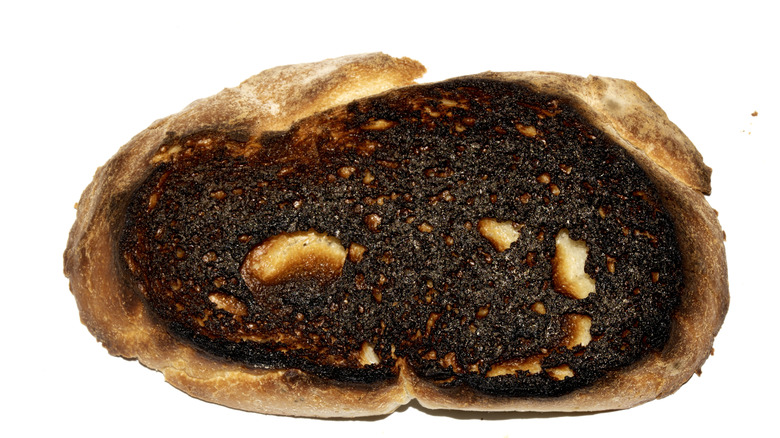
This trick works particularly well for Dutch ovens, which can climb to extreme temperatures, especially if they have a dark interior. However, you can try it out on any of a baker's go-to bread pans or stones. To prepare the pan for baking, cut a piece of foil to fit the shape, layer it a few times, and then flatten the piece against the pan as much as possible. Then, place your bread on a small piece of parchment paper to prevent sticking, and slide it on top.
The thickness of the foil will determine the color of your bread loaf's bottom. Keep folding pieces together to create a bulkier barrier if you want a lightly browned loaf, or keep the thickness between ¼- to ⅛-inch if you want more color. Lining a single layer of foil around the walls of the pot will help prevent charring, and you can even fully insulate the walls if you want to protect the sides of the bread.
Some people like to scrunch the foil up into a spiral trivet rather than a disc, which also works. You can place a baking tray on the rack below your pan to deflect some heat away from the bottom, too — a baking pan full of of water will have a similar effect. But at the end of the day, even the worst bread baking mistakes can still produce an edible loaf, so try not to worry too much.