

Why Bell Peppers Sometimes Hide A Tiny Baby Pepper Inside
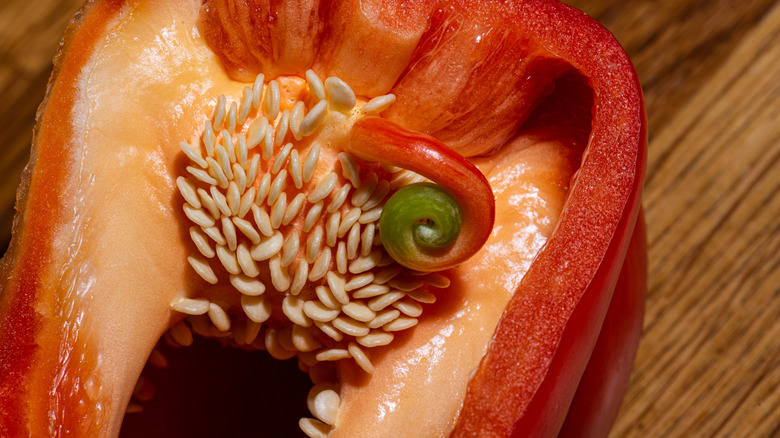
It's likely a situation you've encountered before. You've chosen a firm and glossy bell pepper for your fajitas or stir fry, but when you cut it open, you find a little pepper inside. This isn't a sign that anything is wrong, it is just an extra bonus.
This mini pepper is technically known as an internal proliferation, and is due to a natural process called parthenocarpy. Parthenocarpy is when any fruit develops without fertilization, and in the case of bell peppers, it results in these small internal tissue growths. Although it can have the same shape and look like a regular pepper, if you cut open this mini pepper, you'll find it's completely seedless.
Why parthenocarpy occurs is not always clear, but there can be several contributing factors. The genetics of the plant is one explanation, with some types of bell peppers more likely than others to develop these internal proliferations. Temperature fluctuations during the growing process can be another, particularly if the plants are exposed to cooler periods. Parthenocarpy can also be triggered through exposure to ethylene, which is used commercially to speed up the ripening process.
It's completely safe to eat
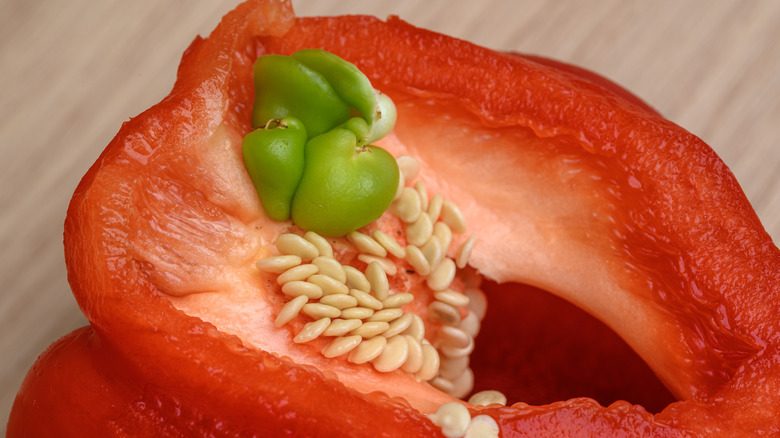
These baby peppers are made up of the same stuff as the rest of the pepper, so they are completely safe to eat. You may notice, however, that depending on their size and maturity, they may be a little bitter. And, of course, if the whole pepper has been lingering in the fridge for some time, you'd be wise to check that it hasn't gone soft, sour, or developed mold.
Many people discard these extra growths, but the reality is that you have probably eaten more examples of parthenocarpy-impacted produce than you realize. It's not a phenomenon limited to peppers, as it also occurs naturally in tomatoes, oranges, and melons. But more interestingly, it can be deliberately induced.
It's due to parthenocarpy that we have been able to develop seedless fruits and vegetables, though the technique varies depending on the plant. Seedless oranges are created by grafting, skipping the need to grow from seed. Seedless cucumbers come from hybrid plants, which have been crossbred to produce fruit without pollination. And of course, you have selective breeding for parthenocarpy to thank for the fact that bananas are no longer full of large seeds.