

This Old-School Midwest Beer Now Belongs To A Major Brewing Giant — But It's Still Hard To Find

While there are old-school local beers from all over the country, the Midwest is their true spiritual home in the United States. Sure, the oldest surviving brewery in the U.S. might be in Pennsylvania, but if your dad liked a beer with a coat of arms label and old-timey script on the can, it probably came from America's heartland. Hamm's, Stroh's, Old Style, these are the classic '70s beers for crisp, easy drinking, but also with a sense of place and hometown pride that was nearly lost in the era of big macrobreweries before the craft beer revolution. While some old-school local beers sadly died out, a fair number have survived — including Belleville, Illinois' Stag beer.
Belleville is a small, old manufacturing town east of St. Louis, and it has a brewing tradition rooted in the history of Midwestern German immigration that gave rise to the nearby Anheuser-Busch. The biggest local beer — still popular there to this day — is Stag, which was produced in the town from 1906 until 1988. After a series of sales, Stag is now owned by fellow Midwestern legacy brand Pabst, which has expanded its business by purchasing several local old-school beer brands. Today, Stag is produced in Milwaukee. However, it is still primarily a hyper-regional beer rarely seen outside of its home region of Southern Illinois and St. Louis.
A midcentury beer from Belleville, Illinois, that is still found in the St. Louis area
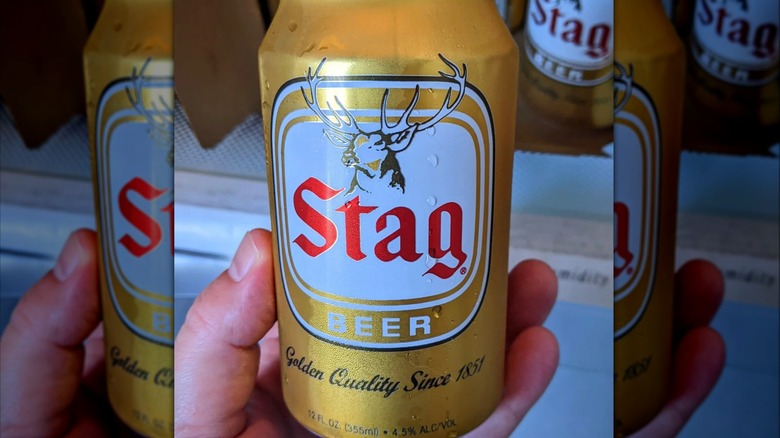
Stag was originally made by Western Brewery, which dated back in different forms to 1856, and went through several different owners before being purchased by successful brewer Henry Griesedieck in 1912. Stag's slogan, "Golden Quality Since 1851," seemingly dates from a different purported founding date for the brewery, but there is no record of it existing at that time, and Stag itself wasn't produced until the early 1900s. The beer was introduced before Griesedieck took over, when Western Brewery released it in 1906 as a seasonal Christmas offering, and it was so popular that it became a permanent fixture in 1907. The name Stag was chosen by contest, with the winner receiving $25 in gold.
By the early 1950s, Griesedieck Western was the 13th largest brewery in the country, with Stag being sold in 22 states. Unfortunately, that was the peak for Stag as a larger national beer brand. Later in the '50s it was sold to a big Cleveland-based brewing company, and changed hands a few more times as sales declined. In 1988, its large corporate owner decided the Belleville plant was no longer viable due to the expense of necessary renovations, and the brewery was closed.
Pabst became the current owners in the late '90s as it worked to revive classic beer brands and has thankfully kept Stag alive, even returning to the old 12-point buck head logo after an ill-fated rebranding a few years ago. It may not be a national powerhouse anymore, but stop in Belleville or the St. Louis area and you'll still find a beer that is a symbol of a time when even big breweries were proudly local.