

8 Dishes To Skip At Italian Restaurants, And 5 Experts Recommend Instead

Dining out at an Italian restaurant offers the perfect balance of comfort and delicious flavors. However, what may seem like a basic cuisine featuring plenty of cheese and tomatoes is far more complex to successfully recreate, easily resulting in meals that fail to shine. To help guide your dining experience the next time you find yourself at an Italian restaurant, we spoke to a few chefs and Italian restaurant owners and founders for advice on the dishes to avoid and what to get instead.
Certain recipes are the result of hours of effort culminating in a single preparation, while others are quicker to get on the table. In that vein, some recipes are better suited to a home-cooked meal, while others can be perfectly executed in a busy restaurant kitchen. Understanding the distinction and using it to your benefit when ordering can help you avoid a lackluster meal.
Meanwhile, some restaurants stick with American favorites like pizza and pasta, whereas others prefer to highlight particular regions in Italy. After all, the country is made up of 20 regions with different cultural and climatic influences, landscapes, and specialties. The most interesting Italian restaurants in the U.S. have an identity that extends beyond being Italian. By focusing their menus on dishes from specific regions, authenticity and quality are more likely. Read on for tips to ensure your meals at Italian restaurants are packed with flavor and culinary interest.
Avoid: Risotto
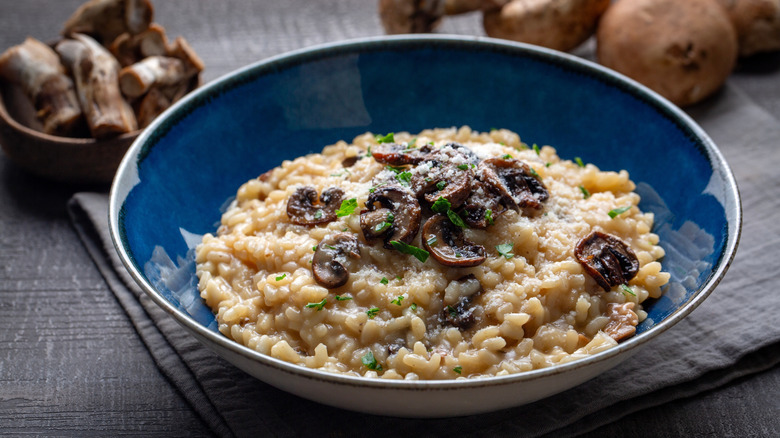
The perfect risotto is a craft of patience and care that requires regular stirring, slow additions of broth, and just the right amount of wine. Toasting the rice ahead of time and only cooking it until it's al dente are other tips to keep in mind for the best tasting risotto. And while no one is suggesting that a restaurant chef wouldn't be able to achieve this careful balance, it's more about whether or not they can prepare risotto the way it should be while managing everything else happening in a restaurant kitchen at any given time.
Chef Matt Eckfeld from Dimmi Dimmi in Chicago emphasizes, "Risotto is a dish that is fantastic when cooked at home. It's a dish that needs to be cooked and immediately eaten." Instead, restaurants typically pre-cook the rice with alliums, broth, wine, and seasoning, then let it cool down until someone orders risotto. At that point, they reheat it with a bit more stock until it's ready.
While that's a decent trick to put out a bowl of risotto fast, that's not how the dish is at its best. Not to mention, adding a little too much liquid or cooking it a bit too long can quickly turn the al dente risotto into mush. While a shortcut version in a restaurant can approximate the real deal, it's not really how risotto is meant to be prepared or served.
Avoid: Ravioli
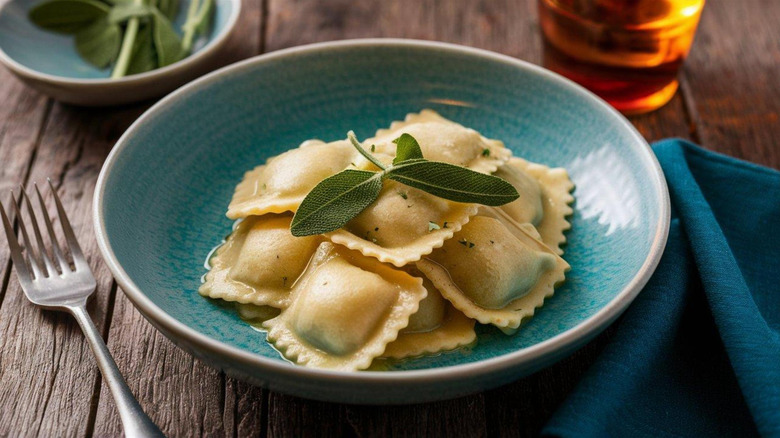
Ravioli might seem like an obvious choice to order at an Italian restaurant, but unless the establishment specializes in fresh pasta, and more specifically, stuffed pasta, then you may just end up being disappointed. If the restaurant isn't showcasing fresh pasta in multiple dishes, you're better off going to a specialty Italian grocer with a pasta counter for your ravioli meal. This seemingly simple pasta dish has a few components involved, and each one has to be executed to perfection to avoid ruining the dish.
"It seems a lot of Italian places miss the mark on ravioli," Chef Matt Eckfeld notes, explaining, "They can get too thick on the pasta and the filling can get a little boring or muddled." If you've ever bitten into doughy ravioli, you know what he's talking about. The casing should be thin enough that it gets slightly tender yet retains some bite when cooked al dente. Meanwhile, the filling needs to cook without becoming mushy, another fine balance that can quickly go haywire.
Avoid: Rich seafood sauces
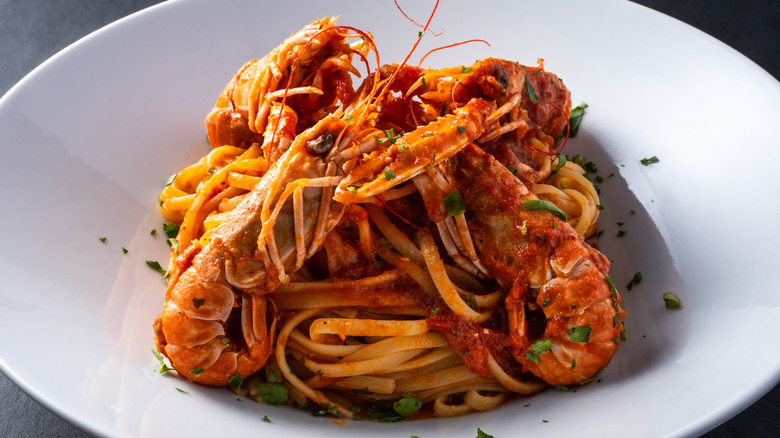
Whether you're dining at an Italian restaurant or not, you'll likely want to avoid seafood-focused dishes if you're nowhere near a body of water. However, more specifically when it comes to Italian cuisine, Dario Monni, owner of award-winning pasta shop and restaurant Tortello in Chicago, recommends skipping a classic seafood bolognese when you're dining out. He describes the tomato-based sauce as made with seafood broth and served with scampi, aka scampi alla busara, a traditional dish from the Adriatic. The recipe is simply served with pasta, polenta, or crusty bread, as the true stars are the sauce and the seafood.
"It takes a lot of time to cook down the broth and get a really rich busara," Monni says, when explaining why it isn't an ideal dish to order at a restaurant. Shortcuts to add complexity to the sauce could be used, undermining the true flavors that come from time. He also notes that sourcing scampi can be tricky, leading some restaurateurs to take liberties with the recipe and serve it differently. "But it is truly one of my favorites, and so it's become a regular in my Sunday lunch repertoire on my day off with my family," Monni shares, highlighting the notion that some Italian foods are meant to be home-cooked and savored in an hours-long relaxing meal.
Avoid: Pasta alla Norma
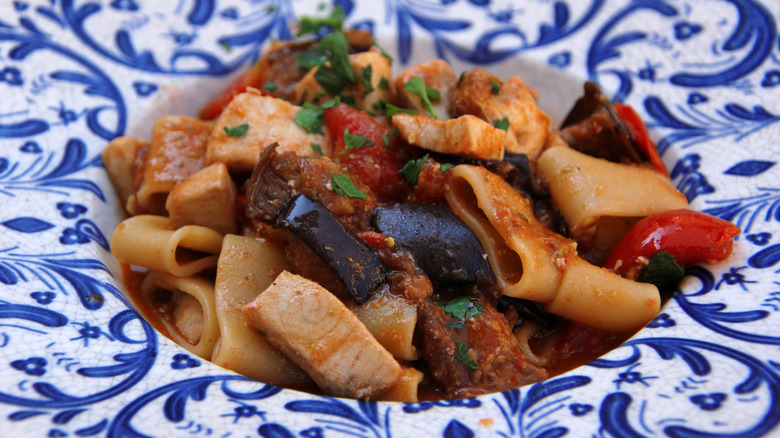
Pasta alla Norma (typically made with a large tube-shaped pasta called paccheri) is a traditional dish from Sicily that consists of eggplant, tomato, and ricotta salata, a pressed, salted, and aged sheep cheese that adds a delicious finishing touch. Dario Monni loves the dish but notes that he sticks to preparing it for his Sunday lunches at home rather than serving it at his restaurant. It all comes down to the preparation method.
"For it to be very good, you need to fry the eggplant right at the same moment as prepping each individual dish, which can be a challenge in a more high-speed, high-volume commercial kitchen setting, especially with our small kitchen at Tortello," Monni explains. Sure, the chef could pre-fry all the eggplant slices, store them, and reheat them in the moment, but just like with any type of fried food, it's really at its best the moment it's been cooked. Especially with eggplant, a vegetable that soaks up a lot of oil, re-frying it will most likely mean soggy slices, rather than crisp edges and a tender center.
Avoid: Cacio e pepe
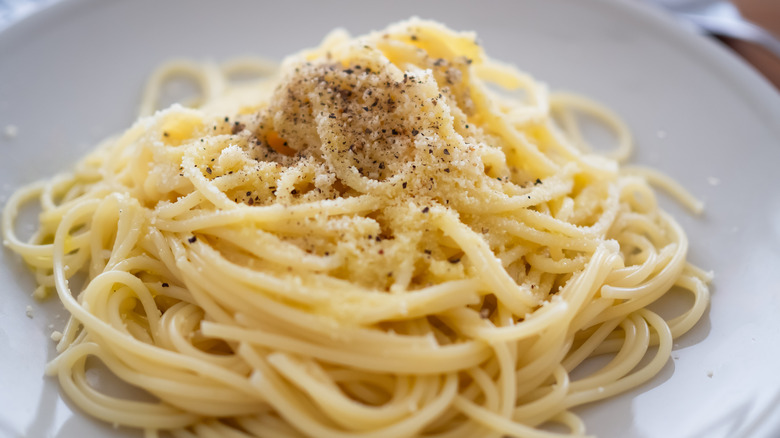
Prepared by the right chef, cacio e pepe is a Roman delicacy that will have you begging for seconds. The simple dish consists of tonnarelli (square-cut spaghetti), Pecorino Romano, and black peppercorns, making use of starchy pasta water to thicken the cheesy coating. "Because it has only three ingredients, it requires the absolute best ingredients and nearly perfect execution. Many restaurants get it wrong," Chef Davide Bugamelli from Il Gigante in New York City explains. When done well, this simple dish is worthy of high praise, but if the execution is lacking, you're better off skipping cacio e pepe.
To successfully make a cacio e pepe worth serving, the pasta needs to be perfectly cooked, and just the right amount of pasta sauce needs to be kept aside. Meanwhile, the pasta itself has to be high-quality al bronzo, which gives it a rougher texture that helps the sauce cling. Using a semi-aged Pecorino is ideal, since it isn't as crumbly as a fully aged one. Not to mention, the size it's grated is also essential to achieving optimal results. Finally, freshly ground peppercorns are the only option, and any shortcuts will affect the bold kick they add to the dish. It's a fine line between success and failure, so unless the restaurant specializes in cacio e pepe, skip it.
Avoid: Americanized dishes
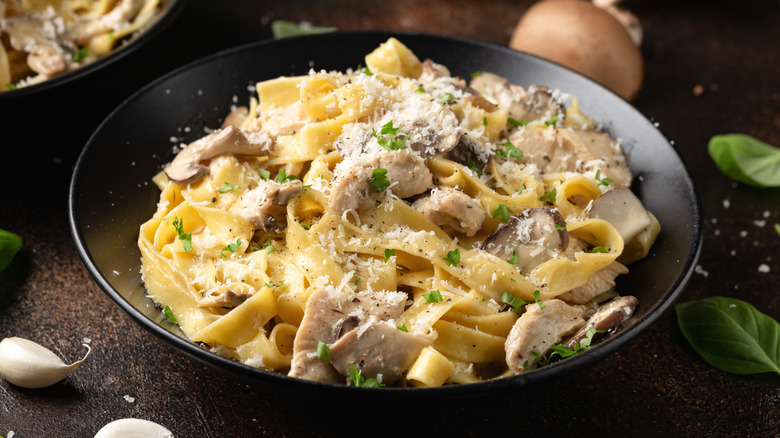
There are Italian restaurants and then there are Italian-American restaurants. The former serves dishes you'd find in Italy, while the latter offers dishes that evolved when Italian immigrants came to the U.S. in the late 1800s and early 1900s and modified their traditional recipes with ingredients and techniques that were more readily available. Italian chain restaurants typically serve more Americanized menu items, but if you're dining somewhere more traditional, it's worth avoiding any Italian-American dishes included only to appease diners.
"We are sometimes asked for fettuccine Alfredo or chicken as an add-on to a pasta dish," Dario Monni notes, adding, "But where I am from in Italy, these do not exist, and it's important to me that I stick to what is authentic to my experience growing up." A traditional Italian restaurant worth visiting for Italian cuisine shouldn't be trying to woo diners with items they could just as easily get at Olive Garden — nor should diners be ordering or requesting these dishes if they want to have an authentic Italian meal.
Avoid: Over-complicated pasta dishes
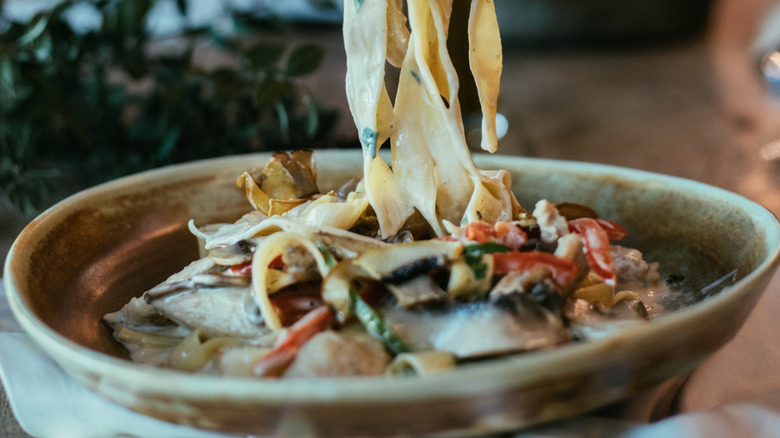
There are some cuisines that are delicious thanks to recipes created with dozens of layered ingredients, but Italian cuisine is more about simplicity. It tends to showcase high-quality, fresh, seasonal ingredients, where less is more. If you think of the most traditional pasta sauces in Italian cuisine, you're looking at simple ones such as pomodoro, arrabbiata, pesto, marinara, puttanesca, ragu, and so on. "To me, pasta is at its best when it can shine," Dario Monni says, adding, "But when it's buried under a lot of crazy flavors, you don't get to really taste and feel the pasta itself."
At his restaurant, Monni prioritizes simple sauces with top-quality ingredients, letting them each stand out with their unique characteristics. "I think that's hard to do when you get too creative with the dishes," he comments. Just because the composition tends to be deceptively simple, that certainly doesn't mean the flavors are. Instead, you can taste the individual ingredients without feeling like they're vying for your palate's attention.
Avoid: Dishes from regions other than the restaurant's focus
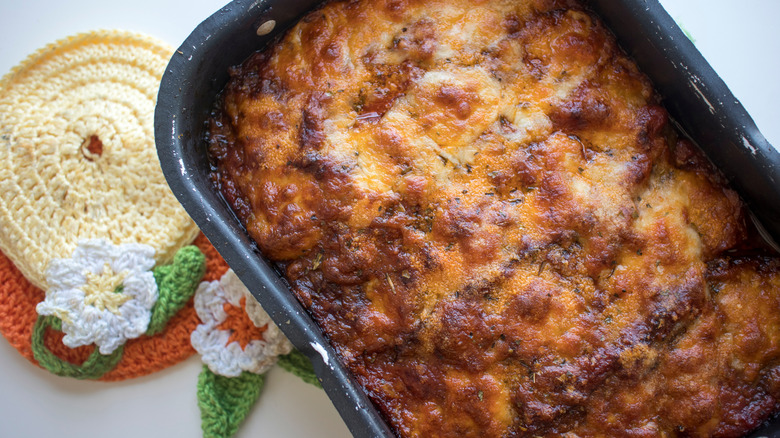
Italian cuisine is incredibly diverse thanks to the varying influences around the country. However, some restaurant menus make it look like there's only one type of Italian cuisine, and it includes a bit of everything. The best restaurants will have a regional focus, likely dictated by their own heritage or experience. For example, Jacopo Maffei, co-founder of Il Gigante in New York City, shares, "We focus our menu on central Italian cuisine, which again helps us maintain that quality." The native Florentine partnered with a Bolognese co-founder and Bolognese chef, giving the restaurant its firm identity.
Granted, a lot of dishes from central Italy such as lasagna and ragu alla Bolognese are popular stateside too. However, another familiar dish like eggplant parm is excluded from the menu, Maffei explains, because it is Sicilian. Dario Monni notes, "Most Italian immigrants who came to America several generations ago came from southern Italy, so there's a lot of familiarity with more tomato-focused dishes, as they do so well in the south." If the menu's trying to check off all the regions, chances are it's not really specializing in anything. When you're craving a saucy tomato dish, check out a local Southern Italian spot to ensure the execution is top notch.
Get: Lesser-known Italian dishes
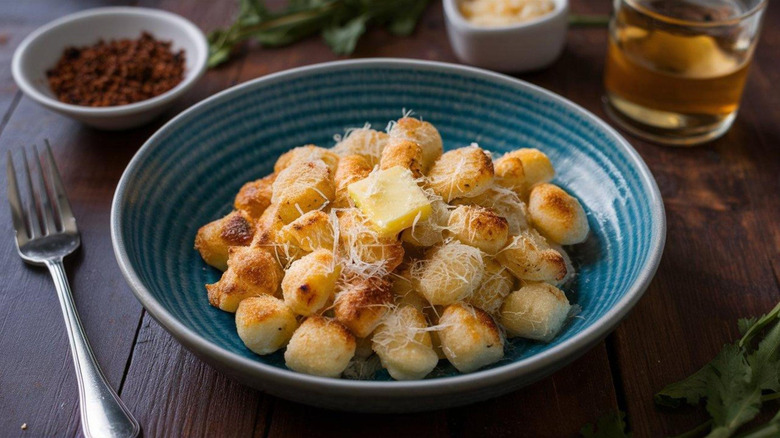
If you're going to an Italian restaurant with a specific craving for ragu or a margherita pizza, then by all means, order it. However, if you're curious to have a novel culinary experience, then you're better off ordering something you've never tried and maybe never even heard of. Italian cuisine is super varied, and chances are you've only just started to scratch the surface.
Jacopo Maffei notes that at Il Gigante, some of the most popular menu items are unfamiliar to American diners but are the norm in the central Italian regions of Emilia Romagna and Tuscany that the restaurant features. "Being able to introduce these incredible but lesser-known dishes to the American diner is another advantage to having a regional menu," he comments. For example, he lists Tuscan sausage and beans, meat and Swiss chard stuffed pasta, breaded veal cutlet, and short pasta tubes with a sausage ragu among some of the standout menu items.
Chef Jason Kohl, chef de cuisine at The Americano in Atlanta, Georgia, also prioritizes regional dishes and classic methods. "A dish we are particularly proud of that is less common, but uses traditional Italian techniques is the Salsa Fegato (or "Liver Sauce"), but made with chicken livers and currants instead," he says, recommending pairing it with Gnocchi alla Romana, made with semolina. Dario Monni highlights regional dishes at Tortello too, such as Chiusoni alla Gallurese, a pasta dish featuring saffron, sausage, cream, and onions that he discovered visiting his father's family in Sardinia.
Get: Dishes with fresh, seasonal ingredients
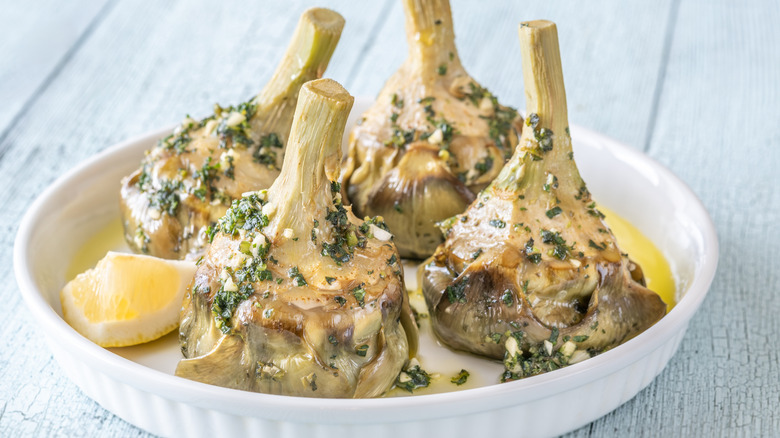
It's worth choosing dishes that feature fresh, seasonal ingredients no matter what restaurant you're at, but this is especially relevant with Italian cuisine. Since recipes often encompass just a few key ingredients that are meant to shine on their own, it's doubly important to make sure those ingredients are at their peak. Just imagine a Caprese salad with unripe tomatoes, a peperonata with bland bell peppers, or carciofi alla Romana with woody artichokes.
Jacopo Maffei recommends choosing Italian restaurants that have actual relationships with the farms and food providers in the region, as it demonstrates a greater attention to choosing quality ingredients. "Smaller, more focused menus that also factor in seasonality will generally make it more possible for the kitchen to really master those dishes, over large menus trying to pack in everything," he adds, a notion that chef Jason Kohl strongly agrees with and incorporates into his menu philosophy.
Get: Traditional takes on popular favorites
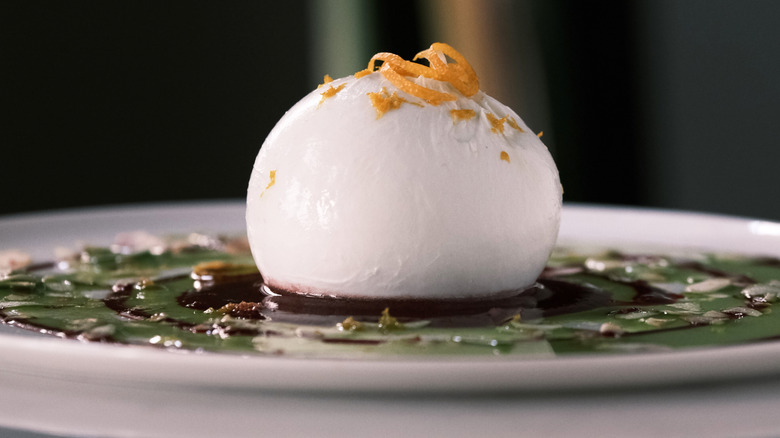
Often, certain Italian ingredients are prepared in a particular way stateside, but they're actually just a drop in the bucket when considering all the potential ways they can be used. Marinara sauce, for example, often gets relegated to being a dipping sauce for garlic bread, when in Italy it's the star of classic pastas, pizzas, and seafood dishes. Meanwhile, burrata is commonly served as a standalone plate in the U.S., perhaps as a variation on a Caprese salad or else as the crowning glory on a pizza.
Dario Monni incorporates the popular ingredient into a pasta dish at Tortello (which is known for its handmade pasta dishes, so this menu item in particular is far from being one to avoid). He describes burrata-filled tortelli served with browned butter, toasted hazelnuts, and sage as one of his favorite dishes. "This is a rich, amazing classic from the north," he explains, adding that the restaurant receives fresh weekly shipments of burrata for this dish.
Get: Authentic carbonara
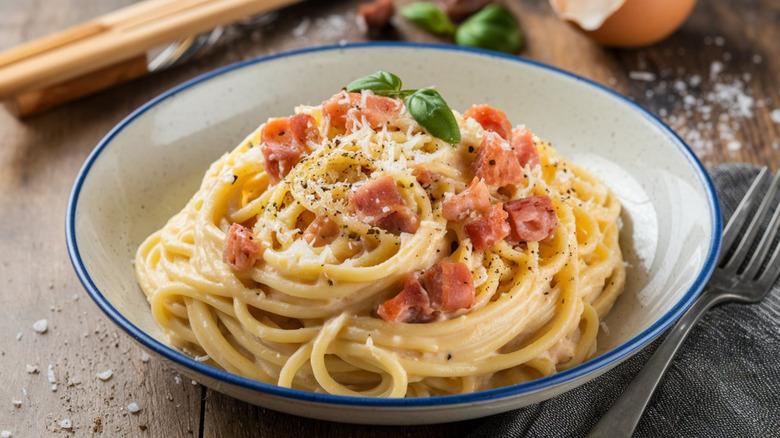
Carbonara is a contentious topic, and we had our experts advising for and against it. Chef Davide Bugamelli pointed at the deceptive simplicity of the dish and how it requires a perfect execution to successfully pull off. Not to mention that plenty of restaurants in the U.S. add all kinds of unnecessary ingredients to the dish to make the sauce extra velvety.
Dario Monni cautions, "If you ever see a carbonara with bacon or with cream, you know you aren't in the right place." Instead, a traditional carbonara should only contain five ingredients: egg yolk, Pecorino Romano cheese, guanciale, black pepper, and spaghetti. Substitutions are definitely discouraged among serious Italian chefs, since each component has an important role. The dish doesn't need anything more or less.
That said, Monni recommends ordering it in certain cases, with the caveat that since it is a tricky recipe to achieve, it requires utmost care to avoid accidentally scrambling the eggs. Instead of keeping it on his standard menu, he adds it as a weekend special on occasion, which ensures it gets the attention it deserves. "Amazing egg yolks and amazing guanciale are the keys to this cult favorite dish," Monni declares, further emphasizing that high-quality ingredients are crucial to Italian cuisine.
Get: Simple, classic pastas
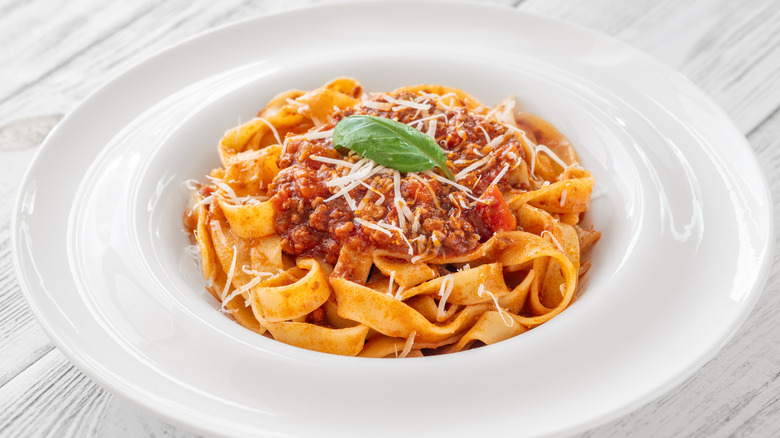
Over-the-top pasta creations are a no-no according to many of the experts we spoke to, so it only makes sense that classic pasta dishes come out on top. Of course, with such simplicity, the quality of the ingredients is once again essential. Chef Davide Bugamelli shuns boxed pasta and asserts, "Fresh pasta always wins." Dario Monni takes this approach too, describing how he put a lot of research into sourcing the flour and eggs for the fresh pasta at Tortello. "There is nowhere to hide when you keep things simple, and that's the excellence that I strive for," he says. Once a chef has put that much effort into preparing the best pasta, they want to make sure it isn't masked by too many flavors.
According to Bugamelli, "If well executed, you can't go wrong with dishes like lasagna and tagliatelle alla bolognese," which both feature in classic form on his menu. Monni has a version of ragu pasta too, noting it's served with hand-cut tagliatelle, an extra touch that doesn't go unnoticed. Perhaps one of the simplest of all, pomodoro sauce is a go-to when done right. Jason Kohl notes, "Our pomodoro sauce contains only five ingredients, but producing it properly requires specific attention to detail to seamlessly highlight each ingredient." Monni makes it a priority on his menu too, serving it with fresh stracciatella sourced from Puglia, Italy.