

Marilyn Monroe's Personal Cookbooks Were Auctioned For A Whopping Price — And Revealed A Lot About Her
We may receive a commission on purchases made from links.
From her iconic billowing white dress to the sexiest rendition of "Happy Birthday" for President John F. Kennedy, Marilyn Monroe solidified herself in silver screen history, but that version of the star was nothing more than a carefully crafted persona. Before her days of fame and during any brief moment of solace she could grab between filming, Monroe was an unexpected homebody. She loved whipping up her own dishes or entertaining friends with lavish meals in the comfort of her own home. Monroe adored a wide range of foods, and some were prepared right from her quaint cookbook collection, which is still intact today. We rarely get an honest glimpse into the day-to-day lives of the rich and famous, especially those who have come and gone, but Monroe's modest cookbook collection resurfaced at an auction in 2021, with an estimated value reaching up to $75,000.
You can tell a lot about a person from their cookbooks, especially if they're not shy about scribbling in the margins and slipping little notes on their favorite pages, and Monroe never seemed to hesitate with a pen. As a star, she didn't have to cook for herself much, but that doesn't mean it didn't bring her great delight. Her cookbook collection consisted of two well-loved cookbooks that made that passion loud and clear — "The New Fanny Farmer Boston Cooking-School Cook Book" and "The New Joy of Cooking."
Inside Monroe's small but insightful cookbook collection
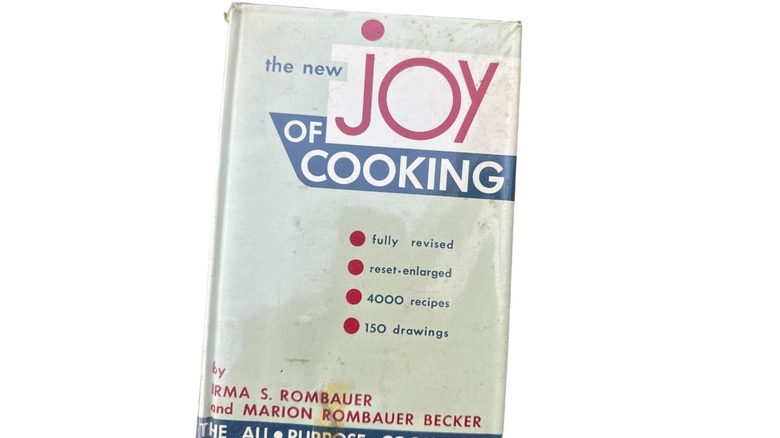
Marilyn Monroe passed away in 1962, leaving nearly her entire estate to her acting coach and mentor, Lee Strasberg, including these hardcover cookbooks she cherished. Fans had no idea these incredible artifacts even existed until they saw the light of day in 1999, when they sold for $45,000. Robert A. Siegel Auction Galleries then listed the incredible collection 22 years later. The estimated value was vast, between $50,000 and $75,000, but collectors were quick to bid.
The two titles are culinary classics and certainly a great investment for the average home cook, with one even being one of the best-selling cookbooks of all time, but anything beyond even two digits seems egregious for a mass-produced cookbook. That is, when it doesn't come full of Monroe's insights and inner thoughts. Complete with sporadic food stains, handwritten notes, grocery lists, recipe clippings, and random snippets, these cookbooks offer a rare glimpse into the routines of a woman whose public persona rarely allowed for normalcy. Her beloved 1951 copy of "The New Fanny Farmer Boston Cooking-School Cook Book" included big dinner plans for mastering beef Bourguignon and corned beef and cabbage, while other simpler notes listed basic necessities like eggs, milk, and coffee.
Monroe's rigid diet didn't leave much room for spontaneous meals
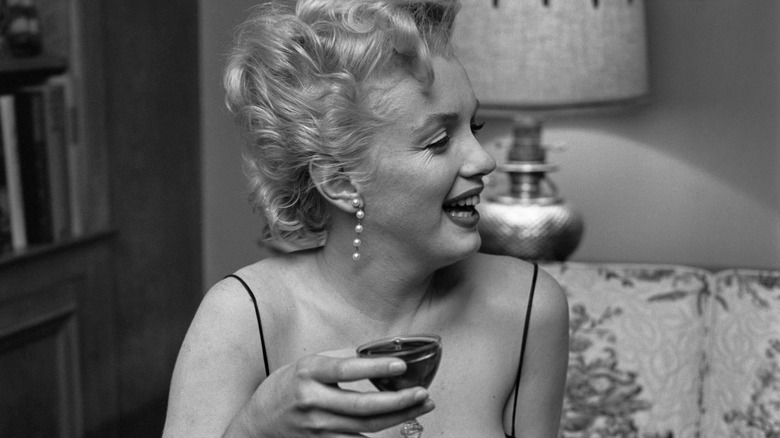
"The New Joy of Cooking" by mother and daughter Irma S. Rombauer and Marion Rombauer Becke was a 1953 updated version of the classic that began exploring a new wave of food trends in a post-war American landscape. Marilyn Monroe's battered copy may have been her most-used cookbook, with a typed eating schedule tucked between the pages.
Monroe's diet was rigid, with specific times designated for each meal. Her day started at 8 a.m. sharp with stewed prunes, hot cereal, buttered white toast, a bit of orange juice, and a crisp glass of milk or cocoa, depending on the day. Aside from starting at 1 p.m. on the dot, lunchtime seemed to offer a bit more variety. Monroe would pick between cottage cheese, eggs, potatoes, or pasta. A bit of bread was often served on the side, and a sweet treat like Jell-O or fruit completed the meal. According to her disciplined routine, dinner was served promptly at 6:30 p.m. It was protein-heavy to keep her full through a long evening of schmoozing and clinking glasses. Lamb, fish, or chicken would often be served with bread and a potato. Her final sweet of the day was a baked apple or a cup of pudding. Her strict diet did include a few snacks throughout the day, but the focus was fuel over flavor. Between meals, Monroe would sip some milk and have just one cracker. By 11 p.m., she would enjoy one last indulgence: a glass of eggnog.
Allegedly, Monroe's cookbooks and bonus personal anecdotes ultimately went unsold, but we hope someone's still cherishing Monroe's memories in the kitchen.