

Oversized Burritos Aren't Traditional In Mexico, But Pati Jinich Still Loves Them

The tale of the burrito's rise to fame in the U.S. is a transformative one: When people migrated over from Mexico in the 1950s, the tortilla-based rollups were fairly simple, but after the Mission-style burrito was invented, oversized burritos became explosively popular. Now, whether you're looking at a deluxe Taco Bell grilled cheese burrito or the best burritos in every U.S. state, generous sizes are predominant — but not very traditional. To find out more about authentic burritos, Tasting Table asked renowned Mexican chef and television personality, Pati Jinich, for her opinions on the subject.
Jinich is the culinary ambassador for Avocados From Mexico, and through this role, she spreads awareness around diabetes prevention by developing tasty yet healthy diabetic-friendly recipes. You might guess that she isn't a huge fan of overstuffed Tex-Mex or Mission-style burritos, but that's far from the truth. "I love a big burrito, so I can give it a big bite!" she said. While some say it's a red flag at a taqueria if the place brags about the size of its burritos, Jinich believes this is "absolutely not" the case.
However, even though she personally loves a generous portion, Jinich pointed out that "oversized burritos are more of a north-of-the-border staple. In Mexico, even in northern regions where burritos originate, they're practical and proportionate." This is owed to the differences between traditional Mexican cuisine and its American-adapted counterpart.
Pati Jinich explains how Mexican burritos differ from American ones
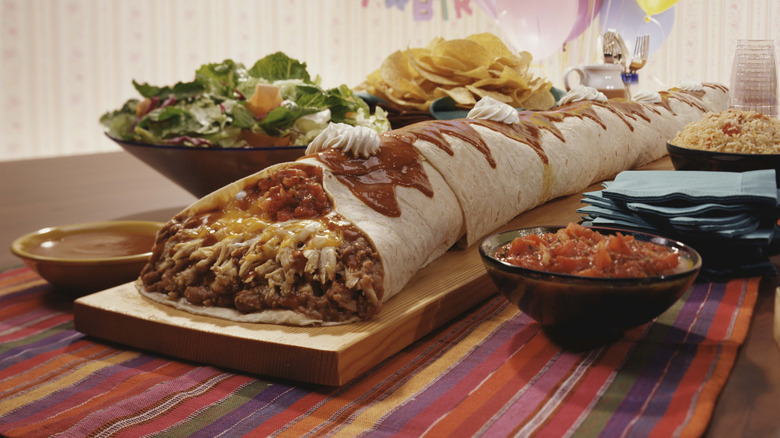
According to Pati Jinich, you won't typically see giant burritos served at traditional Mexican restaurants. Instead, burritos in Mexico "have an emphasis on the filling, not the size," she said. The chef added, "Mexican cuisine is rooted in seasonality, technique, and layered flavor. The emphasis is on harmony, or how the elements work together, rather than how large a portion is." This is a major reason why modern-day American burritos differ from the originals from northern Mexico.
To many Americas, burritos are associated with heavy satiation, so they like to load tons of sauces, veggies, and meats into the tortilla. Build-your-own-burrito spots like Chipotle also let customers stuff in whatever they like, regardless of overall balance or the seasonality of ingredients. Meanwhile, traditional Mexican burritos are longer than they are wide, and put a few simple fillings — often just beans, cheese, and/or meat — inside a smaller flour tortilla.
In Sonora, often said to be the birthplace of the burrito, the wraps were popular meals for vaqueros or Sonoran cowboys, so they had to be portable enough to carry in a bag. While building an overstuffed wrap is definitely fun, using balanced ingredients is a tip you need when making burritos. The next time you get a craving, consider making them with smaller tortillas and only two or three fillings that complement and elevate each other. You just might find that less is more.