

Rubbery Seafood Boils Are Usually Thanks To This Rookie Mistake
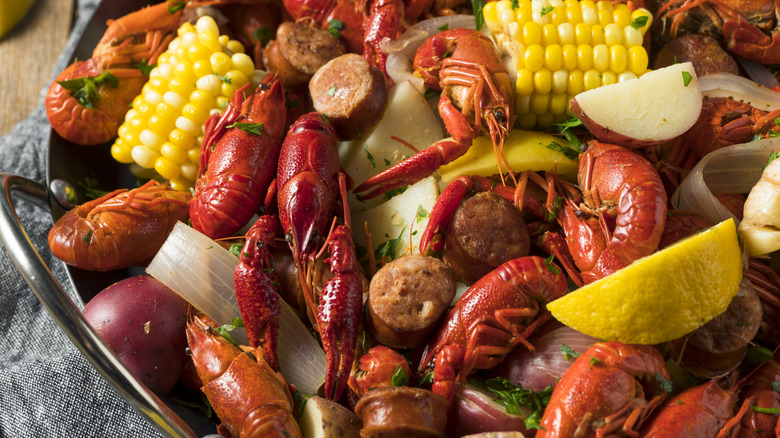
A seafood boil is a hands-on experience. It gives the impression of something rustic and, at first glance, a little bit chaotic in the best way. There's a towering, burbling pot, cascading plumes of aromatic steam, a table lined in paper waiting to be buried in shells and cobs. You dump it all out of the pot together, so you might assume that you can just add it all into the pot together, but that's a mistake to avoid, and it's where many good seafood boils go bad. A perfectly cooked seafood boil is actually as delicate an art as any other recipe that's made from strategically layering flavors.
The goal of a seafood boil is tender, snapping, sweet, buttery proteins. You want them to be cooked through, but only just, because when seafood is overexposed, its delicate flavor gets boiled away along with the texture. The problem with adding everything to the pot at once is that not everything cooks the same way.
Seafood is mostly comprised of water and protein; the latter responds to heat quickly. Shrimp, for example, are mostly lean muscle. They contain very little fat and almost no connective tissue that would need to be broken down with a low-and-slow application of heat. A shrimp's transformation from raw to edible happens very quickly, and once it does, there's nowhere else for it to go but tough. A potato, on the other hand, is mostly starch, and it needs time for heat to soften its cell walls and allow its starches to gelatinize into that ideal, creamy interior. The main idea is that the mechanism of cooking is doing something different to each ingredient.
One ingredient at a time
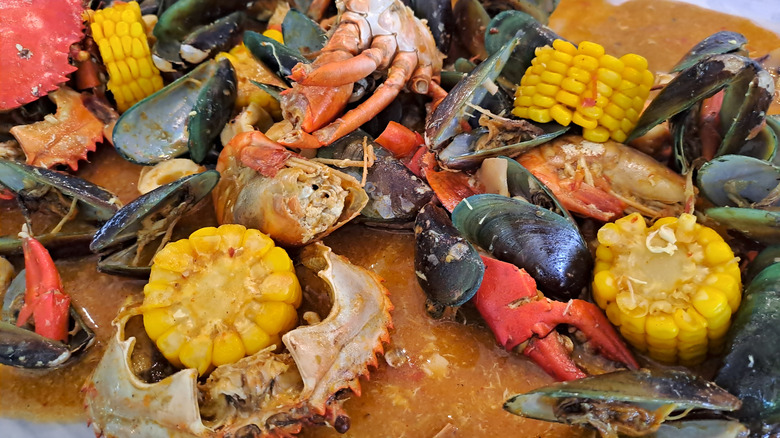
A good seafood boil brings each ingredient to its perfect peak, and lets them meet there together. Start with the potatoes, giving them a good long bath in the rolling boil, till they become fork-tender all the way through. Once they're well on their way, toss in the corn, which needs a shorter simmer. When the potatoes are almost done, add the sausage so it can warm up and perfume the broth. If you have shellfish, like crab or crayfish, add them next. Clams and mussels take about five minutes to cook. They're done as soon as they open and won't need much longer than the shrimp, which should be the final addition of your seafood boil, lowered into actively boiling water for just a few minutes, until they turn opaque and curl into a relaxed C shape.
Then, crucially, stop. The burner may be off, but the pot is still radiating heat. Everything will continue cooking in the liquid's residual heat, potentially past the ideal point if left too long. So once the shrimp are done, drain the whole pot promptly, rather than letting it continue to stew together.
Understanding and respecting the materials as they are, and applying optimal technique, leads to the best bite. When layered properly, you'll know you did it right. The potatoes will be creamy, the corn will be bright and sweet, the crabs and crawdads will slide right out of the shell with no chewiness. The sausage will snap, the shrimp will be springy, and you'll have fun eating with your hands.