

Here's How To Request Your Preferred Spice Level At Restaurants (Without Confusing Your Server)
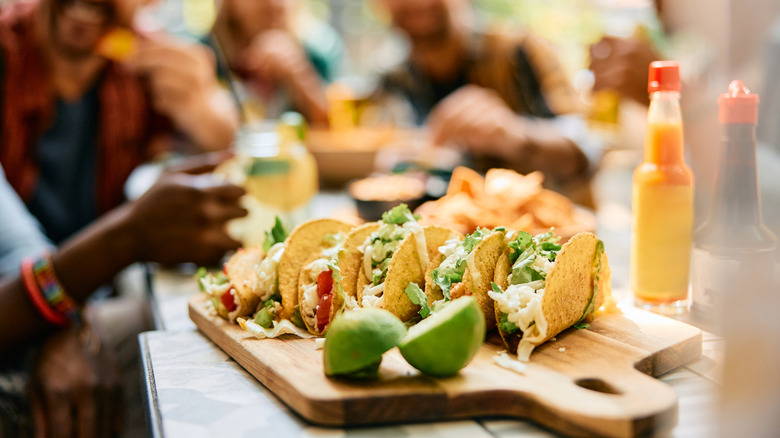
While there may be a four-category spice level option to help you order spicy dishes at a Thai restaurant, Mexican food is a different story. It's no secret that Mexican is spicy; after all, chiles originated in Mexico. If you're sensitive to spicy foods, you can still enjoy a zesty plate of enchiladas or tacos from your local Mexican restaurant by ordering correctly. To help you request your preferred spice level at restaurants, we consulted renowned Mexican chef and television personality Pati Jinich, who, as the culinary ambassador for Avocados From Mexico, is dedicated to spreading awareness around diabetes prevention.
Jinich stresses the difference between spice and heat, with spice being the flavor you want to taste and heat the burning sensation that makes most of us sweat when we've consumed too much spicy food. "Be specific about heat, because it should enhance flavor, not overpower it," says Jinich. "Chili peppers are supposed to bring depth, smokiness, even sweetness — not just fire." Chipotles in adobo, for example, contain smoky, sweet, and spicy notes that pair beautifully with red meat dishes or as a saucy base for slow cooker chicken tinga.
"Don't be afraid to be super clear about your comfort level with heat," Jinich adds. "Instead of saying 'no spice,' which can be confusing because spice doesn't always mean heat, you can say you love the flavors but have a low tolerance for spicy. " Furthermore, she advises sensitive palates to request "very mild heat" or "just a gentle kick."
If a dish is too spicy or too mild, then what?
The reason you ought to order your Mexican food with a "mild kick" if you're intolerant to spicy food is, as the chef puts it, so that "the kitchen adjusts without stripping the dish of its character." According to the chef, "Many traditional Mexican kitchens build layers of flavor first and heat second." This way, they can skip that subsequent step and uphold the integrity of the dish without the painful finish.
Unfortunately, despite the kitchen's best efforts to accommodate spice sensitivities, sometimes a dish is still too spicy. If that's the case, you don't have to suffer through your lunch or dinner. "Feel free to send back a dish — respectfully — if it's just way too hot for you," Jinich tells us. However, there are ways to lessen the spice level of your meal with all the common accompaniments that come with it. She also recommends "balancing the heat with tortillas, rice, beans, crema, or lime. Mexican food is about balance, and there are many ways to soften heat without discarding a dish."
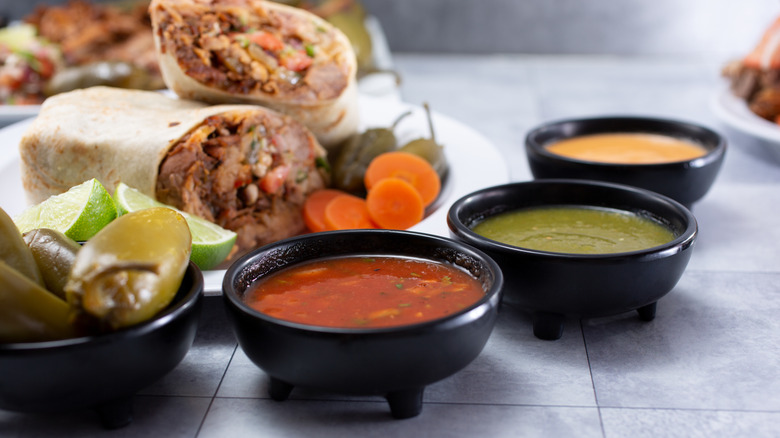
At the other end of the spectrum, if the kitchen adjusts the spice level too much, you can bring more heat with all the delicious salsas any good Mexican restaurant has in its arsenal. "Lots of traditional Mexican meals are designed with salsas on the side, so heat can be adjusted at the table," Jinich adds. "Asking for more salsa is completely natural — that's how many Mexican meals are enjoyed."