

The Story Behind Chick‑fil‑A's Capital 'A'
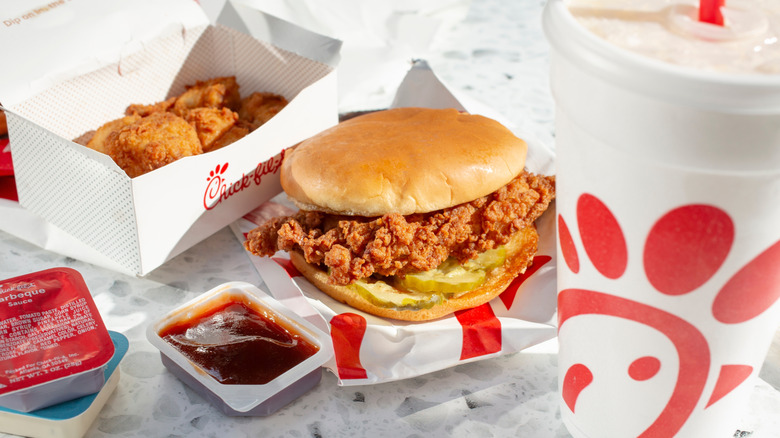
As one of America's favorite fast food chains, Chick-fil-A is synonymous with quality and consistency, whether you're judging on criteria like food, service, availability, or a cumulative combination. Its commitment to holding steady on classic items, (as well as offering fresh and seasonal menu items), is a core reason why Chick-fil-A has been propelled to billions of dollars in sales. The brand's name has been an intentional play to support success ever since its inception. It serves as a simultaneous indication of Chick-fil-A's mission, and a clever marketing tool that lets customers know what to expect: Grade "A" chicken.
Being at the top takes a generation of work: At close to 60 years old, the recipe for the Original Chick-fil-A chicken sandwich is nearly a historic relic. Unlike the recipe consistency demonstrated over the years, the company's title has had to go through some iterations to gain its hallmark status. After S. Truett Cathy pivoted away from running a restaurant called the Dwarf House and toward his future chicken sandwich empire, the company had a three-year run where it was known as Chick-Fill-A. Per reporting by Southern Living, this play on words was, at first, Cathy's attempt to signal to customers what his sandwich was made of — a hefty chicken fillet. However, Cathy recognized that there was more room for specificity. The name was eventually modified to the version we know now. With its modern title, Chick-fil-A confirms that its name is intended to signify the grade of the chicken it uses.
How chicken meat is graded
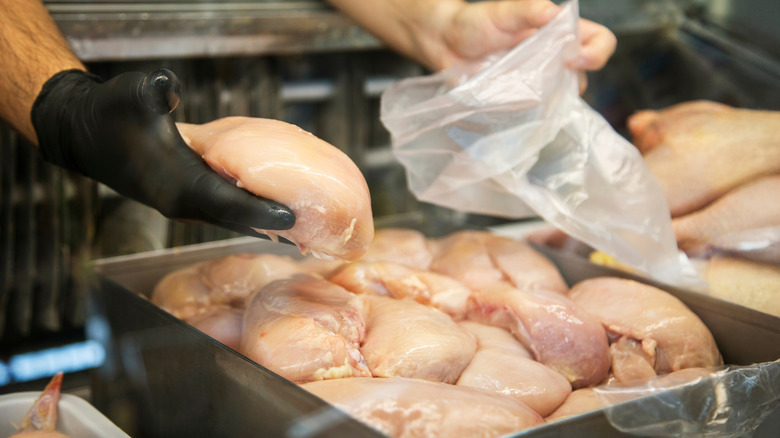
In the United States, beef, lamb, pork, and poultry are all graded differently. A subsection within the U.S. Department of Agriculture, called the Agricultural Marketing Service, oversees the chicken grading system that includes three categories: A, B, and C. If you regularly (or ever) purchased chicken cuts from the grocery store, then you've purchased grade A chicken. It is the only grade sold directly to consumers as whole cuts. The first and primary grade A stuff is, essentially, chicken that's "well fleshed," per the USDA. That implies a good ratio of fat-to-skin and meat that's clean, intact, and has been butchered without leftover feathers, tendons, or the like. This is what Chick-fil-A prides itself on.
If your favorite chicken sandwich lacks marketing around the use of A-quality meat, then it's possible you're getting something that doesn't make the grade. Chicken grades B and C are found predominately in processed items. Think ground meat, broths, frozen dinners, or something like chicken sausage. Across retail and consumer-facing products — especially in fast food — it's rare to find packaging or marketing that boasts about the use of grades B or C chicken. Instead, what's more common is what's left unsaid. For example, 100% white meat does not imply an A grade, just that the fast food chain is using meat from a certain poultry part. With a commitment to 100% real breast meat, Chick-fil-A guarantees you're getting protein that rates high on numerous fronts.