

10 Tips For Getting A Perfect Steak Crust
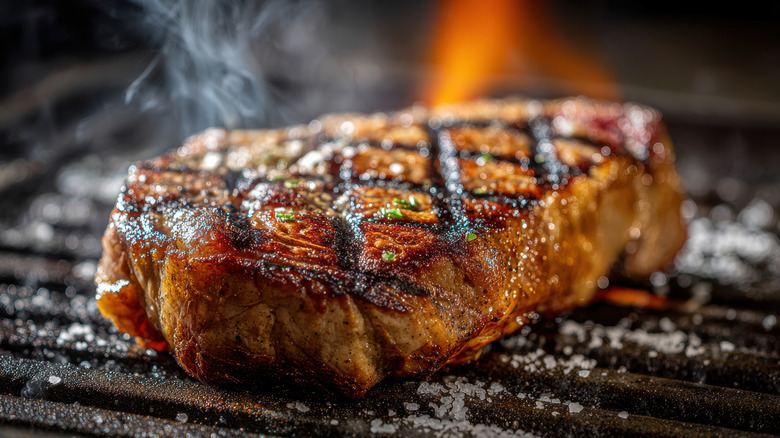
For meat lovers, a nice piece of steak can be the perfect thing to cook on any occasion, whether it's a weeknight dinner or date night. If you're going to eat a good steak, part of the pleasure comes from having a good crust. Especially if you've got a good cut of meat, a little bit of care in its cooking can give you a truly delicious meal. There is plenty of advice, and even debate, about how to cook the perfect steak, so you've probably already heard about the key elements, like which cuts work best for what, how to not overcook it, and the importance of letting a steak rest. Here, we're going to get into the nitty gritty of how to cook the perfect crust.
An almost crispy, well-seasoned, and caramelized crust on your steak can take it from good to great. Having gone through culinary school and working in professional kitchens, I've made a fair share of steaks in my career, and I've learned some skills from decorated chefs about the best ways to get there. A lot of work goes into getting the crust right, and some of it starts before the steak even touches the heat.
There's a reason that eating steak at a restaurant tends to taste better than the steak you make at home. With the right advice, you too can make a truly restaurant-worthy steak. Here are some tips for getting the perfect steak crust.
1. Use the right pan
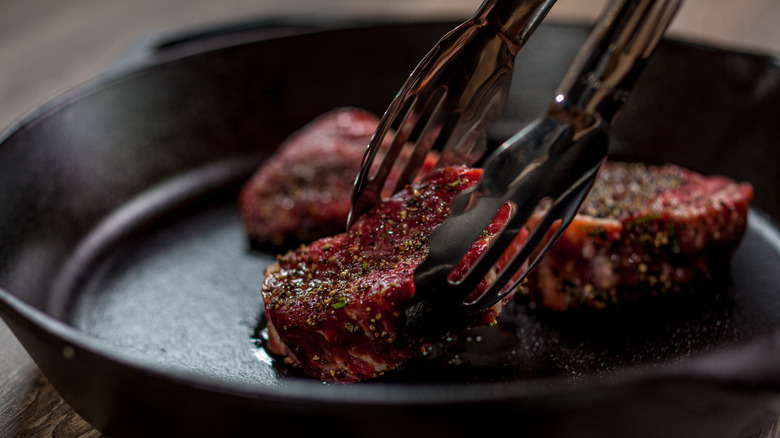
The right kitchen equipment can make all the difference in your cooking, and it's no different with steak. You have to use the right pan if you're going to get a good, hot sear on your steak. Don't worry, you don't need something fancy or expensive to do it, but there are things your pan needs to do well. Many people swear by using a cast-iron pan, but I don't think you absolutely need to. There are two factors that I look for in a pan for getting a good crust for my steaks. The pan first needs to get hot enough. You're never going to get the good browning that comes from the Maillard reaction if your pan doesn't get hot enough.
The other really important thing is that you use a pan that you know the steak won't stick to. There's no point putting in the effort to get the right caramelization, only for all that goodness to stick to the pan when you flip or remove your steak. Now, this doesn't have to be a non-stick pan, although those are the easiest to work with.
You know your pans, so you have experience with which ones can be tricky. As long as you know your way around it, you can use a stainless-steel or cast-iron pan, taking all the steps to make sure the meat won't stick.
2. Don't cook straight out of the fridge
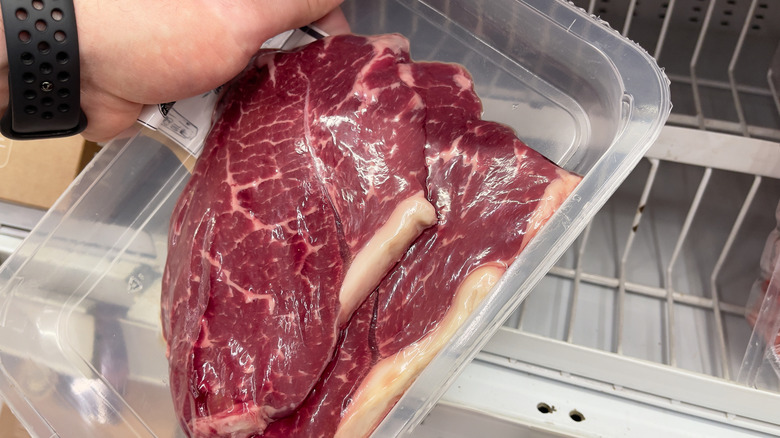
One of the first things I learned in culinary school was never to cook meat straight out of the fridge. It will be too cold to get the cooking right, it won't cook evenly, and it can affect the crust, too. You want a nice, consistent browning on the crust, and cooking cold meat can hinder this from happening. Plus, it can cause you to overcook your steak to get it to the right level of doneness on the inside. A good crust can be ruined by overcooking, and in my experience, there's also the risk of burning the spices you've used to season the steak with if you overcook the crust.
Instead, take the meat out of the fridge and leave it out on your counter for a bit before you cook it. This can take anything from 10 minutes to an hour. How long depends on how cold your fridge is, as well as the room temperature in your kitchen. Touching the meat will help guide you. The steak shouldn't be super cold to the touch. Once you feel that it has warmed up a little to neither cold nor warm, then it will be ready to cook.
3. Dry out your steak before cooking it
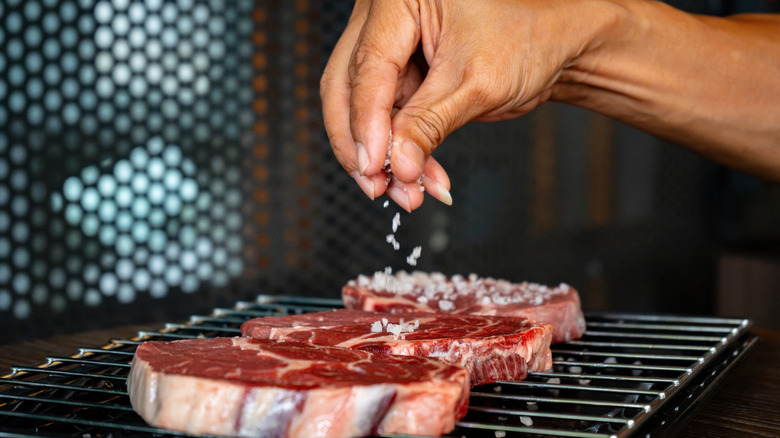
This tip may be new to you, but drying out a steak is essential to getting the perfect crust. While it's good for steaks to have moisture in them to an extent, you don't want excess moisture on the exterior. This will prevent the crust from forming because the moisture will hinder the temperature from rising enough to sear and brown properly. Steak is more likely to be wet when it's kept in the package in the fridge. Once you take it out, remove the packaging, and expose it to air to let it dry out as much as possible before you start cooking.
Now, you may be a little impatient if you've just decided to start cooking when you're already hungry, but trust me, taking the extra time for this step ensures a better steak. You can also quicken the process by patting the exterior with some paper towels, but I find that you still need to leave it for a little while after that for the edges to properly dry. You can even kill two birds with one stone by doing the drying while you're letting the steaks come to room temperature on your counter. Even better, lay them on a wire rack so there is airflow all around the steak.
You should also sprinkle salt on the edges while the steaks sit out. Salt not only seasons the meat, but it helps draw out moisture, supporting you in getting a delicious crust when the meat hits the pan.
4. Scoring works to help get a great crust
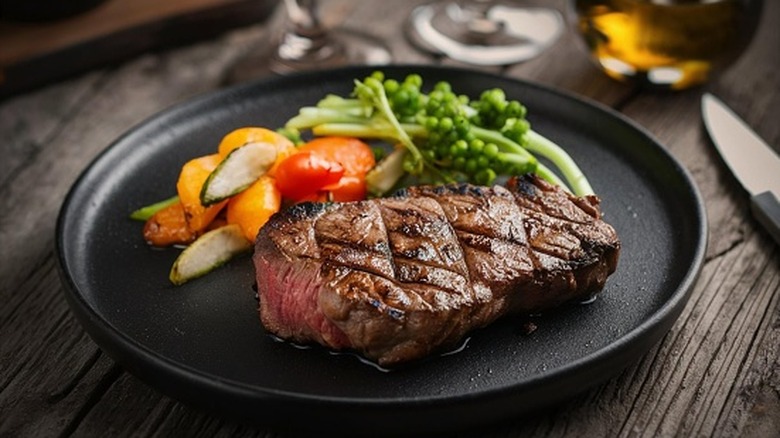
People often associate scoring with foods like duck breast or a holiday ham. When it comes to steak, some folks might think you should only score a steak that's on the cheaper and tougher side. Well, it certainly works to tenderize a tough cut, but scoring also helps you get a better crust, too, even on a pricey steak. Scoring creates greater surface area to get caramelized, which means more flavor and texture all around the steak. The more meat exposed to heat while you sear, the more crust will form.
Now, you don't need to make huge, deep scores on a good-quality piece of meat. Using a sharp knife, make shallow cuts against the grain in one direction, and then in the other direction. A shallow score will do the job perfectly, without interfering with the steak quality. Scoring also offers another benefit, which is that seasonings can go into the little cuts, deepening the flavors and making each bite even tastier.
5. Use dry seasonings on your steak
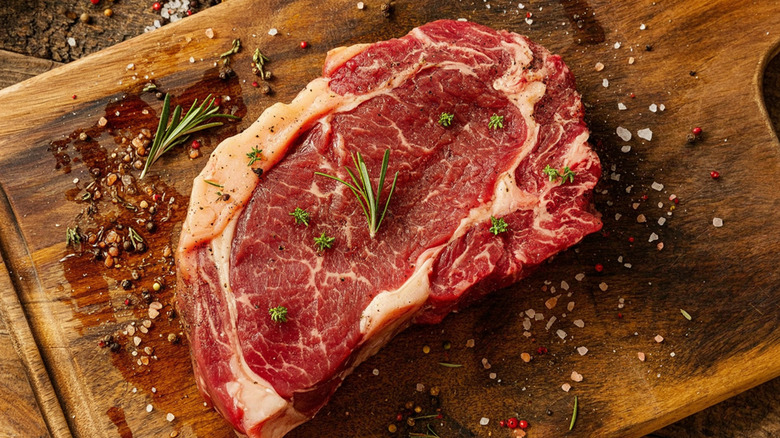
Many cooks use marinades and seasonings to inject as much flavor into a steak as possible, but in order to get a good crust, a wet marinade isn't the best idea. Instead, opt for dry seasonings to get the job done. This will help a crust develop better as the steak cooks, and the seasonings will even become part of the textured crust.
Dry seasonings that contain salt also help draw out moisture and dry out the surface of the steak, so adding some dry seasonings to the steak as you air it out to dry it will reinforce this. Using anything wet will work against forming a crust. Additionally, if the wet marinade has sugar in it, it's likely to burn while you're trying to form a nice sear.
I like to use some simple dry seasonings, like salt, black pepper, and some dried rosemary. That's a good combo to use for a great-tasting steak with a nice crust. A good steak doesn't need too much else, but if you really like to add seasonings, then things like ground cumin, crushed pepper or cayenne pepper, and some garlic powder can work a treat. Paprika should be added near the end of cooking, as I've found it burns too easily, which can ruin the taste of your crust.
6. Get the heat right up
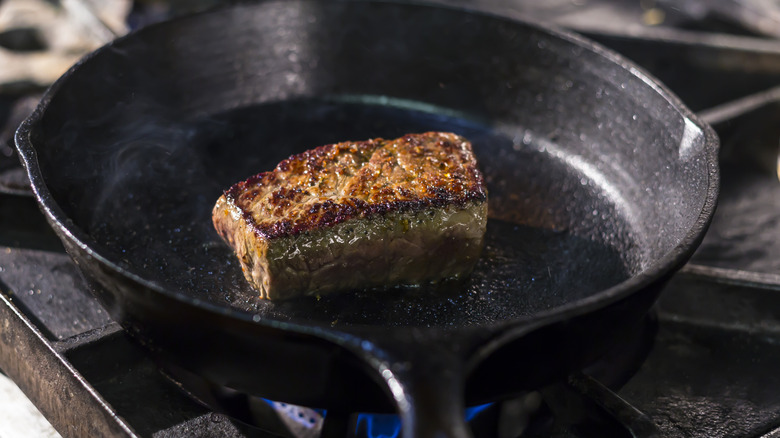
One thing that's non-negotiable in searing a steak is to have high heat. In my experience, you can't get good browning if the heat isn't high enough. If you're nervous to get the heat up and think a longer cooking time is enough to form a crust, you can end up with a grey steak, or even an overcooked steak, because you're keeping the steak on the pan, hoping the browning will come. A nice, high heat ensures you get a crust, without risk of overcooking.
So, don't be afraid to get the heat right up there. You can always turn the heat down later, after getting a good searing, to cook the steak inside at a slower pace. If you're doing a reverse-searing method, you will certainly overcook the steak if your heat isn't high enough. And, if you're starting off with a sear, you'll want to make sure to turn on the heat and let your pan warm up before placing the steaks on there. Let your hand hover above the pan to feel the heat being emitted. Once it feels hot, get the steaks on, and let the Maillard reaction do its thing.
7. Use butter or oil generously
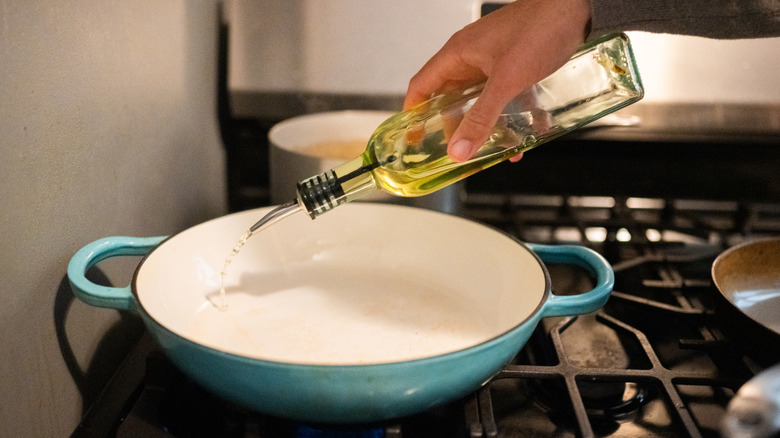
To get a perfect crust on your steak, you need enough fat in the pan. Living through the low-fat diet movement was a sad time for more than one reason, and in part because cooking steak just wasn't the same. You often need more fat than you think when trying to form the perfect crust, so trying to do so with just a little oil just doesn't work. Be generous with the fat you're using, whether it's oil or butter, and make sure your pan is glistening in it before placing your steak on it.
Hot fat is crucial to keeping the heat level up, and as it lashes the meat, it causes the caramelization, while giving the steak heaps of flavor at the same time. It also bubbles up and splashes as it heats, which enables it to rise up and touch the parts of the steak that aren't meeting the pan. I like to always start with oil, and then add butter later. Butter can burn at high heat, so starting with oil helps to prevent that; adding butter in later gives you all the rich flavor, without burning your steak.
You want every part of the steak to have access to fat. So, use an oil brush or paper towel to move and spread the oil or butter around until the whole pan is well lubricated.
8. Don't be afraid to press down
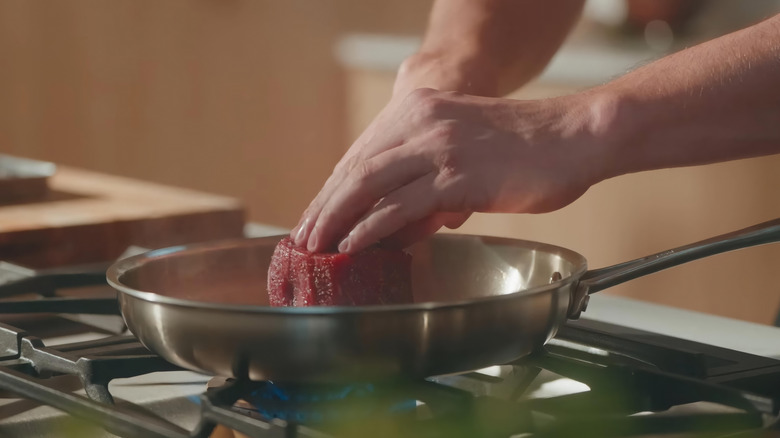
One of the things I learned in a professional kitchen was to always press down on a steak while it was searing. This was the opposite of what I thought when I first started out, because I had the impression that pressing down would cause the juices in the steak to come out and dry out the meat. However, the chef that was training me taught me that this was a myth, and that pressing down was actually good for getting a crust to form, as it made sure the parts of the steak that weren't meeting the pan would reach the heat. Plus, getting a faster browning means you can retain the juices in the steak, because you are less likely to overcook it.
Pressing down also helps if the steak shape isn't flat and also if it starts to curl up. If it's doing so, there are parts that simply won't brown unless you press down. So, as long as you don't overdo it, pressing down actually helps to cook the steak perfectly and get a good crust. Use a meat press if you have one, or just use a large spatula to evenly press down on the steak.
9. Keep flipping your steak
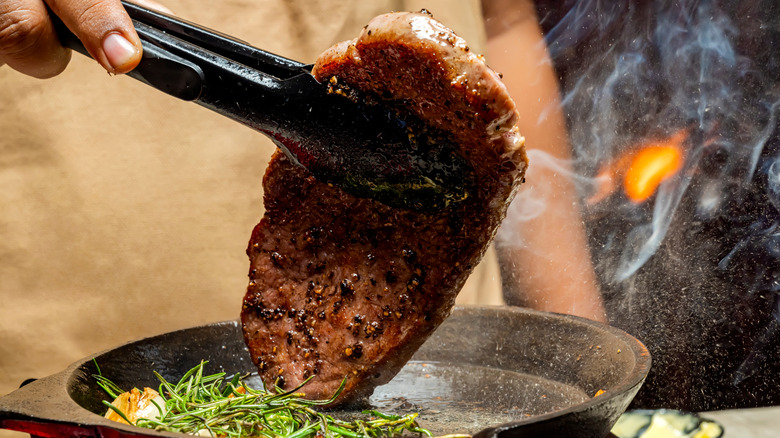
Another debate about cooking steak is whether you should keep flipping it throughout the process or only flip it once. Some chefs say that the more you flip it, the more you'll overcook or dry out your steak, but I have found the opposite to be true. Flipping it often while cooking allows for more even cooking, while also helping the browning to develop on each side more consistently. In fact, there's even science that suggests that you should flip steaks every 30 seconds. This makes sure that no part of the meat overheats and overcooks, resulting in an overall better texture.
While I have not perhaps done it with such precision, I've found that regular flipping does result in a good crust and even cooking on the inside. The final texture is always tender on the inside, with a nice, crispy exterior. So, even if it feels wrong to you after years of hearing not to touch the steak too much, give it a try. You might be surprised by how well it works out.
10. Baste your steak as you cook to get a perfect crust
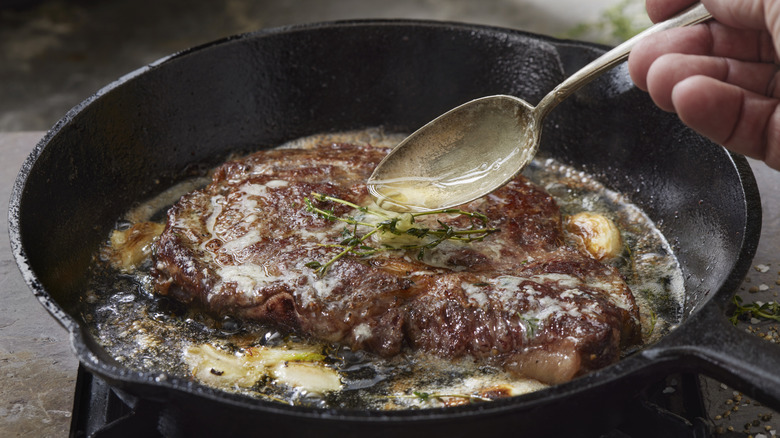
Basting is something we naturally do with longer cooking methods, but it's also handy for helping a nice crust to form on a steak. Even though you are cooking your steak for a shorter time period than say, a Thanksgiving turkey, consistently basting a steak will keep it juicy, too. Additionally, it keeps the side that isn't touching the pan nice and hot as you let the hot oil or butter splash on it. This is especially good if you're using the method of flipping regularly, because it reinforces even cooking, helping to keep both sides of the steak hot at the same time. Plus, if you've added enough fat to the pan (as I've told you to), this will be very easy to do.
There are no basting tools needed, however. Instead, the way to do this is to slightly tilt the pan and spoon out some oil or melted butter (and pan juices, which include melted fat from the meat) from the side of the pan and pour it on the top of the steak. Keep doing this as you cook, and your crust will be crispy, the steak will be juicy, and every part will taste amazing.