

How To Grow Eggplant Indoors For A Faster And More Foolproof Harvest

There's no real way to ensure you have an ideal growing season, but there are a few things you can do to help set your garden up for success. You can start weeding early, of course, or figure out the best compost system and bed positions ahead of time. But there is one way to get started early inside the four walls of your home, and that is by planting some of the best seeds to grow in your kitchen. A great example is the humble eggplant, which can be seeded over two months before the final frost of winter.
Eggplants have a particularly long growing season, with an almost 100-day window between seeding and maturity. You can speed up the process by buying transplants from the garden store, but starting eggplants indoors at home will really help give you a leg up on the season and prepare the vegetables for a more reliable harvest.
It's also a lot easier to control the temperature and moisture of the soil when it's inside a container, and sprouting eggplant seeds indoors has been shown to lead to a higher yield. Plus, it's fun to watch the whole lifespan of a vegetable, and eggplant seeds can start germinating just five days after planting.
Eggplants need a lot of light to grow
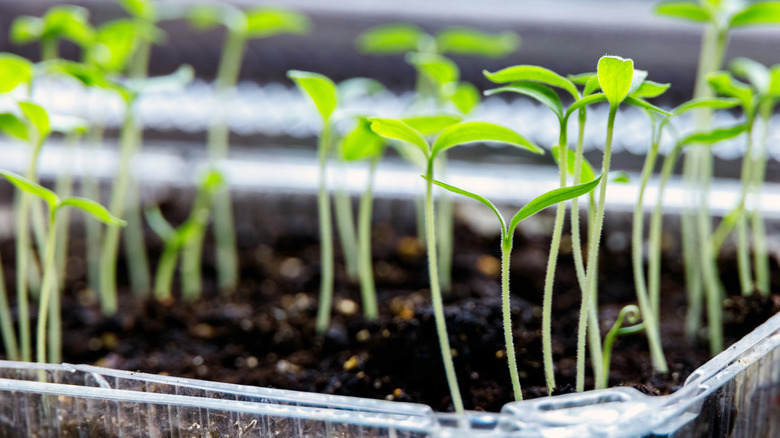
To start your eggplants indoors, just plant the seeds about ¼ inch deep in a container with good drainage and cover it with plastic wrap. Eggplants germinate at around 70 degrees Fahrenheit, so you might need a heat mat depending on the temperature of your home. If you do have a mat, crank it up to 80 degrees Fahrenheit. Light is also extremely important for eggplants. Place your container on a south-facing window that gets direct sunlight for at least 10 hours per day. If that's not possible, it might be time to invest in some lamps.
As for watering, you need to check the soil frequently to make sure it's moist and use a gentle method like misting. Start off by watering every 24 hours, but don't soak the soil. You can take the plastic wrap off once the seedling starts to poke out. If needed, start thinning out the plants once you see a lot of oval-shaped leaves, which usually appear about five weeks or so after planting.
The plants will be ready to move outdoors once they're over five inches tall and they've been hardened in advance to get them used to the change in temperature. It's safest to wait until at least two weeks after the last frost. Hopefully, it won't be too long before you're turning your hard work into a delicious baked eggplant parmesan or plant-based meatballs. It might take a while to get there, but it will be worth it.