

How Much The McDonald's Filet-O-Fish Cost When It Hit The Menu In 1965
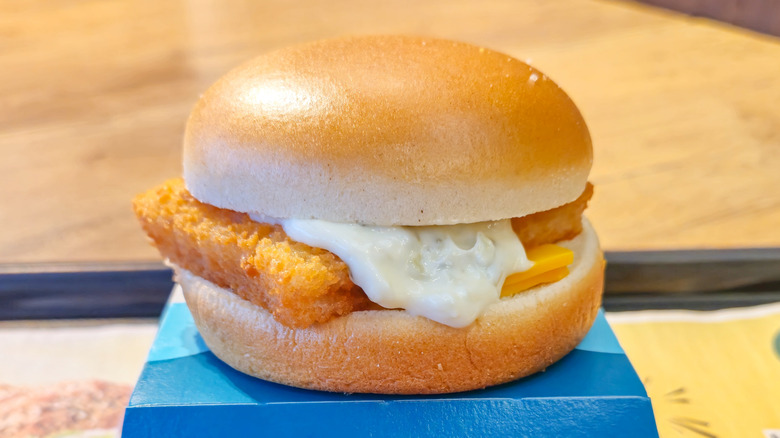
The price of just about everything seems to be on the rise these days, and even that most affordable luxury, a fast food meal, is not free from this upward creep. Some chains that we have relied on for years as an easy, inexpensive way to grab an on-the-go meal are now dishing out deeply overpriced fast food. But to really put all this change into perspective, it is helpful to look at the past. In this case, we are examining the most iconic fast food fish sandwich, McDonald's famous Filet-O-Fish, which made its nationwide debut all the way back in 1965 for the low price of just $0.29.
Looking at that number may be a bit startling for the modern fast food customer. There isn't much that you can buy these days for a quarter and a nickel, and certainly not anything on the McDonald's menu. The current price of a Filet-O-Fish, for reference, is about $5.59, depending on your location. But, of course, this sandwich was introduced over 60 years ago, and the U.S. dollar had a very different buying power back then.
Unfortunately, however, the issue is not just one of inflation. Adjusted to modern value, that $0.29 in 1965 would be worth about $3 today — or roughly 54% of the modern cost of the sandwich. While it might be tempting to target ingredient changes as the source of the price hike, the original protein in this McDonald's fish sandwich was halibut, a more expensive choice than the modern pollock. So, what is behind this steep price hike?
The rising cost of the Filet-O-Fish sandwich over time

In 2024, McDonald's issued a statement attempting to discredit detractors and defend itself against social media allegations of increasing its prices well beyond rates of inflation. Looking at the numbers, however, things don't quite add up. Reaching all the way back to the launch of the Filet-O-Fish is perhaps too long a time to look at how prices should be expected to change over time, but how about 12 years? Looking at the data, there has been a steep climb in McDonald's prices since then.
According to Visual Capitalist, the Filet-O-Fish cost about $3.49 on average in 2014. Adjusted for inflation, that should be about $4.85 in 2026. Of course, the actual price on the menu board is about 15% higher than that. To really compound the idea of why fast food is quickly becoming a luxury for many Americans, we must also include the stagnancy of wages. The minimum wage in 1965 was $1.25 per hour. To put that in relevant McDonald's terms, the least that a person could earn at the time was 4.3 Filet-O-Fish sandwiches per hour.
In 2009, the federal minimum wage had risen to $7.25 per hour, still enough to buy more than two McDonald's fish sandwiches with an hour's work. That minimum wage, of course, hasn't budged since then, meaning an hour of minimum wage work in 2026 only buys about 1.3 Filet-O-Fish sandwiches today. McDonald's can assert that these price hikes are all down to inflation and increased labor costs, but after posting record profits of over $15 billion in 2025, the claim comes off a bit fishy, to say the least.