

Trust Us, You Should Never Make Scrambled Eggs In Advance
We may receive a commission on purchases made from links.
Cooking can be daunting to those who are just starting out. Some dishes are incredibly complex, while others are very simple. A few dishes straddle the line between both in a deceptive way. Scrambled eggs is one of those dishes. When testing someone's culinary skills, chef Wolfgang Puck would task candidates with making scrambled eggs. Since even trained chefs often mess them up, he considered it a fundamental skill that needs to be proven. One of the things you need to know about mastering scrambled eggs is that you cannot make them in advance. Don't even try it.
Tasting Table went to an expert to ask about the finer points of scrambled-egg making. We talked to Lisa Steele, fifth-generation chicken keeper, host of the "Welcome to My Farm" American Public Television series, and cookbook author of "In Season: 125+ Sweet and Savory Recipes Celebrating Simple, Fresh Ingredients," out in May 2026. She told us exactly why making eggs in advance is a bad idea.
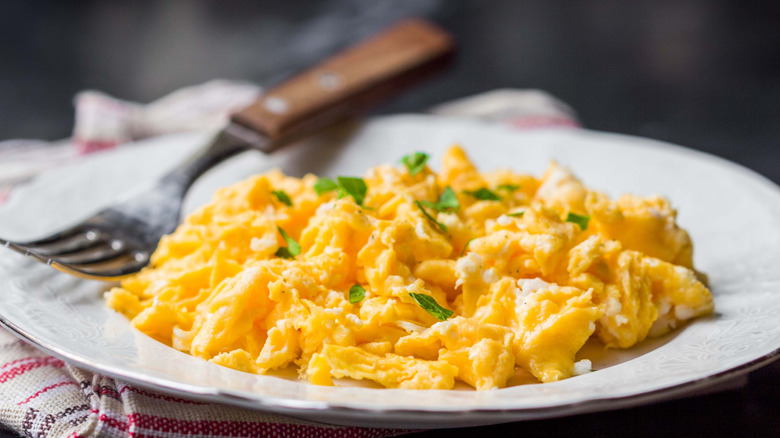
"Eggs cook so quickly, you aren't going to save any time by cooking them in large batches and then heating some up each morning," she says. "In the time it would take to reheat them, you could just cook a fresh batch." While it's true they're fast to make, they're even quicker than many people think. "Most people tend to overcook scrambled eggs — they should be removed from the heat when they still look wet and glossy — and they'll finish setting up on the plate." Try this soft and fluffy scrambled egg recipe and see for yourself.
Cracking the mystery of reheating eggs
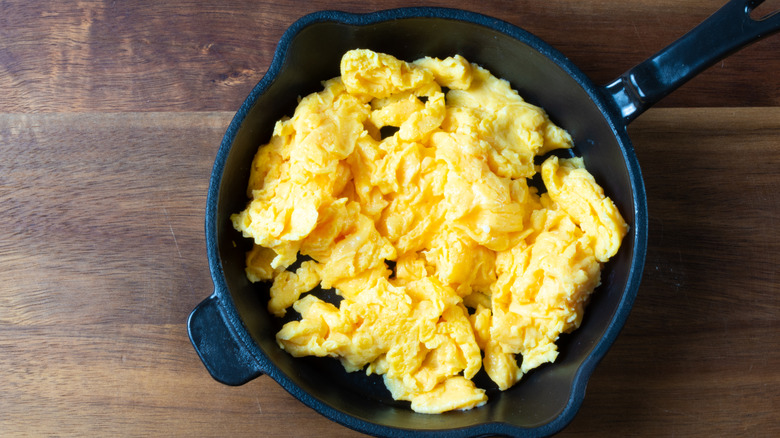
Texture is another big reason to scramble eggs fresh to order. "Reheating scrambled eggs is just going to leave you with overcooked, rubbery eggs," Steele tells us. It's true, this is one of those foods that just don't reheat well. With something that seems so easy to make, it's a big letdown if it ends up overcooked.
The science of what happens when you cook an egg can get a little complicated. The important part is that eggs are made of protein and water. When you cook them, the protein chains coagulate and squeeze out that water. When they're cooked just enough, the egg is perfect. When they are overcooked, those protein chains keep squeezing the moisture out, creating a dryer and more rubbery final product. The difference between a perfect egg and an overcooked egg can be a matter of seconds.
Keep in mind what Steele said about how easy it is to overcook eggs. It's nearly impossible to preserve the texture you want, but there are some tricks you could try. "If you absolutely have to reheat them, I would consider gently steaming them in a colander set over simmering water, or adding some type of liquid to them — either milk or cream, some cheese — something to disguise the rubbery texture," Steele says. If you want to avoid this hassle altogether, we have some tips for the fluffiest scrambled eggs you'll want to eat right away, no reheating necessary.