

Why You Should Always Check The Ingredients Before Buying Chocolate

Just because chocolate is a treat doesn't mean you shouldn't be paying attention to what you're putting in your body. Like any grocery store product these days, chocolate varies widely in how natural or processed it is — and you can't always tell by the branding. This isn't just a concern about health, but also quality. Plenty of chocolate ingredients and additives that are perfectly safe can still impact the flavor and texture in different ways. So, we spoke to Nicole Patel, the founder of Delysia Chocolatier, for her expert opinion on picking out chocolate. According to her, the number one thing a shopper should do is learn the basics about how to read the ingredient list.
"Chocolate labels tell you a lot about quality," Patel notes. "Ingredients are listed in descending order by weight, so the first few ingredients reveal what the chocolate is actually made of." Indeed, high-quality chocolate will always lead with the natural cacao ingredients like cocoa mass, sometimes called cocoa liquor, along with cocoa butter, which will show you that the bar doesn't rely too heavily on additives. "A shorter ingredient list usually indicates a more traditional chocolate made with fewer additives," she explains. "Many excellent dark chocolates contain just cocoa mass, cocoa butter, and sugar." However, Patel admits that shorter ingredient lists don't always mean high quality, and there are natural additions like vanilla or lecithin that can improve the texture and taste of your chocolate.
Ingredient lists can reveal additives and fillers that affect the quality of your chocolate
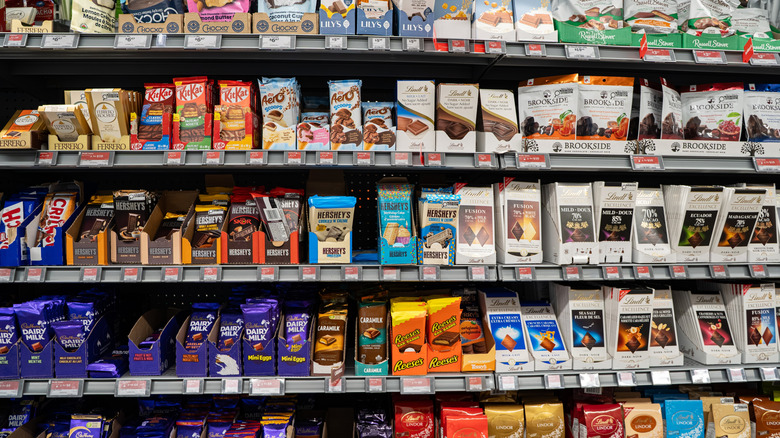
Patel tells us that for her and chocolate, "the goal is simplicity and purpose, not unnecessary fillers." So, while you ought not be afraid of a few extra ingredients, you should be aware of how additives will change the taste and mouthfeel of your chocolate. According to the expert, many don't realize that the U.S. Food & Drug Administration (FDA) regulations mean chocolate only has to contain a minimum of 10% chocolate liquor.
"Many mass-produced products fall short, using additives, waxes like paraffin, and fillers instead," Patel explains. "These fillers, waxes, and oils used in lower-quality chocolates create a bendable, dough-like texture instead of a smooth, clean melt." In contrast high-quality chocolate that relies on simple, natural ingredients will melt better in your mouth, and deliver more rich, complex flavors. Texture especially is more important than you might think.
"Mouthfeel is important because our brains associate smooth, creamy textures with richness, freshness, and quality," Patel notes. When chocolate melts evenly, it's both satisfying and triggers your brain's pleasure responses. In contrast, Patel adds that lower-quality chocolate can be waxy or gritty, which prevents even melting. "Because it doesn't dissolve cleanly or release flavor well, the brain registers it as less rich and less rewarding," she includes, "leaving people feeling like something is missing, even if the chocolate is sweet." Essentially, mouthfeel is one of the biggest differences that makes chocolate feel either luxurious or cheap.
There are plenty of red flags to be on lookout for with chocolate ingredients
Patel has made it clear just how important minimal additives and fillers are to chocolate quality, but what specifically should you be looking for? First off, she advises you to look for high cocoa content (with 60% or more being base for dark chocolate) and ideally bars with only cocoa mass, cocoa butter, and a bit of sugar. "Avoid products with added oils, artificial flavors, or excessive sweeteners," she says. "If there are unpronounceable words in the ingredients list, it is poorer quality chocolate."
Patel also offers a list of specific red flags for chocolate ingredients. Be aware of any bar where vegetable oils or palm oil are the primary fat rather than cocoa butter, or bars where chocolate ingredients are listed as "chocolatey" or "coating" instead of real chocolate. In addition to that, sugar should never be listed as the first ingredient. Lastly, Patel adds that there are visual clues beyond the ingredient list that should also tip you off, although obviously you'll have purchased the chocolate by then.
"Quality chocolate typically has a glossy finish, a clean snap, and melts smoothly without feeling waxy or greasy," she explains. While it can be frustrating to have to deal with so much low-quality chocolate competing for your attention, there are still plenty of great chocolate brands that are widely available. Armed with Patel's simple-to-follow advice, there is no need to be fooled again.