

How The Simplest Addition Makes Pan-Cooked Chicken 10X Juicier
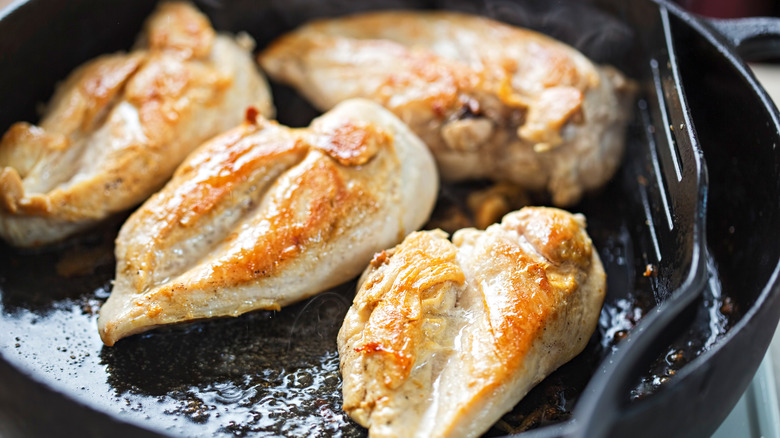
Most home cooks have at least one simple chicken dish in their weekly menu rotation, as it's a fairly affordable protein that seamlessly fits into countless recipes. It does, however, have a reputation of being dry because it's a very lean protein without a lot of fat, meaning it quickly loses moisture as it cooks, particularly in the pan, where moisture is evaporating rapidly. Luckily, this issue can be fixed with a little bit of water and a lid.
Retaining moisture is the key objective of cooking chicken, and adding some additional water to the pan helps us get a head start. First, sear the chicken on both sides as you normally would, and once you're happy with the color of the sear, pour about a cup of water into the pan. The exact amount will depend on the thickness of your chicken — you don't want it to be covered or swimming around, but you do want to deglaze the pan and trap the steam. Cover the pan with a lid and leave it on the stove for a few more minutes before removing it from the heat and letting it rest for 10 to 15 minutes. Allowing the chicken to steam yields the juiciest stovetop results, so it's very important that you keep the lid on the pan through this whole process, not allowing any steam to escape.
Pan-cooked chicken doesn't have to be dry
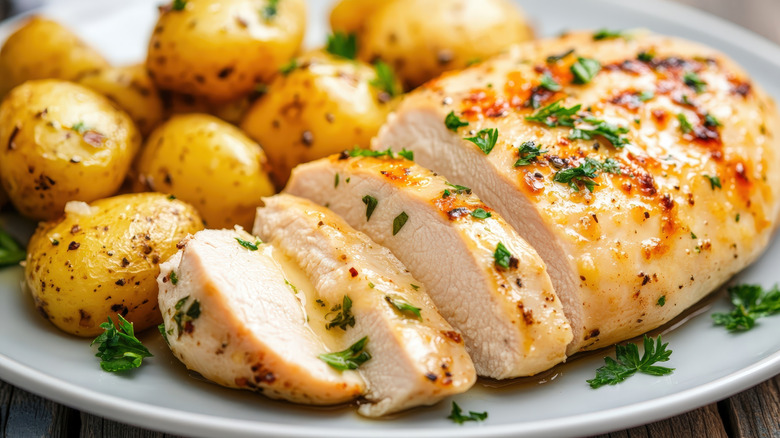
Adding water is the first step to ensuring your chicken turns out moist, but you can take some additional precautions as well. For example, being mindful of the cooking temperature — the higher the temperature, the drier the chicken. When pan-cooking poultry, opting for a medium-range temp is the best choice as it still gives you that nice sear but also cooks the bird more slowly. Our one-pan lemon basil chicken recipe is a good example of medium heat cooking. If you're worried that lowering the temperature will lead to undercooked meat, a thermometer is a helpful tool until you get the timings just right for your preferred cut of chicken. The internal temperature at the thickest part of the meat should be a minimum of 165 degrees Fahrenheit to be considered safe.
Before it even hits the pan, chicken can be brined or marinated to help with the texture. Brining requires you to soak the chicken in salted water for about an hour prior to cooking it, a process that significantly changes its texture from harsh and dry to moist and tender when cooked. You can soak separate cuts of chicken or brine a whole chicken for the juiciest, most flavorful results. Marinades, though primarily flavor-focused, can also help tenderize the meat when they include acidic ingredients, such as lemon juice, vinegar, or yogurt, for a milder option.