

This Is What You Should Do With Potatoes That Have Sprouted
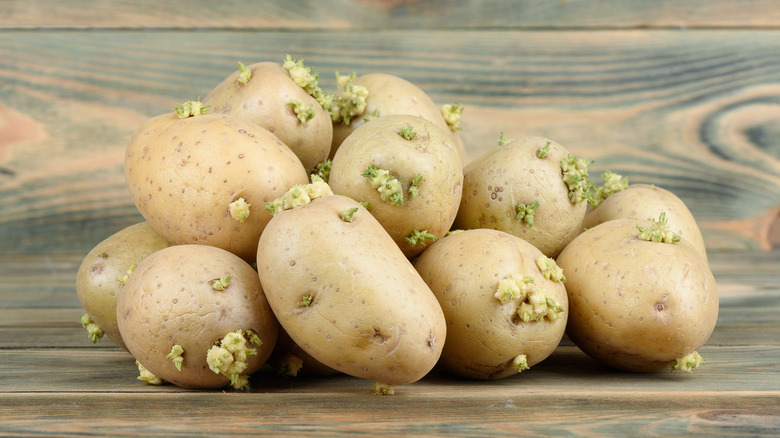
You say "sprouted potato," we say "slam that bad boy back underground." With some preparation, sprouted potatoes can still be safe to eat — but, it's safer to replant them than to cut off the sprouts and cook with them, especially after those sprouts have reached or surpassed ½-inch in length. Potato sprouts contain compounds (specifically glycoalkaloids like solanine and chaconine), which stick in the potatoes' skin and become toxic in the body when consumed in large quantities, leading to an upset stomach or indigestion. However, it's worth noting that potatoes already contain glycoalkaloids — the compound is just more concentrated in the sprouts. To that end, the unsightly sprouts jutting from your spud are powerful organic plant material filled with energy for taking another trip in the soil.
The reason why potatoes sprout in your pantry or long-storage in the first place is that the tuber thinks it's underground, and that springtime has arrived. The dark, moist, warm conditions spuds are accustomed to during their subterranean tenure prompt the formation of those sprouts, which are a crucial fixture in the natural propagation process. To help stave off sprouting from the jump, store your potatoes in a cool, dark space with adequate breathing room, like a milk crate in a walk-in pantry. However, once the proverbial "worm has turned," replanting them is more eco-friendly than throwing them away — and when sprouts emerge, the spuds are already well into the regrowth process.
Return that spud to the soil from whence it came
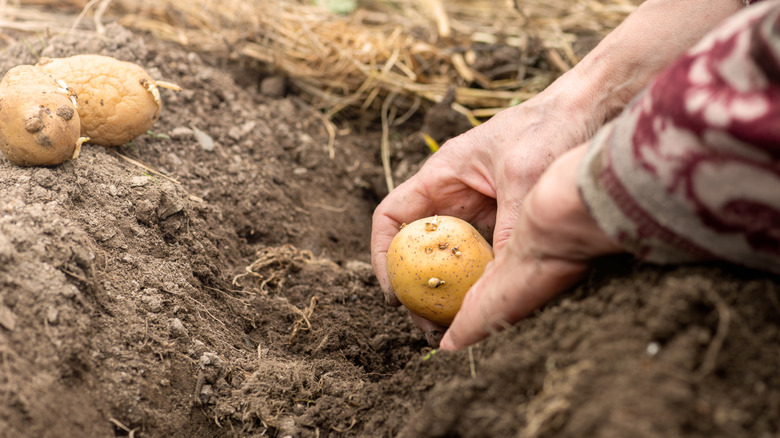
Happily, dozens of potato types are famously among the hardiest veggies, easiest to grow for beginner vegetable gardeners (no green thumb? no problem). To do it, simply bury that spirited spud 6 to 8 inches deep (sprouts facing upward) and 12 to 16 inches apart from any other sprouted spuds you might be replanting. For maximum yield, those potatoes prefer full sun or partial shade.
With a little patience, after another full growing season (roughly 60 to 100 days post-planting), that one sprouted spud can generate several potato plants and an entirely new crop of full-sized potatoes ready for harvesting. Just one pound of replanted sprouted spuds can generate 15 to 20 pounds of large potatoes — a wicked impressive yield, and a relatively low-effort way to reduce food waste. Pro tip: To yield a bigger harvest from a single potato, cut the spud up into multiple pieces, with each chunk having a sprout growing from it, then plant the chunks as normal, sprout-side-up.
Don't have a dedicated garden bed? Sprouted potatoes also make fabulous candidates for container gardening; in a container of well-draining soil, plant 'em 3 inches deep. Alternatively, a sprouted potato can be plunged directly into average soil (not too rich or moist, but not gravel), no tilled garden necessary. This sustainable, seasonal tip works best during the summer and early fall months, but potatoes can still thrive if planted in late spring or early winter, barring frost.