

Don't Buy Olive Oil In This Type Of Bottle — Unless You Want It To Spoil Faster
When shopping at the grocery store for a good cooking oil, it can seem like there are a hundred different olive oils to choose from. And it's true — today, there are countless varieties of the flavorful oil, ranging from organic to extra virgin to biodynamic varieties. But besides the olive oil itself, there's also the consideration of the container. While it may seem like deciding between a glass, plastic, or tin holding vessel is merely a matter of personal preference and aesthetics, it's not. And actually, you should avoid buying olive oil in a plastic bottle – regardless of the kind or brand — since it's known to promote oxidation of the oil, making it spoil faster.
While unopened olive oil can last for a year or two, once it's opened, it's best practice to use it within six months (though some people recommend consuming it within three months after opening for best quality). This is because the fats and antioxidants in olive oil are highly susceptible to oxidation, or degradation as a result of exposure to factors like air and light. To limit this occurrence, which can make olive oil spoil and develop rancid flavors, it's important to have a durable, dark container to store olive oil, like heavy-duty green glass. Tin also helps protect the oil from light exposure and air. On the other hand, plastic olive oil jars are comparatively porous and prone to absorbing oxygen and promoting quicker spoilage.
How to tell if your olive oil has gone rancid
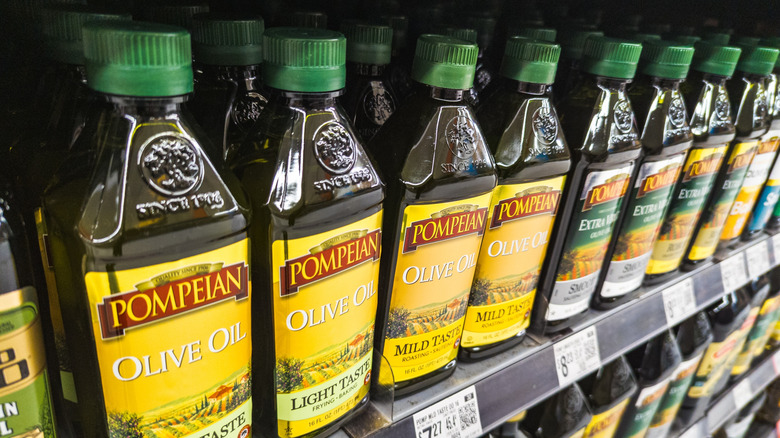
If you're accustomed to buying olive oil in plastic containers, it's a good time to make a change. Not only is plastic less effective than other materials like glass in preventing oxidation, but it can also contain harmful chemicals like BPA. Further, reducing plastic waste in the kitchen and reusing or recycling your olive oil containers are good steps towards more sustainable choices. Either way, olive oil can be susceptible to spoilage.
Preventing factors that accelerate spoilage and assessing if olive oil is still good, or spotting signs it's gone bad, are relatively easy. You can taste or smell the olive oil, looking out for any "cardboard," flat, or bitter notes. Olive oil that's past its prime can also look cloudy or have an overly greasy mouthfeel.
To preserve and highlight the complex sensory qualities of a good olive oil, including grassy, fruity, and peppery notes, store your olive oil in a cool, dry place in a glass or tin container away from sunlight or heat. Since light can also cause olive oil to oxidize, the color of your olive oil bottle matters more than you may think, too. Avoid buying or transferring olive oil to clear containers, since this can increase its exposure and degradation.