

Why There's Simply No Need For A Food Processor Anymore
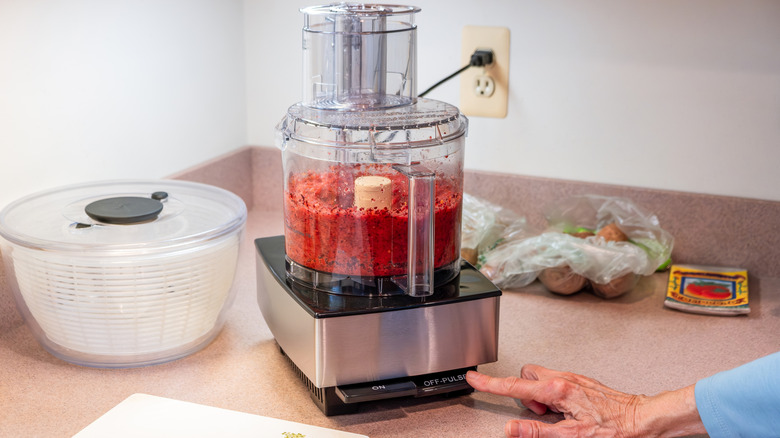
I've had a food processor in my kitchen ever since I first moved out on my own at 19. I've owned a surprisingly varied array of these gadgets over the years, from small, cheap, one-cup appliances to a heavy-duty, 1980s 14-cup KitchenAid food processor inherited from my grandmother. She bought it in France, and the fact that it still works today is another stunning example of the incredible craftsmanship of vintage kitchen appliances.
Yet, despite owning so many different types of food processors, it's actually the appliance I use the least. I find it cumbersome to take out of the cabinet, and it's a pain to clean all the small parts when finished. In fact, I often start to get one out to use it and then realize it's gotten so dusty from being in storage that I'd have to clean it before I even begin, which is enough to deter me. It typically ends up being faster just to chop and dice by hand than go through all of that hassle.
Food processors may still be a handy gadget for anyone who hates chopping, wants to avoid getting the smell of garlic or onions on their hands, or regularly meal preps or puts together large quantities of food. It's also useful for those who suffer from arthritis, carpal tunnel, or any other condition that make slicing and dicing difficult or painful. Obviously, it's still a vital appliance for commercial kitchens, but for many casual home chefs, a knife and cutting board are all that's needed. A food processor isn't really necessary, and it just ends up taking up valuable counter or cabinet space.
What to use instead of a food processor
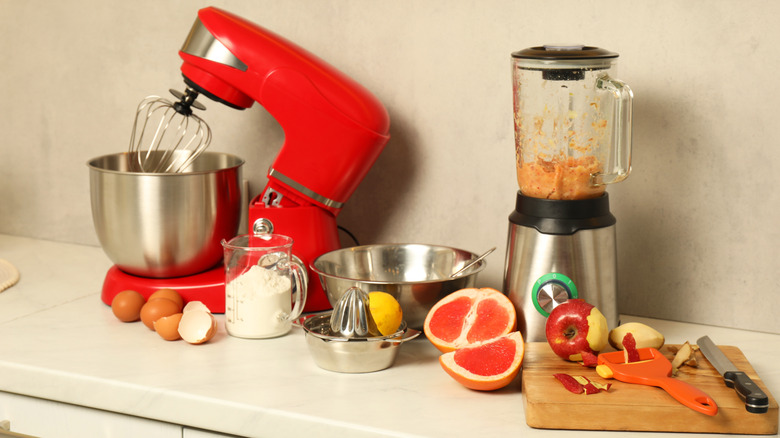
If you don't have a food processor and want to make soup, sauce, nut butter, or any other recipe that recommends the use of this appliance, you have options. For instance, I've found that my trusty KitchenAid stand mixer and my humble, 10-speed Hamilton Beach blender are usually enough. I make around 16 dozen cookies each holiday season, as well as pies, bread, cake, and large batches of soups throughout the year using these two appliances alone, leaving my food processors to gather dust in my basement.
Though there are key differences between a food processor and blender, I've found that my blender is perfect for effortlessly smooth salsa and refried beans, and my stand mixer can cut butter into pastry dough just fine. If I need to grate large amounts of cheese or slice and dice a pile of veggies or potatoes, I may grab my $20 Fullstar Mandolin Slicer instead. It fits in my kitchen drawer and is dishwasher safe, making it much more convenient (in my opinion) than a food processor.
If these aren't tasks you need to tackle in the kitchen, a food processor may be even less important. Ultimately, the best way to decide if you really need a certain kitchen appliance is to consider a few different factors: If you're willing to invest in a quality product that will last, whether it will add value to life or make your meal prep routine easier, if it offers multipurpose benefits that make it more cost-effective, and if you know where you'll store it so it's easily accessible when needed.