

Why Nonalcoholic Beer Is Almost Never Served On Tap
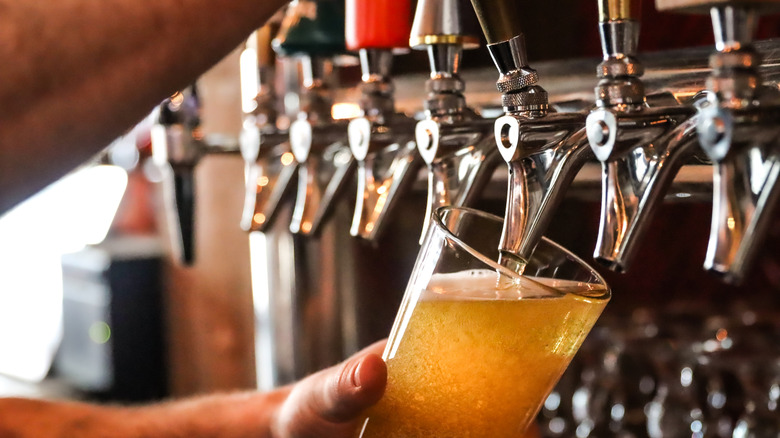
Healthier choices and delicious beer aren't as mutually exclusive as they once were. A 2025 Gallup poll shows that a new high of 53% of Americans now believe that even moderate drinking is harmful to their health. This represents a 25% increase in concern over just seven years, sparking a major shift in the alcoholic beverage industry. With modern attitudes toward consumption of alcohol changing drastically, breweries have unlocked brewing methods to create nonalcoholic brews to keep our whistles wet. In fact, many major beer brands have shifted gears, offering nonalcoholic versions of their brews. But with all these nonalcoholic beers in the market, why are they hardly ever available on tap?
While cans and bottles of alcohol-free beer are certainly within arms-reach, these "better for me" options are still scarce on draught lines in the United States for a few reasons. Among concerns that a slower-moving nonalcoholic beer would occupy a beer line that would otherwise sell more alcoholic beer, there are additional logistical, quality, and safety considerations around alcohol-free products in a keg format.
Alcohol isn't just in beer for sips and giggles. It's actually one of the main preservatives protecting the beer from spoilage or proliferation of potentially harmful foodborne pathogens. You know those high octane IPAs with hops galore? They were created for shipping in the 1800's because its higher alcohol, along with increased antibacterial hop acids, helped to preserve the beer over long ocean journeys.
Shelf-stable and keg-stable are different
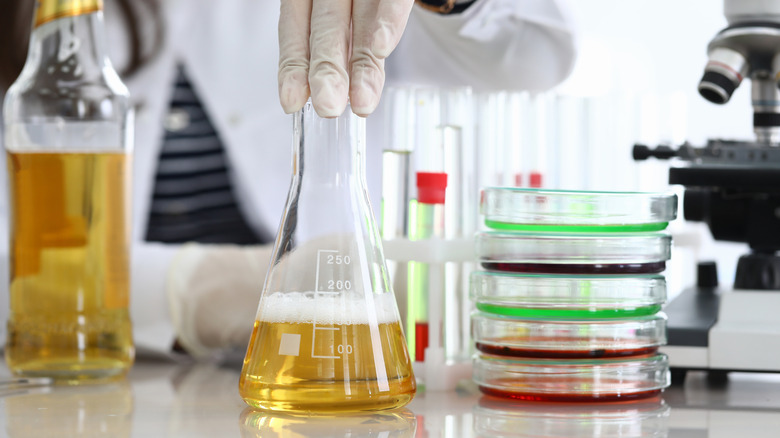
Breweries can better control the sanitization, pasteurization, and packaging of nonalcoholic beers by using cans and bottles. Kegs can't fit into the tunnel pasteurizer brewers might use to kill off stowaway bacteria in packaged beer. The sanitization effots don't stop when the beer leaves the brewery; those storing and serving nonalcoholic beers have an important role in keeping it fresh and safe. If one can is contaminated, it doesn't necessarily mean the others will be too. In a keg, however, bacteria can make its way from the tap, down the draught line, and into the keg, spoiling gallons of beer quickly.
Where alcohol content helps to make beer more stable, nonalcoholic beer is far more susceptible to growing bacteria. A study published in the Journal of Food Protection shows that the presence of alcohol is a major "antimicrobial hurdle," protecting beer from proliferation of E. coli and Salmonella Typhimurium. The study illustrated that in a nonalcoholic beer stored at 57.2 degrees Fahrenheit, these pathogens multiplied. As ethanol was introduced to the beer to raise its ABV (alcohol by volume) to 2.7% and 5% ABV, these bacteria cells began to deactivate.
This doesn't mean that it's impossible to store and serve NA beers on tap, however. Bars should regularly sanitize their draught lines by running caustic cleaner through them. Storing beer in a chiller rather than at ambient temperatures can also help to prevent bacteria growth. Full kegs getting warm behind the bar — that's a red flag.