

Neither Hardwood Nor LVP: Mike Holmes Names The Easiest, Most Durable Kitchen Floor Material

If you're in the midst of making decisions about a kitchen renovation, you're probably wondering if there's a flooring option that makes the most sense for this oft-traveled, food-filled room. Well, according to professional contractor and HGTV's Mike Holmes, there certainly is. While it may be trendy to install hardwood floors or LVP (luxury vinyl plank) in your kitchen, tile is by far the most durable option, and there are several reasons for this.
First of all, food gets everywhere in the kitchen, and tile is much easier to clean than hardwood, which may have nooks, crannies, and cracks that trap food and become very difficult to truly sanitize. But according to Mike Holmes, the thing you should really focus on when it comes to kitchen flooring is moisture. Kitchens are damp — water runs from sinks, steam flies out of pots on the stove, items spill — the moisture content in the air is higher in your kitchen than almost any other room of the house, perhaps with the exception of the bathroom.
The name of the game when it comes to kitchen flooring is choosing a material that can handle the moisture in your kitchen without warping or cracking. Both LVP and hardwood are too porous and susceptible to moisture, which could damage the flooring itself or lead to mold and other problems. In a post on his website, Make It Right, Holmes explains, "Ceramic and porcelain tiles are my recommendation for kitchen floors. They are durable, attractive, easy to clean, and available in a large variety of patterns and finishes."
Which tiles are the absolute best for kitchen floors?
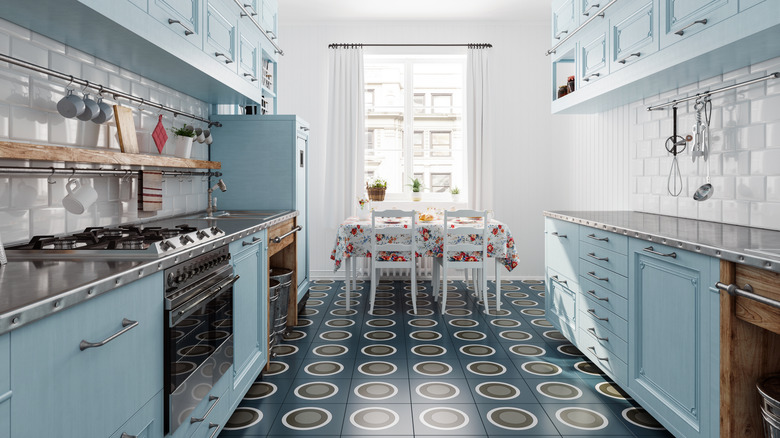
While Mike Holmes believes that ceramic and porcelain tile are great flooring options, there are some caveats for each material to consider. "With proper installation, ceramic tiles are the ideal choice for a kitchen that has access to the outdoors. This is because tile can handle the moisture and dirt that is bound to come in," he writes. If your kitchen connects to your deck or if it's located near your front or back door, ceramic may be your best bet.
Holmes adds that porcelain is even harder and more waterproof than ceramic tile, and cracks aren't as visible because the tile is colored all the way through, not just painted on the top. However, porcelain tiles aren't always a realistic option because they tend to be more difficult to install and are generally more expensive than ceramic tile.
Before you go laying tile in your kitchen yourself, though, you should know that installing tile floors is among the kitchen projects Mike Holmes says you should never DIY. In fact, he has a word of warning before tackling any major kitchen renovation; prior to doing anything to modify your kitchen, make sure your contractor (whom you've definitely hired because you would never try to install that tile yourself!) is on top of any permit requirements.