

The One Container You Should Never Use For Raw Meat, According To A Food Scientist
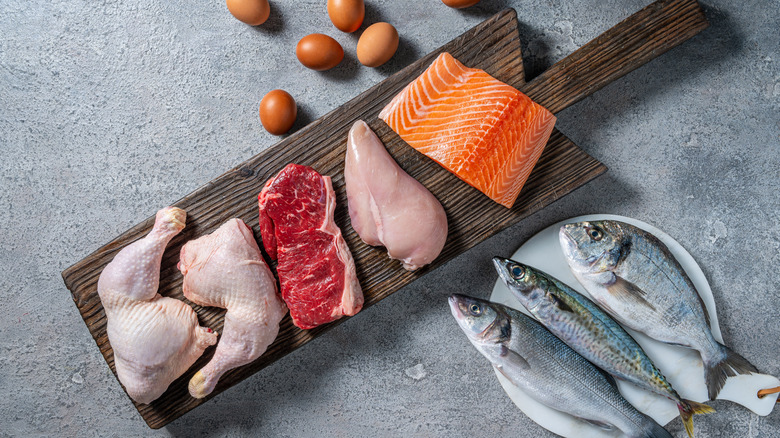
Sometimes, you only needed half the package of ground beef for dinner. You can't just throw the open package back in the fridge, because the meat will oxidize, turning purple or brown, and it might leak, so it makes sense to reach for a plastic food storage container — but our expert says you should seriously reconsider that choice. According to Kantha Shelke, an author, certified food scientist, and senior lecturer on food safety regulations at Johns Hopkins University, "plastic is not inherently dangerous, but it is inherently porous, and that distinction matters enormously in food safety."
You know how when you store something especially pungent or pigmented, it tends to sort of ... haunt your Tupperware for evermore? You can try all the TikTok hacks in the world, but that smell and/or stain is evidence of biological material clinging to the plastic. Letting it sit with baking soda might help remove the old smell, but Shelke points to research which has shown that "plastic surfaces, especially softer grades, can harbor biofilms more readily than glass or stainless steel, whose non-porous surfaces are far easier to sanitize completely."
It only gets worse as the plastic starts to wear down over many uses, creating texture we can't see but bacteria can find and colonize. "Scratches in plastic create microscopic grooves that trap proteins, fats, and bacterial cells that ordinary washing simply cannot reach," Shelke explains. Even after a thorough hand-wash, she says, "pathogens like Salmonella and E. coli can persist in those crevices." The FDA, she adds, "recommends retiring any food contact surface that is heavily scratched or scored, because at that point sanitation becomes functionally impossible."
A broken seal is a red flag
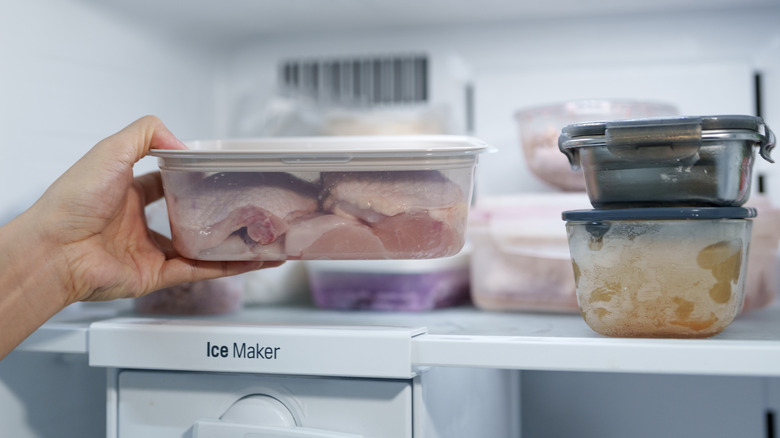
Besides resisting surface sanitization, Shelke notes that plastic containers can also fail structurally over time. "Plastic containers, especially older or lower-grade ones, are more likely to warp, crack, or develop ill-fitting lids over time and especially if run through the dish washer with high heat settings, compromising the seal that stands between raw meat juices and other contents of the refrigerator," she says. A lid that no longer seals tightly or a container that has warped slightly can undermine the very barrier meant to separate raw meat from the rest of the refrigerator. And because raw meat carries naturally occurring bacteria, even a small spill can turn a neatly organized refrigerator into a contamination zone.
Container material is only part of the equation, as Shelke says, "whatever container is chosen, ensure it is leak-proof." Shelke explains that the USDA "explicitly advises storing raw meat on the lowest refrigerator shelf in a container that catches any drips to prevent cross-contamination of ready-to-eat foods." She encourages home cooks to "think of the refrigerator as a hierarchical storage area with raw proteins always at the bottom, and containment is everything."
In professional kitchens, meat must always be stored — by law in most places — on the bottom shelves, with other items, like raw vegetables and prepped or leftover foods above it. But in home refrigerators, the vegetable crisper is usually at the bottom, meaning it's where the drips will drop, and bacteria love raw vegetables. Cooking food kills a lot of bacterial villains, meaning that ready-to-eat and raw foods like lettuce or cucumbers are more vulnerable to bacteria that stays alive when we're eating it, underscoring the importance of a sturdy container for stored raw meat.
Bottom shelf behavior
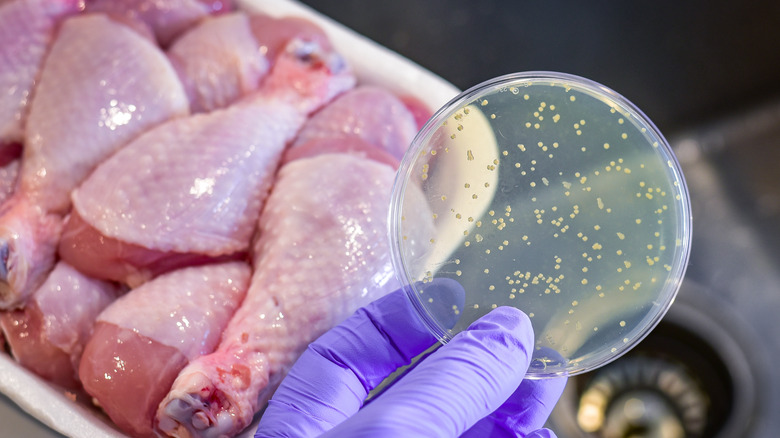
By contrast, she explains, "Glass containers with locking lids maintain their integrity far longer, making them a more reliable barrier against the kind of drip contamination that the CDC identifies as a leading cause of cross-contamination in home kitchens." Her warning is stark: "A container that once held raw chicken and now has a hairline crack is not a storage vessel, it is a liability." In the ambition of keeping your food safe and tasting good, Shelke emphasizes, "the container is the first line of defense!"
Shelke also shared her personal food storage credo: "As a food scientist with a background in food safety, I live by two rules: dating everything and not trusting any meat past its prime." She notes that "the USDA is clear that raw beef, pork, and lamb should be used within three to five days of refrigeration, and ground meat within one to two days, no exceptions." Dating meat with a simple label or painter's tape takes a lot of guesswork out of the situation, preventing the problems that can arise from relying on "it smells fine." If you have a hazy idea of when you might use the rest of that package of ground beef, go ahead and freeze it, which will give you a year or two to figure out how to use it.
Finally, Shelke stresses temperature control. "My second tip is to treat the refrigerator temperature as non-negotiable. It must stay at or below 40 degrees Fahrenheit, because even a few degrees warmer creates conditions where pathogens can double in number in a very short time." And don't try to rely on the touch test; in her words, "A five-dollar refrigerator thermometer is the cheapest food safety insurance a home cook will ever buy."