

Martha Stewart Says To Replace This Kitchen Item At Least Once A Week

You probably already know that you should replace your dish brushes and sponges regularly or at least sanitize them to remove dangerous bacteria. However, there is another common kitchen item that you probably use every day that could also be harboring bacteria and odors — your kitchen towels and dishcloths. Martha Stewart recommends replacing these items at least once a week so that you can avoid spreading harmful germs throughout your kitchen.
In a February 2009 advice column in The Philadelphia Inquirer, Stewart says you should "change dishcloths at least once a week," as they are "breeding grounds for bacteria, which thrive in the presence of food particles and in warm, moist environments." Every time you dry your hands with a kitchen towel or use it to dry dishes or wipe the counter, you're potentially spreading germs from one place to another. If you have a dishcloth or towel that you use for washing dishes, you should have a separate one for drying clean dishes and yet another dedicated solely for drying your hands. And you should never use the same cloth or sponge to clean sinks or counters that you would use to dry your hands or clean dishes.
Unfortunately, most don't change their kitchen towels as often as they should. If a dishcloth smells musty or moldy, is stained, or has been used for a week, it's time to throw it in the washing machine and replace it with a clean, dry cloth. Kitchen towels and dishcloths should be washed in hot water and dried in a dryer, if possible, as the heat from the dryer can offer additional sanitizing power.
Kitchen sponges should also be sanitized and replaced regularly
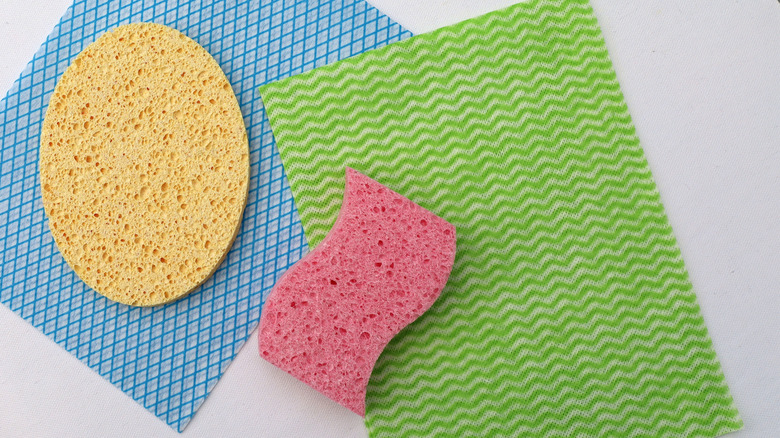
Perhaps unsurprisingly, Stewart also offers similar advice for kitchen sponges, adding that "dishcloths and sponges are equal-opportunity breeding grounds for bacteria," but that "sponges can harbor more bacteria than dishcloths because they're thicker, dry more slowly and have lots of holes that can trap small food particles." This means you need to be even more vigilant about cleaning and sanitizing your kitchen sponges and replacing them regularly. After each use, rinse the sponge out under hot running water and squeeze any excess water out. Store it in a place where it can dry properly between uses.
Additionally, don't leave sponges in sinks, and again, don't use the same sponge to both clean sinks and counters and wash dishes. Every day, or immediately after a sponge is exposed to meat or eggs, sanitize your sponge. Stewart notes that you "can destroy up to 99 percent of the germs on a cellulose sponge by microwaving it, soaking wet on a plate, for one minute on high or running it through the dishwasher on the hottest setting." Remember that sponges should be replaced after two or three uses, if they have funky odors you can't get rid of, or if they are falling apart.