

You've Been Cutting Bell Peppers All Wrong: This Method Makes It 10X Easier
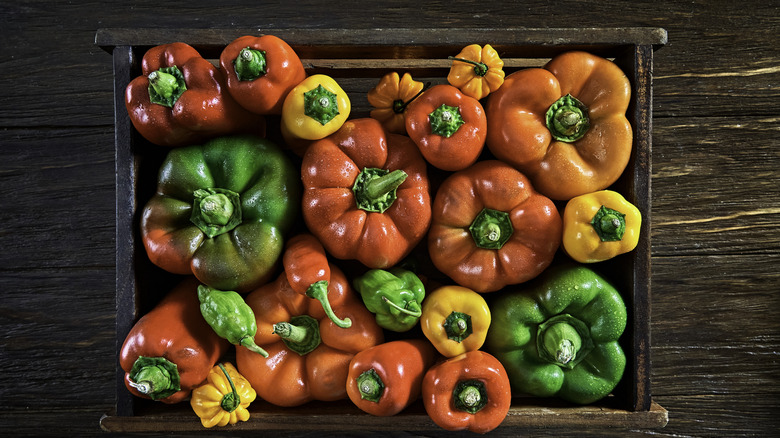
The more time you spend in the kitchen, the more you realize just how important knife skills are. Sure, you can cut most ingredients with any old knife. However, there's usually an easy way and a hard way. Sometimes it's the technique you use. Sometimes it's the knife you use. Sometimes it can even be both. While you may know the tricks for dicing an onion by keeping the root attached or cutting a steak against the grain, there's a simple hack for cutting bell peppers, too. You need to smash it.
Bell peppers are notoriously awkward to cut if you keep them in their natural shape. Start by cutting the top off just below the stem, wasting as little pepper as possible. Keep in mind, you can still use the part you trimmed, just get rid of the stem itself. Then, depending on how deeply you made the cut, you should be able to reach in with your fingers, grab the seed bundle, and twist and pull it clean out. That leaves you with one nearly perfect, empty pepper.
It's this empty pepper that people sometimes struggle with, trying to cut it into rings or even into little arch-shaped strips. Save yourself the trouble by standing it up on the side you just cut off and slicing it in two down the middle. Then take one half and smash it flat before cutting into whatever size strips you need. This is fast, efficient, and also much safer than trying to balance an irregularly shaped pepper for cutting.
Picking your pepper's purpose
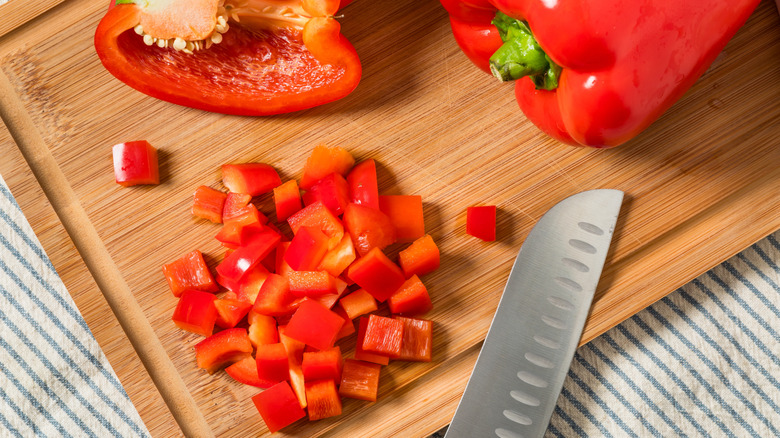
When you have the pepper smashed, flip it over so the interior, fleshy side is up. This is especially helpful if your knife is not the sharpest. The exterior skin is a little waxy and smooth, and it can be hard for your blade to slice into. The interior flesh is typically much easier to cut, but use a sharp knife regardless. A sharp knife is much safer in the kitchen than a dull one, and will ensure even, reliable cuts in your pepper.
If necessary, trim away the white ribs inside the pepper where the seeds were connected. There's nothing wrong with eating them, but they can be a little more bitter than the rest of the pepper. They'll also make your cuts uneven, and the pepper won't look as nice in the dish with the white parts attached.
How you cut the pepper matters for the dish. Long, thin strips hold their shape better and can develop more flavor if you're making a stir-fry or fajita. If you cut the pepper into smaller chunks, it will cook and soften faster. You can prepare your dish faster, but you won't get the same depth of flavor. It all depends on your end goal.
If you want a little more in-depth guide on cutting peppers, check out Tasting Table's three ways to cut them. Once you have your cuts mastered, if you're not sure what to do next, we've got your back with two dozen bell pepper recipes that are well worth your time.