

The Sneaky Kitchen Habit That Can Jam Your Sink Over Time
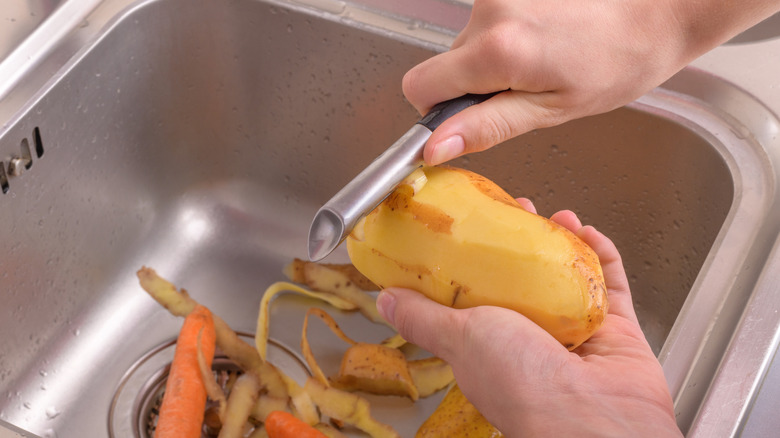
Cleaning as you go is the best way to keep your kitchen in order as you prep, but you need to be careful about how exactly you're doing it. If you're in the habit of peeling vegetables directly over the sink for greater efficiency, or even scraping your cutting board directly into the sink, you could be causing problems for yourself — particularly, if you've been preparing certain vegetables.
Even if your sink is equipped with an efficient garbage disposal unit, fibrous vegetables can wreak havoc with the mechanics. This includes things like artichokes, asparagus, celery, corn husks, and even onion skins. While garbage disposal units (an everyday appliance that's nearly nonexistent abroad) are designed to deal with small amounts of food scraps, the system works by chopping them into small pieces that can be washed away easily with water. The issue with vegetables that contain stringy fibers is that these strands can wrap around the blades of your unit, and over time lead to jamming.
Alternatively, these long fibers may slip through the blades entirely and end up further down in the pipes where they can tangle together in knots and catch other food particles. Either way, you'll have a blocked drain sooner or later. It might pain you to take the extra step, but tossing scraps from your cutting board into the trash or compost bin first will save you from problems later on.
Keeping your sink clean and clear
Keeping your sink clear of blockages starts with what you choose to put into it, and the list of forbidden items might be longer than you think. Beyond fibrous vegetables, garbage disposal units don't deal well with certain food scraps including eggshells, avocado pips, or bones, which won't be cut small enough to wash away cleanly. And it's not just hard foods to avoid, either. Oils, rice, pasta, and even flour can gum up your pipes.
It's inevitable that bits and pieces of food are going to end up in your sink as you wash dishes, which is why you should still be cleaning your garbage disposal unit every week or two. This is a simple task, and can be done with items you probably already have to hand. In fact, you should avoid harsh cleaners for regular cleaning to ensure pipes remain in tip-top shape.
Start by switching the unit off so that you can check for and remove any pieces of food that have become stuck in the blades. Tongs or needle-nose pliers are helpful tools to have here. Once it's clear of debris, there are two popular methods for cleaning the unit, which can be used in succession. The first is to add ice and salt and run the disposal, which will help remove minor debris and residue from the blades. The second is to add baking soda, followed by vinegar, which will help break down grease and clear odors.