

How To Tell If Your Orange Juice Has Gone Bad

It's so nice to have a bottle of cold, zesty juice on hand when the morning calls for it. But orange juice doesn't have the longest shelf life, especially if it's freshly squeezed. The last thing you want when you sit down for your hard-earned breakfast is to gulp down a vinegary, expired OJ. It's important to keep an eye out for any signs it might be on its last legs before you pour that glass.
The first thing to look at is the container. If it's swollen, there's probably gas inside, which means the contents have gone bad. You also want to look at the juice itself, keeping an eye out for any discoloration, mold, cloudiness, or excess sediment, which can indicate bacterial growth. If everything looks okay, take a whiff. If the juice smells sour at all, it's time to toss it. It's best to avoid tasting anything you suspect might be spoiled, but if you do accidentally sip an expired juice, it will probably taste bitter and have an unusually fizzy texture.
The shelf life of orange juice can range dramatically. Fresh pressed orange juice only lasts for two to three days in the refrigerator, and can start deteriorating in less than two hours at room temperature. Store-bought juices have a longer time clock, but this can also tick down quickly depending on a few factors.
The shelf life of orange juice
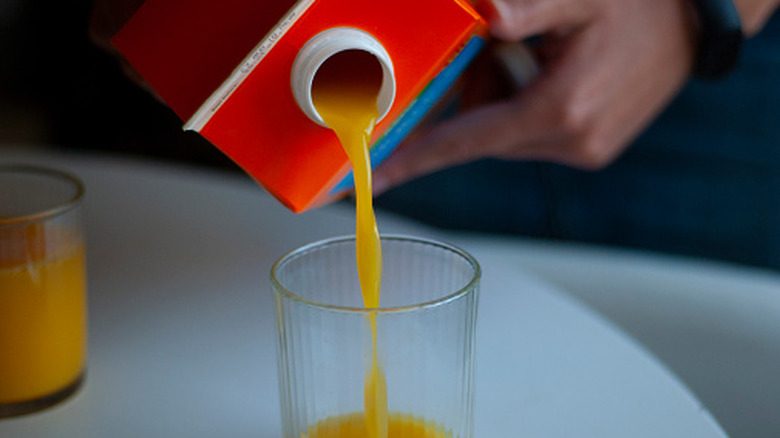
Commercial orange juice is specially packaged to prevent spoilage, so you usually have a week or two to drink the refrigerated kind if the bottle remains unopened (depending on the use-by date). The unrefrigerated, shelf-stable juice you find in the soda aisle lasts even longer — typically up to nine months. Canned juice, which often contains preservatives, is good for about four months. Once the seal is broken on any orange juice, oxidation starts to occur, changing the flavor and consistency. This causes the juice to spoil within about 10 days. Frozen orange juice concentrate, which can be stored for months, has an even shorter shelf life once thawed (about five to seven days).
Again, none of this matters if the use-by date has passed, or if the juice isn't stored correctly. If you're making your own juice, place it in clean, airtight containers and refrigerate it as soon as possible. Store-bought orange juices should also be placed in the fridge after opening. If you have a shelf-stable juice that's still sealed, keep it in a cool, dark place, such as the pantry, until you're ready to drink it. If the bottle was cold when you bought it, keep it that way.