

How Buffets Visually Trick You Into Filling Up On Cheap Food Items
If you are a fan of buffets, you may have wondered how they manage to stay in business. Though many are going out of business, others thrive while offering a wide variety of foods at a price that seems perplexing. Sure, not everyone goes back for thirds or fourths, but some people do. It turns out there's a lot of psychology involved with buffets as these restaurants use crafty tactics designed to make you fill up on cheap items to keep costs low.
Surprisingly, BusinessDojo reports that only 5% to 10% of buffet customers are considered unprofitable. This means they eat enough to exceed the expected cost of food per customer. With such a low percentage, overeating is not a major concern for any buffet. To ensure these figures stay low, a restaurant may offer you a slightly smaller plate than normal so it looks fuller while having less on it. A study in the Journal of Experimental Psychology: Applied showed that buffet customers with large plates took 52% more food, ate 45% more, and then wasted 135% more food than diners with smaller plates. It's a simple trick, but clearly an effective one.
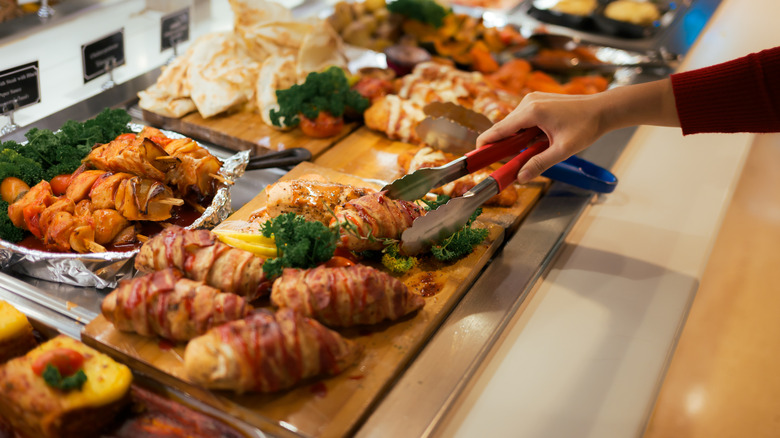
Another sly tactic regarding sizes relates to serving utensils and containers. Smaller spoons will be placed with more expensive items so you take less. Conversely, larger spoons will be provided for lower cost (and better satiating) items so you take more. Some dishes may be elevated and lit in a way that makes them look more inviting. Look for garnishes, too. Those can make a cheaper dish seem more enticing. We also have some other tips to help you navigate your next buffet for the best experience.
All you can eat versus all you will eat
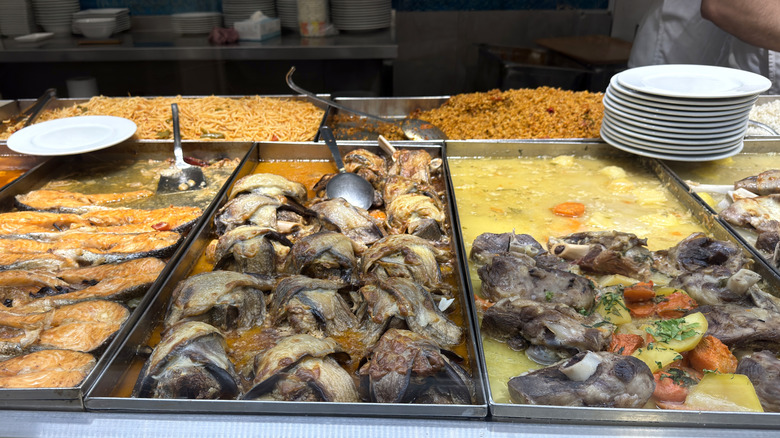
One of the annoying things about buffets is they offer a large selection of lower cost items, and this is another very intentional thing. The greater the selection, the greater the perceived value, even if those items do not offer much actual worth. If you see abundance and have the opportunity to pick multiple things, you feel more satiated. More expensive items, however, are often offered in smaller portion sizes. This encourages you to take less. If a filet of salmon is cut into three pieces, you're more likely to take just one portion instead of all three. Those pricier items will also be surrounded by cheaper vegetable dishes because you are more likely to take from the offerings around the desirable choices.
The colors of plates and even displays can alter how people eat. Bright colors are associated with fresher, tastier food, and customers will tend to eat more items presented with these colors. When food contrasts with the plate color, you become more aware of what you are eating, and may take less. But, even the presence of other diners is itself a visual trick employed by buffets. Being surrounded by other people makes you self-conscious and wary of appearing as though you are eating too much; you might limit yourself because everyone can see you.
There are plenty of other tricks that buffets use to further entice you towards certain dishes and away from others. As simple as they seem, there's a lot of psychology going on behind all-you-can-eat buffets.