

The Coffee Orders Of 10 American Presidents
The U.S. is a nation of coffee lovers. In fact, according to the Spring 2025 National Coffee Data Trends report, around two-thirds of adult Americans drink coffee every single day (via National Coffee Association of U.S.A.). Most prioritize their daily cup of caffeine above all other drinks, including tea, juice, and soda. America has loved coffee for centuries, and it's certainly one of those drinks that unites everyone regardless of their background — even presidents love a cup of coffee every now and again.
Below, we take a deep dive into political history to answer the burning question: How did American presidents take their coffee? It turns out that some loved their coffee with piping hot milk, while others preferred it with cream, and some even went for caffeine-free options. For several early presidents, coffee was a political statement, but by the time the 2000s rolled around, one president was grabbing his from McDonald's. Can you guess who? Keep reading to find out.
George Washington
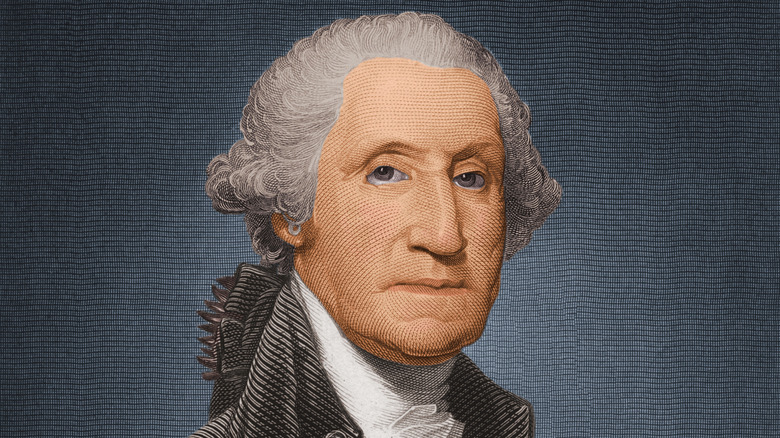
Back in the 1700s, coffee was only just starting to become a staple drink. Before that, most people drank tea. But if you're up on your history, you'll know that opting out of the Brits' favorite drink became a political statement in the 18th century (three words for you: Boston Tea Party). This laid the ground for coffee to become the nation's new favorite drink. So, of course, George Washington, the first president of the United States, drank it.
But how, exactly, did the president take his coffee? Well, we don't know for sure, but according to "The Presidents Cookbook," published in 1968, Martha Washington (George Washington's wife) used to make drip coffee, with a big tablespoon of finely ground specially selected coffee for every cup of water. First thing in the morning, it would be served black with sugar, but for breakfast, it would be served with hot milk.
But it wasn't instant coffee love for Washington. Decades before he took office, he tried it at a ball in Virginia. He said it was relatively flavorless, and compared it to sweet hot water. But over the years, Americans got better at making coffee. By the time he became president, Washington and Martha would frequently serve it to guests. He (or, rather the enslaved people on the estate) even grew coffee beans on the grounds of Mount Vernon.
John Adams
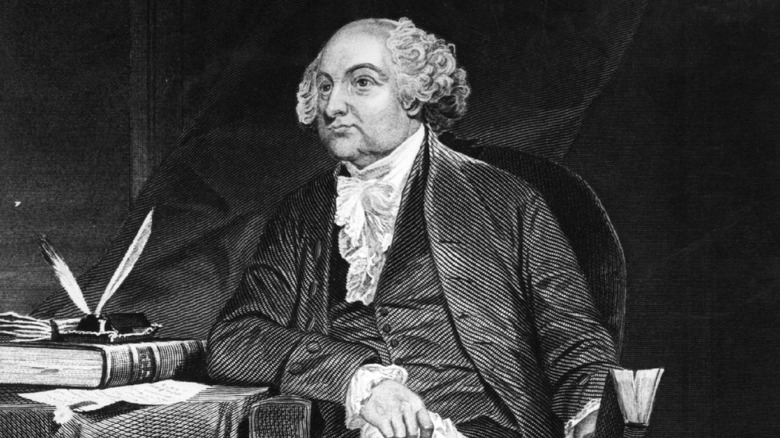
John Adams used to spend a lot of time talking politics and drinking coffee in coffeehouses, which was pretty standard for the male revolutionary politicians of the time. Coffee was a symbol of patriotism, after all. Adams was a reformed tea drinker, and he saw his rejection of the drink as key to distancing himself from Britain and America's colonial heritage. Like Washington, though, Adams wasn't really that taken with coffee initially. In 1777, told his wife, Abigail Adams, in a letter that he would actually prefer cider, because it could be produced in the U.S.
By the time he took office in 1796, Adams wasn't quite as anti-tea as he had been in the past, and he also seemed to have found a genuine love for coffee. For the second president, coffee wasn't just about political statements anymore, it was just a drink that he enjoyed. It's not clear whether he had it with milk or sugar, but we do know that Adams owned a silver plated vase-shaped urn with his initials that he possibly used for coffee. Ironically, it's assumed that the urn was originally intended for tea.
Thomas Jefferson
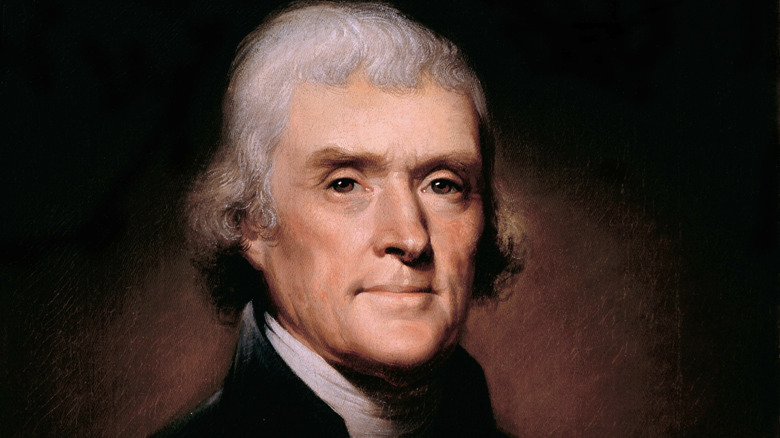
Like the presidents before him, Thomas Jefferson saw coffee as a symbol of patriotism. In a letter to Edmund Rogers, a veteran of the revolutionary war, he even called it "the favorite beverage of the civilised world." But Jefferson wasn't a fan of coffee produced in the U.S. (made with green coffee beans, he thought it was too sour). Instead, he much preferred coffee produced in places like the Caribbean, Java in Indonesia, and Mocha in Yemen. Fun fact: This is where the chocolate coffee drink, mocha, gets its name.
Jefferson would usually drink coffee after dinner, which would be served alongside tea in the White House's Blue Room. In his letter to Rogers, the third president praises its velvety texture and subtle, yet slightly bitter flavor. He says that while some have tried to recreate coffee with different plants, nothing compares to coffee beans. That said, he did acknowledge that his favorite coffee alternative was made with chickpeas.
As for how Jefferson took his coffee, it seems he preferred it black. An old coffee recipe of his reads that he would start the drink with one measure of finely ground coffee, before pouring three measures of boiling water over the top. He would then boil it on ashes and coal until the ground coffee was no longer visible on the top of the drink, and then strain it before drinking.
Ulysses S. Grant
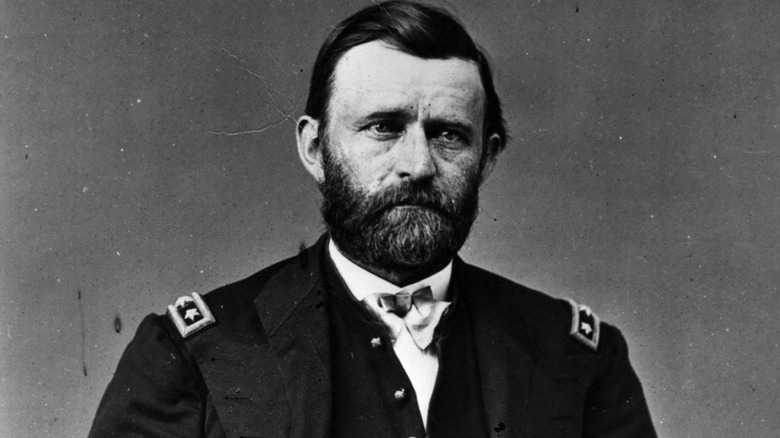
By the time Ulysses S. Grant was born in 1822, coffee had already improved in quality. Though most of it relied on imported green coffee beans, ripened coffee from the Caribbean (like the kind Jefferson preferred) was becoming more common. In the aftermath of American Civil War, and by the time Grant took office in 1869, coffee was a prominent drink in America. So, of course, he drank plenty of it.
The 18th president of the U.S. reportedly preferred strong black coffee. He would often drink it alongside a hearty breakfast of Spanish mackerel, steak, fried apples, bacon, and buckwheat cakes. If you're thinking: That's one heck of a breakfast, you're not wrong. He apparently indulged in such large breakfasts to make up for the years he spent eating just cucumber and coffee for breakfast, likely during his time as a soldier and general.
Coffee wasn't just limited to breakfast time. White House steward Valentino Melah was known for his extravagant state dinners during Grant's time as president. These lavish affairs would usually end with ice cream, chocolate, nuts, candy, and coffee.
Theodore Roosevelt
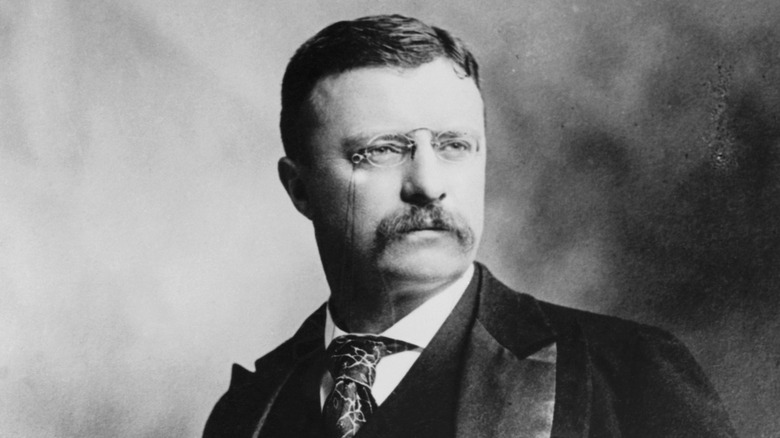
Nowadays, most people drink coffee because they like the caffeine boost or its taste, but when it first made its way into Europe from Africa in the 16th and 17th century, physicians sometimes saw it as medicinal and would prescribe it to patients. It mostly related to humoral theory — an ancient idea that the body is made up of four humours that can be balanced with food and drink. Though the theory was slowly dying out by the 1800s, coffee was still sometimes prescribed for various medical conditions. For Theodore Roosevelt, this condition was asthma. In the 1860s, when Roosevelt was young, his doctors prescribed black coffee to manage his asthma. Regardless of whether coffee helped his asthma, Roosevelt became hooked. In fact, by the time he moved into the White House at the age of 42, it's rumored that he would drink up to one gallon every single day. He liked his coffee sweet, so would reportedly mix it with spoonfuls of sugar.
It's also rumored that Roosevelt was the one to come up with Maxwell House's famous slogan "Good to the last drop" after trying the blend at a resort in Nashville. That said, there is little evidence to support this theory, but still, it's a fun legend. And definitely fitting for a man who would drink gallons of coffee every week.
Franklin D. Roosevelt
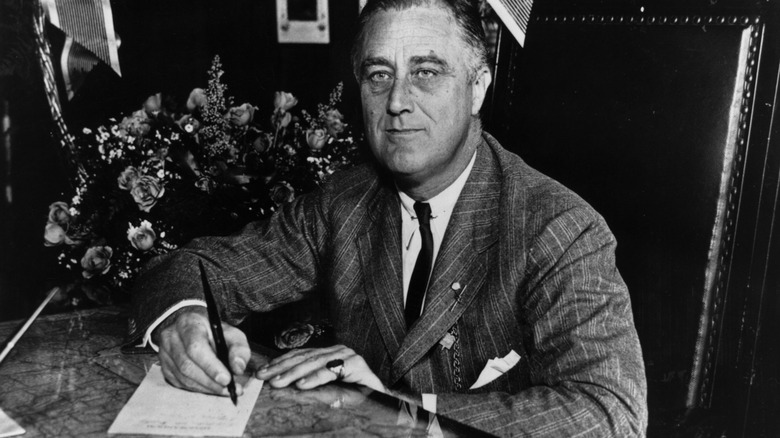
Franklin D. Roosevelt (known as FDR) had a rough deal as president. He came to office in the 1930s during the Great Depression, and he left in 1945 at the end of World War II. To get through these challenging periods, FDR relied on doughnuts as his favorite breakfast option, which were usually served with plenty of coffee.
Unlike Jefferson, Franklin favored green coffee beans that would be roasted in the kitchen, and he would usually opt for a dark French roast. He would brew coffee every morning, with a coffee maker that was given to him on his daily breakfast tray, and then mix it with lots of thick cream. But the president and the first lady didn't just drink coffee in the morning. They also loved indulging in coffee on Sunday nights, alongside another breakfast classic: Scrambled eggs. Fun fact: Eleanor Roosevelt would usually prepare the eggs herself at the table, while the president mixed cocktails to be served with coffee.
The Roosevelts couldn't always enjoy copious amounts of their favorite beverage, though. Coffee had to be rationed from 1942 to 1943, so Franklin cut down, too. He started drinking cold milk in the mornings during this time, and according to Eleanor, he felt much better for it. He would still indulge in the odd evening coffee, though.
John F. Kennedy
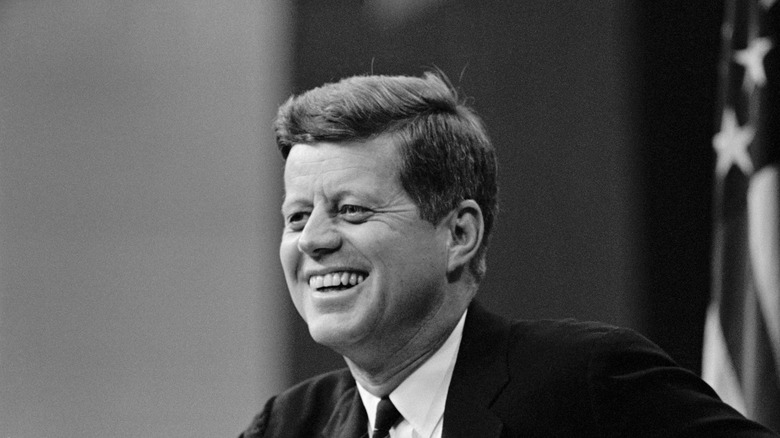
John F. Kennedy was a man of simple taste, but his diet wasn't entirely up to him. The president suffered from several health conditions, including Addison disease, which meant that JFK had to be careful with his food choices. He could still drink coffee, though. According to a handwritten note from the first lady Jacqueline Kennedy to the White House chef Tania Herbst, her husband couldn't eat anything fried, so JFK paired his coffee with a classic breakfast. His morning preference included white toast and marmalade that would be accompanied by some broiled bacon, poached eggs, and orange juice. Jacqueline would also have eggs and toast, and she would take her coffee with skimmed milk.
Apparently, Kennedy also liked his coffee with milk. That's what he drank on the morning of his assassination, on November 22, 1963. According to the waiter that served the president his breakfast that morning at the Hotel Texas in Dallas, Kennedy had opted for his classic breakfast order, just like most other days. The waiter clarified that the president had specifically asked for hot milk with his coffee, rather than cream.
Ronald Reagan
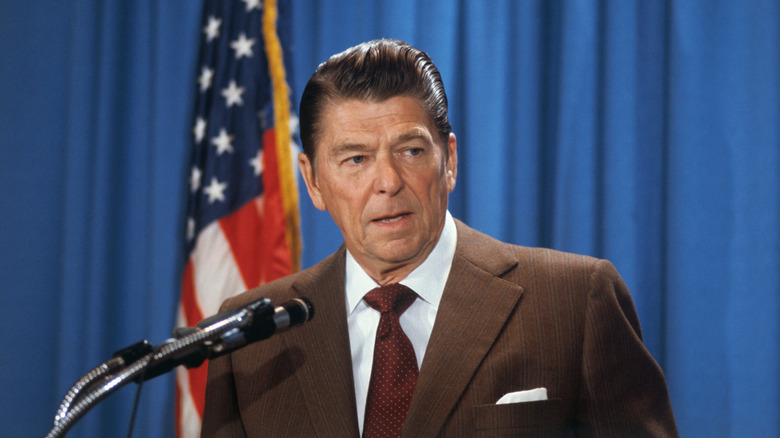
During his time in the White House, Ronald Reagan was health-conscious. At the time, he was the oldest president to take office (he has since been overtaken by Donald Trump, who is closely followed by Joe Biden), and people were concerned about his health. His doctors, though, confirmed that he was taking care of himself with regular exercise and a careful diet. He didn't even drink caffeinated coffee. Nope, the 40th president of the U.S. always opted for the decaffeinated version.
Most mornings, together with first lady Nancy Reagan, Reagan would enjoy a steaming cup of decaffeinated coffee, which he would drink alongside a glass of skim milk, some fresh fruit, and a bowl of bran cereal. Once a week, the Reagans would treat themselves to eggs, and on special occasions, they had monkey bread. In fact, Reagan was so strict about the way he had his coffee, Queen Elizabeth II even personally made sure he had a decaffeinated cup when he visited the Royal Yacht Britannia in 1991.
George H.W. Bush
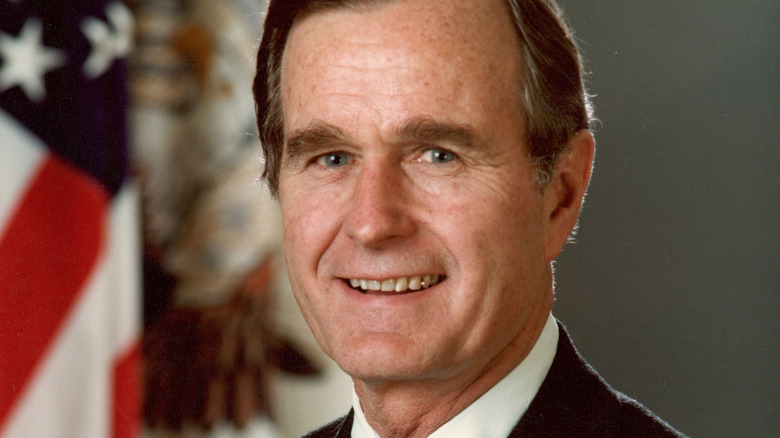
George H.W. Bush might have been famous for his aversion to broccoli, but he also had many great loves when it came to food and drink. He loved pork rinds, for example, as well as popcorn, Texas barbecue, oysters, and lobster. He also really, really loved coffee. In fact, he loved it so much, he used to drink around six cups a day, according to his wife Barbara Bush.
The first lady encouraged the president to give up his caffeine habit (which, notably, he didn't think was that bad), when he was diagnosed with an irregular heartbeat. Like Reagan, he switched to decaffeinated coffee for a short while. But it seems like Bush eventually went back to his coffee drinking ways. In 2014, he mentioned in an interview that he drank very hot coffee every morning, and though he skipped sugar, he combined his coffee with light cream.
Bill Clinton
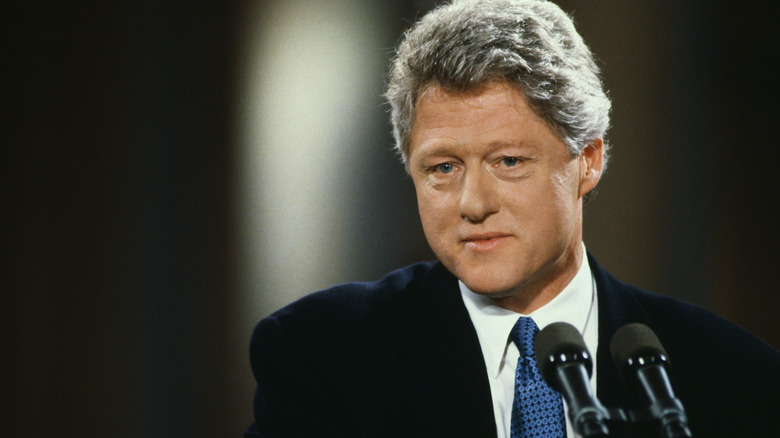
Bill Clinton loves McDonald's. In fact, one of his favorite ways to start the day was with an Egg McMuffin from the fast food giant. But after choosing to take better care of his health the year before he took office in 1993, he had to save the McMuffins for special occasions only. The trips to McDonald's didn't stop entirely though. But instead of food, he'd grab water and coffee.
Like many of the presidents before him, Clinton loved coffee. He would regularly pick up a cup when he was out jogging or taking a break from politics, usually from cafes or bakeries nearby. One waiter who served Clinton during a presidential visit said the 42nd president of the U.S. and then first lady Hillary Clinton were both fond of macchiato. For the uninitiated, a macchiato is an espresso topped with a small amount of steamed milk.