

Why You Need To Start Pinching Tin Cans Closed Before Tossing Them
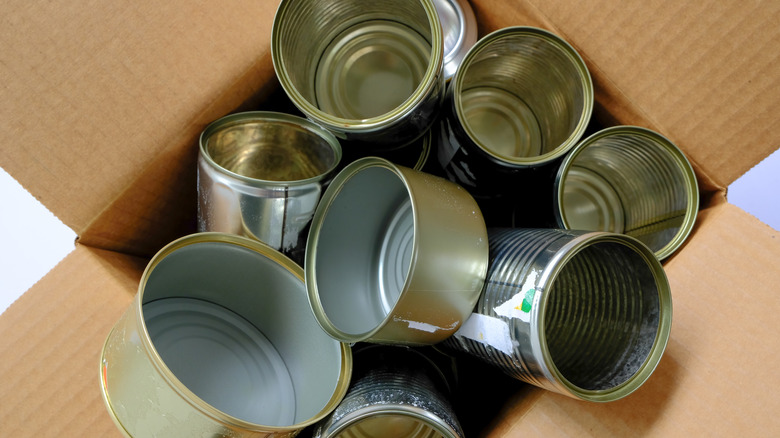
By now, most people know that recycling is important for many reasons, from protecting the environment and saving landfill space to reusing materials that come from finite resources. Among the latter are metal cans, particularly steel and tin cans, used to contain important pantry staples such as beans, tomatoes, and soups.
It's important to do certain things when recycling food cans so they can be adequately processed. In case a food can is not recycled properly and it ends up in a landfill, closing the top before discarding it will save curious animals such as cats, raccoons, squirrels, and birds from sticking their heads into the empty can and getting accidentally stuck. It's quite possible that you've seen the viral video of a poor raccoon on the side of the road, with its head firmly stuck inside a can.
To properly recycle metal cans, you shouldn't crush them completely when pinching the top closed, as retaining their shape makes it easy for recycling machinery to process them. However, you should remove the steel lid and place it in the can, at the bottom, before pinching it shut. Rinsing your cans also helps to remove any leftover food and keep your recycling bin from smelling, which might entice little critters to come check out your bins.
How to help animals by properly discarding and recycling food cans
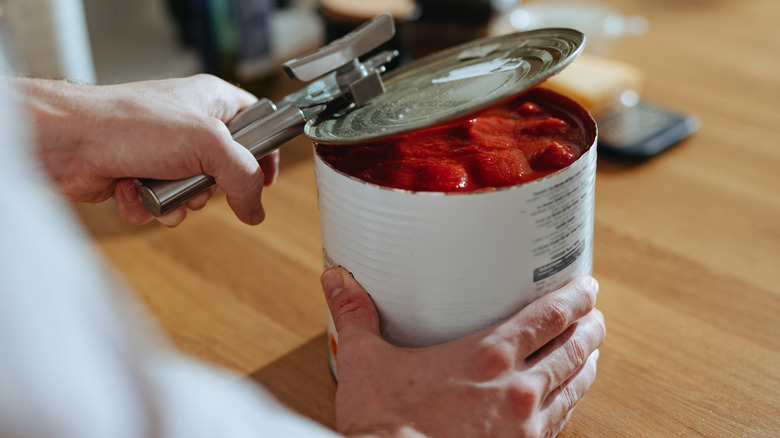
According to a 2021 scientific study, steel cans made up more than 16% of containers in which animals were trapped, based on more than 500 records analyzed for the study. If you want to help lower these numbers, following these guidelines will help you do your part.
Steel cans are preferred for packaging food over aluminium cans, which are more often used in the beverage industry. That's because they are lined with tin, which prevents rust and food contamination, and they are sturdy enough to withstand the heat and pressure required for canning as well as for stacking them in storage. Steel is the material with the highest recycling rate, more than 88% of all other recyclables. In fact, recycled steel is contained in two-thirds of all new steel produced.
Aluminium cans, such as those containing beer and soda, are much thinner and don't have an opening as large as steel cans, so the risk to animals is lower. Still, giving them a rinse will keep your bins from smelling like stale beer or attracting pesky insects.
There are other ways of keeping animals safe from the dangers of food tins, like reusing them in the kitchen as clever storage solutions, or as containers to start your own herb garden indoors.