

This Subtle Red Flag At A Deli Could Signal Bigger Food Safety Issues
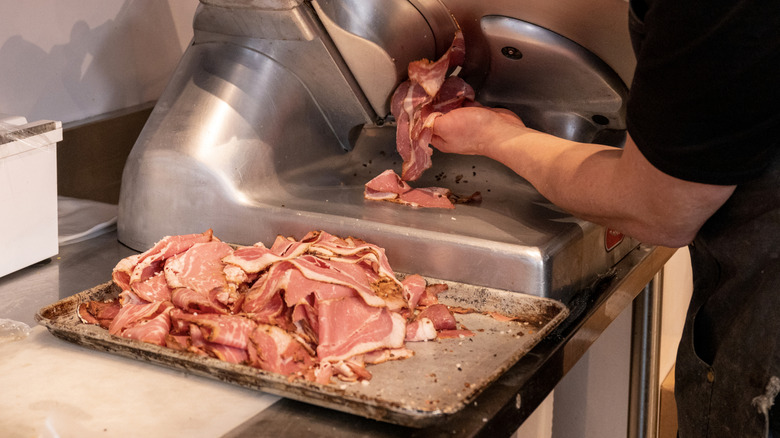
Few things are more tantalizing than the "yoo-hoo, over here!" of freshly-sliced cold cuts beckoning from the edges of a deli sandwich. Even Subway tried to up their deli meat game by dropping meat slicers into their stores, but came out perhaps a slice short. Having meat sliced to order or even just knowing that it's been recently sliced is part of what makes the deli experience special.The one thing that pre-packaged deli meat has over freshly-sliced is fewer variables — an extra layer of food safety and another opportunity to prevent contamination.
Cutting meat in store offers a fresher product, but also means that the equipment requires frequent cleaning and maintenance. It doesn't take long for foodborne bacteria to grow on equipment and contaminate meat. A watchful eye during your deli visit can help you spot some subtle yet important red flags at the deli.
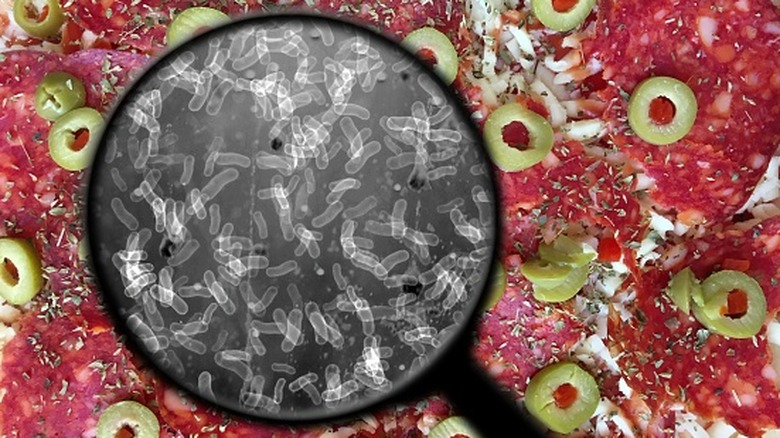
The villain in this story is listeria monocytogenes, a notable bacteria when it comes to meat-related food safety that "causes the third highest number of foodborne illness deaths in the United States each year," according to the CDC. That's pretty scary, especially in the context of the deli environment; "meats sliced and packaged at retail delis are the major source of listeriosis illnesses attributed to deli meat." There's nothing inherently dangerous about deli meat, however. It appears that delis are susceptible to L. monocytogene contamination when their food safety practices fall short.
Keep your eyes peeled
The FDA suggests inspecting deli meat slicers for damage every four hours. Shockingly, studies carried out by the CDC showed that three in five delis had damaged meat slicers, which gives bacteria a chance to take hold in the nooks and crannies. The FDA explains that as "seals and gaskets become degraded, spaces can be created that can trap debris and moisture, which can lead to areas that may not be able to be adequately cleaned and sanitized under normal cleaning conditions," making a damaged machine a primary red flag. Similarly, guidelines say to clean machines thoroughly every four hours to avoid the buildup of food soil and oils, which only about half of the delis in the CDC study compiled with. Red flag number two: Machines with excessive visible accumulation of grease and pieces of meat that don't appear to have been cleaned all day, or at least within the last four hours.
Let's consider some green flags that indicate that a deli understands great food safety practices. Up-to-date food hygiene accreditation and food safety certificates on display shows that they're compliant and inspection-ready. Cleaning and maintenance instructions and schedules that are clearly visible near the meat slicer show that an FDA-approved routine is in place. If you're a frequent visitor, taking note of the state of the machine's cleanliness and condition over time can also tip you off to how thoroughly the staff follow the FDA's guidelines.