

A Complete Guide To Steak Marbling
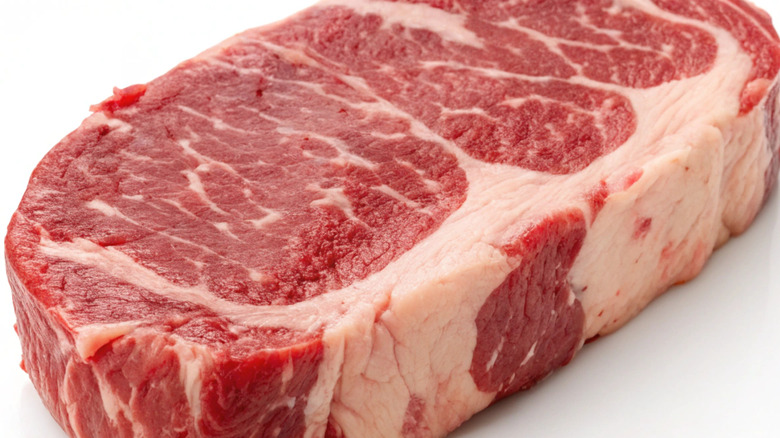
For many beef lovers and chefs, marbling is one of the most important aspects of steak quality. Unlike the thick fat cap found on the outside of a piece of steak, marbling refers to the streaks of intramuscular fat dispersed within the lean muscle of beef. This is integral to an elevated steak-eating experience. As the steak cooks, the fat melts, basting the meat from the inside, leaving you with a flavorful and tender piece of meat. If good marbling results in juicy, soft, buttery steaks, then great marbling results in premium steaks, often accompanied by a premium price tag. Just like when choosing the right cut of steak, there's more to marbling than meets the eye. From breed, feed, and animal welfare to cooking practices and USDA grading, there are key nuances that impact the quality of marbling.
We reached out to steak specialist Chef Wayne Baker for a comprehensive breakdown of steak marbling—what it is and why it's crucial to great steak. Baker of the Patina Steakhouse in Newlands, Cape Town, has been a chef for over 40 years. After an illustrious career in hotel restaurants, including the Protea Hotel and the Ritz Hotel, his focus shifted to steakhouses. He served as head chef for several steakhouses, where he also handled in-house butchery for his own restaurant, as well as multiple sister locations within the same group. In other words, the man knows his meat. Here's a complete guide to steak marbling.
Not all marbling is good marbling
While marbling is generally considered the stamp of superiority in a cut of steak, not all marbling is created equally. Good marbling comes down to composition, distribution, and texture, and as Wayne Baker says, bad marbling "can just get a bit too much." When it comes to composition, thick ribbons of marbling can taste overly fatty. What you're looking for is thinner ribbons of web-like marbling that are lighter in color. According to Chef Baker, regarding fat, you sometimes end up with a "big chunky," which results in an overly rich steak that is overpowering, chewy, or has a slightly gelatinous mouthfeel.
You are also looking for an even medium distribution of fat in the specs. This will ensure a smooth distribution of flavor and tenderness in every bite of steak. Uneven marbling distribution can result in an uneven cook. Meaning, you might end up with a steak that is overly fatty in parts and dry in others. When it comes to texture, softer fat (like in wagyu beef) will render better and disperse more evenly. Harder fat can more easily result in a waxy texture. Overall, according to Chef Baker, the golden rule is to keep your eye out for "medium even distribution." This, he says, will elevate your steak from an ordinary dinner.
Animal welfare is essential
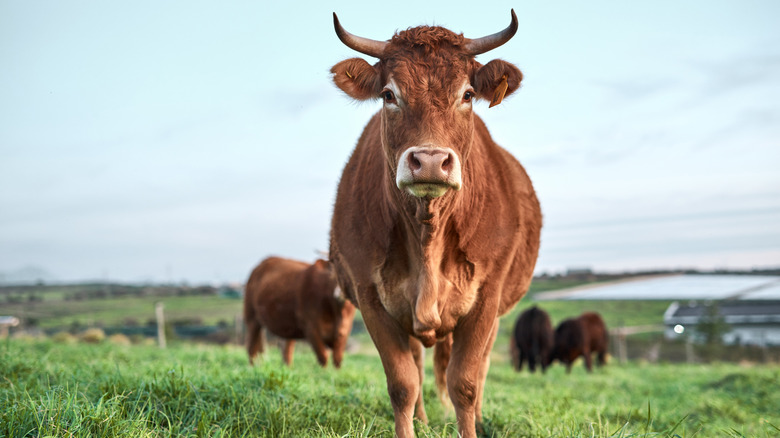
Animal welfare plays a crucial role in the overall quality of steak marbling. As emphasized by Wayne Baker, "It's about the amount of care that's done to an animal that produces correct marbling and guarantees you get what you're looking for in [a] piece of meat." This is because when an animal experiences prolonged duress from stressful conditions, their cortisol levels spike, and excess cortisol disrupts intramuscular fat (aka marbling) production. As such, more humane breeding practices are not only better for animals but also produce a higher-quality product.
Baker considers animal welfare as how an animal is raised, its overall well-being, what and how it is fed, and, as he puts it, "the slow process". But animal welfare can also be impacted by transport practices, environmental conditions, and the weaning age of the animal. He specifically mentions Angus and Wagyu beef, and notes that, famously, these breeds produce premium steak because of the specialized and deliberate care practices farmers implement.
For instance, Wagyu cows are free-roaming and pasture-raised. They are fed high-quality wheat, grain, and hay three times a day. The cows are brushed to release tension in their muscles, and, overall, live humane, stress-free lives. In contrast, Baker notes that while mass-bred animals will still produce some marbling, the quality is greatly reduced, resulting in steaks with no more than "thin little lines" of intramuscular fat.
Ask about slaughter dates
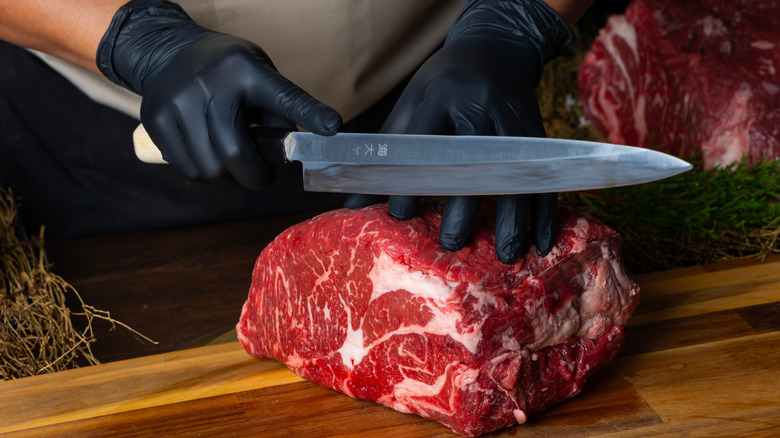
According to Wayne Baker, the age at which an animal is slaughtered greatly impacts the quality of steak marbling. While it's not commonly done, he suggests asking your butcher for slaughter dates before purchasing your meat. "There is no harm in asking for slaughter dates or packing dates," he emphasizes. Baker notes that when an animal is slaughtered under 16 months, the steak will not have very much marbling, which will, in turn, impact the texture. Rather, he states that the best marbling will come from a cow that is slaughtered between 18 and 24 months. He attributes this to the rate of aging.
"Anything under 16 months, and your animal is still growing slowly," Baker says. "So your inside fat, marbling, and the fat on the outside are growing at different rates." In other words, even marbling comes from when the cow is aging at a steadier rate. Further, cows slaughtered after 30 months (around the most rapid rate of aging) will produce much tougher meat. According to a study on marbling levels in beef, the phenomenon can be explained as follows: As cows age, their fat cells enlarge, allowing for more time and larger quantities of intramuscular fat to be deposited. Finally, Chef Baker notes that mass-bred cattle are often "slaughtered as needed on a daily basis", and this lack of attention to slaughtering at the correct age greatly impacts the quality of steak marbling.
Breed is important
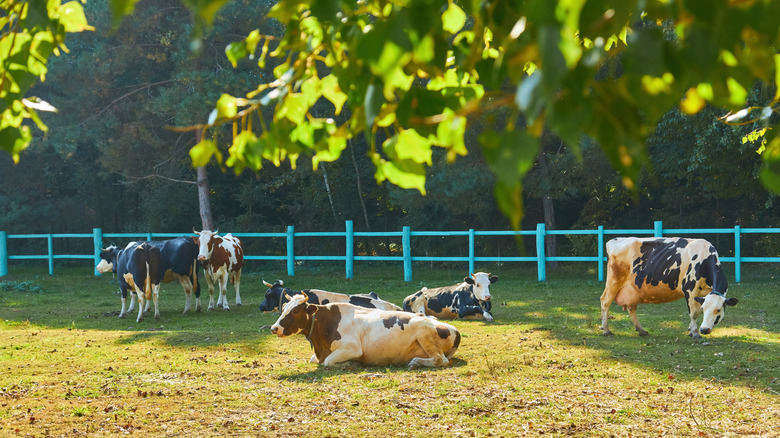
Sirloin and rump are steak cuts not typically associated with high-quality marbling. However, according to Wayne Baker, "You would find more decent marbling in an Angus sirloin or rump than you would in your general cuts." That's because the breed of cattle makes an enormous difference to the overall quality of steak marbling. Different cattle breeds have vastly different genetics, and genetics play a vital role in how and when intramuscular fat (marbling) grows.
According to a study on the genetic factors impacting intramuscular fat deposition in cows, the breed of cattle with the highest levels of notable marbling globally is Japanese black cattle (Wagyu), followed by Hanwoo Korean cattle. And, as mentioned by Baker, Western breeds like Angus showed significantly high levels of quality marbling as well. Angus cattle come from the Scottish cattle breed known as Aberdeen Angus. These cows are known for being strong and robust, while also being genetically predisposed to having very good steak marbling. Beyond genetics, these premium breeds are also very well-looked after.
As emphasized by Chef Baker, with Angus beef, "They take special care, have special feed. They [are slaughtered on the] correct dates. That's why it's so good, and you find more decent marbling." In other words, part of producing and maintaining a strong gene pool is to ensure the highest quality of welfare for the animal. Other notable cattle breeds that produce good marbling include Galloway cattle and Beef Shorthorn cattle.
Selecting the right cut
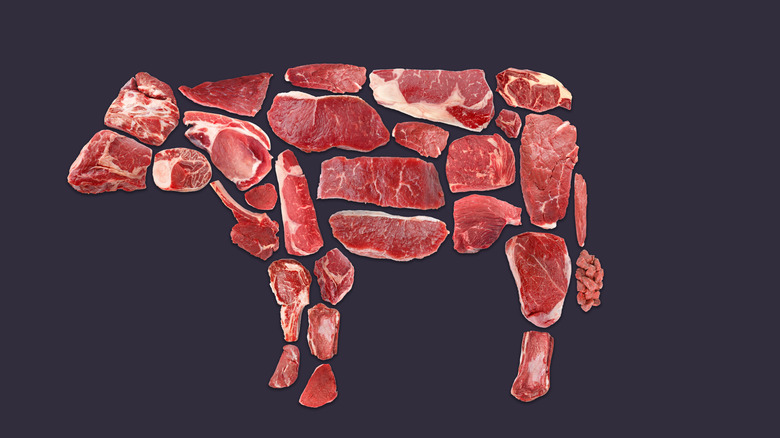
Wayne Baker says that "just about every piece of meat has marbling ... some of it's visible, some of it's not visible." In other words, different cuts of steak have varying amounts of marbling at various quality levels. Typically, the animal muscle groups that are worked the least will produce the best intramuscular fat. And the ribeye is often considered the gold standard when it comes to marbling. Taken from the ribs of the cow, it is known for being juicy, tender, buttery, and flavorful, thanks to its generally even, medium distribution of intramuscular fat (or perfect marbling).
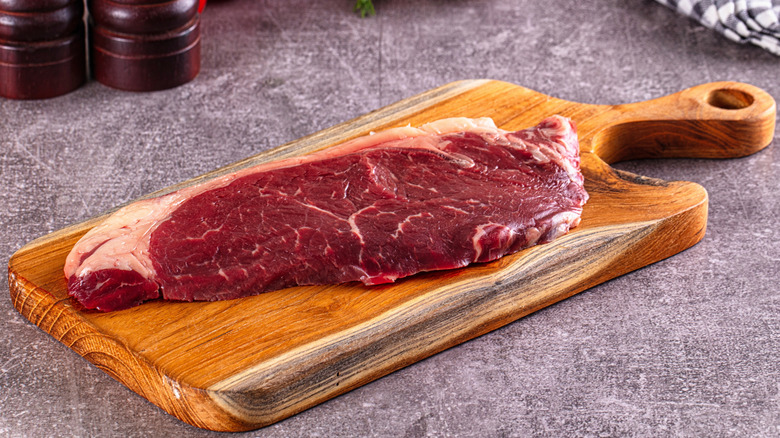
Another steak cut known for its marbling is the New York strip steak. It is cut from a minimally working muscle just along the spine, and produces soft, mouth-watering steaks. When on the hunt for fine marbling, cuts to avoid would be anything on the leaner side. One example is the eye of round, a cut that comes from the rear end of the cow and is taken from its hind legs; this is a heavily worked part of the animal. According to Baker, sirloin and rump are also the least likely to produce high-quality marbling. However, as noted previously, the breed of cow could also play a significant role in marbling.
USDA Grade
Have you ever noticed a red-and-blue sticker in the shape of a shield when walking down your grocery aisle? Well, these shields are your best friend in ensuring and sourcing high-quality marbling, and, as a result, high-quality steak. The United States Department of Agriculture (USDA) offers a beef grading system that functions as a shorthand for quality for both consumers and beef industry insiders. The USDA grading system operates on a voluntary fee-based system whereby farmers can request that their stock be graded, over and above the mandatory meat inspection system.
The USDA beef grades are categorized according to tenderness due to marbling, as well as distinctions in quality based on maturation, feed, and well-being. When evaluating beef, graders will visually inspect both the distribution and volume of marbling in a particular age group. For instance, Prime refers to young cattle that are still of high quality even if they only produce a slight amount of marbling. It is also the highest of the USDA grades.
If the beef has even less marbling, but is still of a high standard, it might be labeled Choice. Leaner, more standard cuts of beef are called Select. Below that, you might see a "standard and commercial" grade, which is reserved for generic, store-grade beef. In addition, meat can also be graded as "Tender" or "Very Tender," which requires passing a muscle force test to acquire a particular grade. Overall, steak marbling serves as a defining characteristic and cornerstone of USDA grades.
Cooking marbled beef
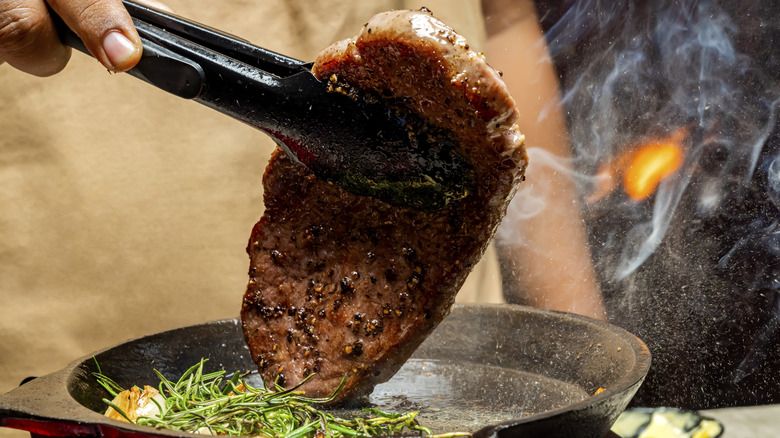
Great marbling, with medium and even distribution, is, by its very nature, going to ensure a buttery, properly-cooked steak. "From a chef's point of view, marbling is a safe haven," says Wayne Baker. "You know, it's very difficult to actually mess it up. The mere fact is that your steak will cook evenly, your steak will be juicy, and your steak will be tender." He adds that whether you're cooking your steak on a pan, grill, or oven, you can feel confident that the steak will be delicious with high-quality steak marbling. As the intramuscular fat melts through the steak, it maintains moisture, making it very unlikely your steak will dry out or be tough.
When it comes to seasoning, Chef Baker calls it unnecessary. In general, he is not a proponent of meat rubs, marinades, or most other forms of seasoning. He's a purist who sticks to simple salt and pepper, noting that meat should taste like meat, not "mushroom sauce or pepper sauce." This is especially true with a piece of beautifully marbled steak. Let the marbling do the work; it will provide all the flavor you need. For instance, when cooking a ribeye, let it rest at room temperature for about an hour before cooking. Then, season with salt and pepper and cook; it's as simple as that. He even jokes that the marbling has done the chef's job. Finally, he emphasizes, irrespective of marbling, beef should be treated as "more than an ingredient," but rather a work of art that needs time to get right.