

Trouble Deciding Between Red And White? This Hybrid Gives You The Best Of Both Worlds
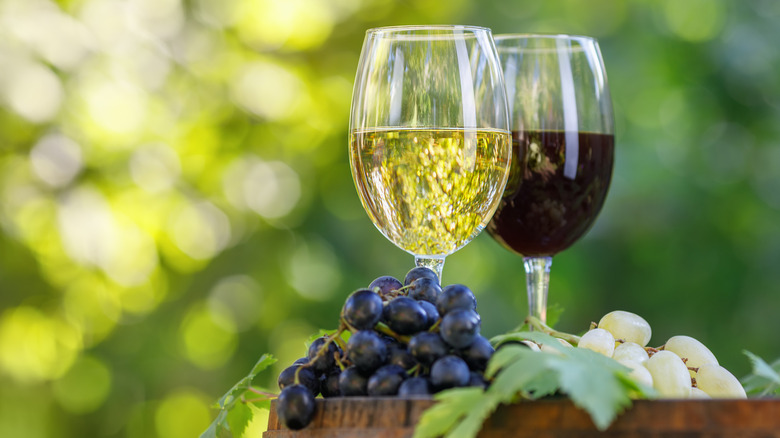
Choosing the right wine to accompany a dish or fit an occasion is never an easy task. It takes an exceptional amount of knowledge not only of different varietals, but also individual bottles and vintages, to pair wines like a pro. But even at its most basic — choosing between a bottle of red or white — the question can be a challenge. For example, while the general rule may be that red wine goes with red meat and white wine goes with lighter fare like fish and poultry, oily salmon goes great with a light-bodied pinot noir, and an oaky chardonnay can be an excellent accompaniment to a cut of beef. If you'd prefer to skip all the worrying and simply shoot the middle, however, there's a new style of wine called "blouge" that's making waves, as a balance of the differences between red and white wine in one bottle.
The name "blouge" — a portmanteau of "blanc" and "rouge," the French words for "white" and "red" — is something that probably shouldn't have escaped the focus groups, but that shouldn't be a deterrent from sampling a wine that far outshines its moniker. It is cleverly crafted with both white and red grapes, a combination that produces wines that are light-bodied and easy to drink across the board, but still with plenty of room for variation. Blouges can be as pale as rosé or as dark as certain reds, and some show up on the fruity side of the spectrum, while others can pack a spicy punch. Served chilled on a warm day, they may be one of the best wines for parties, offering all drinkers a taste that they can enjoy.
Blouge wine is new, but certainly not unprecedented
It may sound, as we describe these wines, as if we are talking about a type of rosé, but that is not the case. Blouges are produced by the co-fermentation of both red and white grape varietals. For example, that could mean riesling and merlot or syrah and sauvignon blanc grapes in the same fermentation tank — among many other combinations. Traditional rosé, on the other hand, is made with just red grapes. The signature pale pink color is achieved by limiting the time that the juice of the grapes is in contact with the skins.
Lovers of rosé, however, may find a new favorite in blouge, another wine style that can help bridge the gap between red and white. And, while it might not be traditional, some rosés do use of both red and white grapes. In fact, there are actually a few other wines that sometimes involve a mixture of the two grape colors as well.
Most wines use a blend of different grapes, but for the most part vintners stick to just red or just white varietals. Blouge is, however, far from the first wine style to test out this heterochromatic pairing — it's actually quite traditional for some well-known styles like champagne, syrah, and Côte-Rôtie. In each of these cases, the use of the different varietals leads to more well-rounded wine, each color providing a unique character that can be expertly interwoven to create a final product that is much more than the sum of its parts. It's a good thing, too, because this is a trend that is likely to be on the rise, and not just because of the splash blouge is currently making.
Red and white grape blends are likely to become much more common
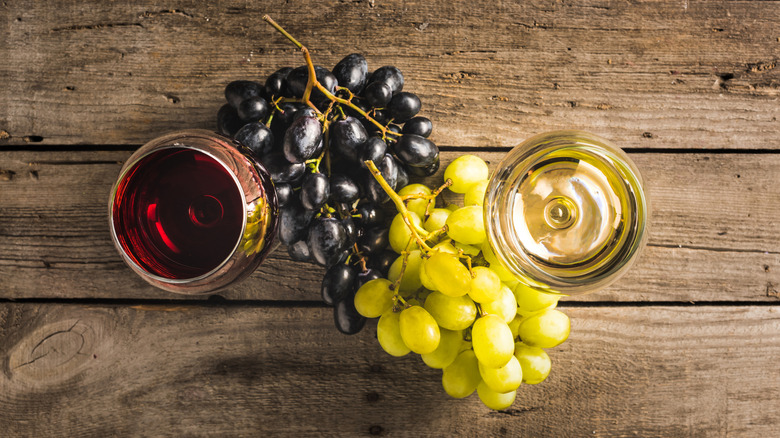
A light-bodied wine with a goofy-but-memorable name and a preference for being served chilled is something that is sure to draw plenty of attention in the warmer months of the year, but the ties between blouge and heat run deeper than its refreshing nature on a warm evening. As it turns out, this novel combination of red and white grapes is also a means by which traditional wine regions are attempting to adapt to a warming world.
Grape vines are notoriously weather-sensitive, and around the world climate change is threatening the wine industry. Weather patterns that have produced reliable products for centuries are now shifting in what feels like the blink of an eye. Drought, extreme weather events, heatwaves, and cold snaps all have a profound effect on the quality of grapes produced by a vineyard, leading to fears that a significant amount of wine production could be lost in the next 50 years. The issues are popping up faster than the industry can adapt, though novel ideas like hybrid grapes are gaining popularity — as are hybrid wines.
The changes in weather patterns can necessitate viticulturists harvesting imperfect grapes, with hotter weather causing sugars to accumulate more quickly in the fruit and throwing off the delicate balance of tannins, acidity, and alcohol in a finished wine. Combining overly sugary red grapes with light and acidic white grapes, however, can bring everything back to equilibrium.
Unfortunately, climate change is heavily disrupting — and potentially on the path to eliminating — some wines that have been reliable for centuries. As ever, though, human ingenuity is rising to the occasion. Blouge is still new, but if current trends continue, expect it to continue its proliferation across the industry.