

Once You Make Whipped Garlic Confit, You'll Be Eating It On Everything
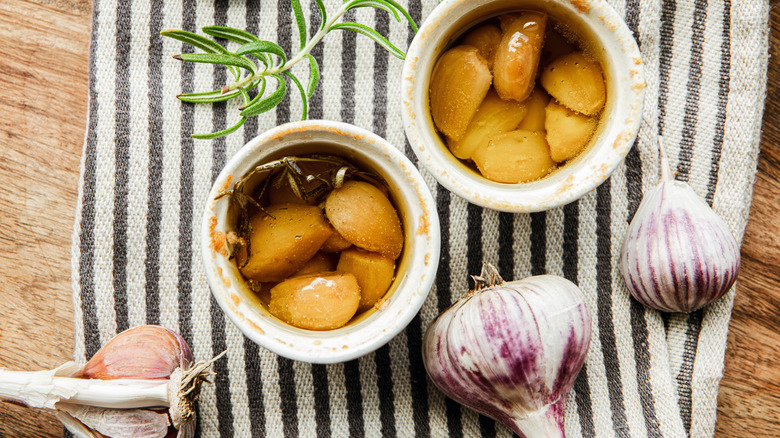
Foodies might recognize the word confit in relation to traditional duck confit. The dish is a French classic named for its methodology: Confit (pronounced cohn-fee) is a preservation technique in which an ingredient is salted and slow-cooked at a low temperature, submerged in a generous amount of fat. Today, we're shining the spotlight not on duck, but on garlic. Garlic confit essentially comprises raw garlic gently poached in olive oil. Fat tames the potent, pungent bite on sharper garlic bulbs for a pleasantly mellow profile, also emphasizing the garlic's natural sweetness. All in all, it's a dimensional, impressive condiment that comes together in very little time. Texturally, garlic confit is soft, spreadable, velvety, and ultra-rich.
On a utilitarian note, confit provides a flavorful way to extend the shelf life of fresh peak-season garlic (typically harvested during early summer, varying by crop hardiness zone). It can also be a zero-waste way to use up a head or two of garlic nearing its expiration. To make garlic confit, peel fresh garlic cloves, then place them in a saucepan with enough oil to cover. As a jumping-off point, about two cups of olive oil is the right amount to confit two cups of peeled garlic cloves (roughly six heads). Bring to a simmer over medium heat, then reduce it to low and hold it there for around 30 minutes, or until the garlic begins to soften to a tender, mashable texture. Be sure to keep the heat low to avoid browning.
Garlic confit is simple, timeless, budget-friendly, and delicious
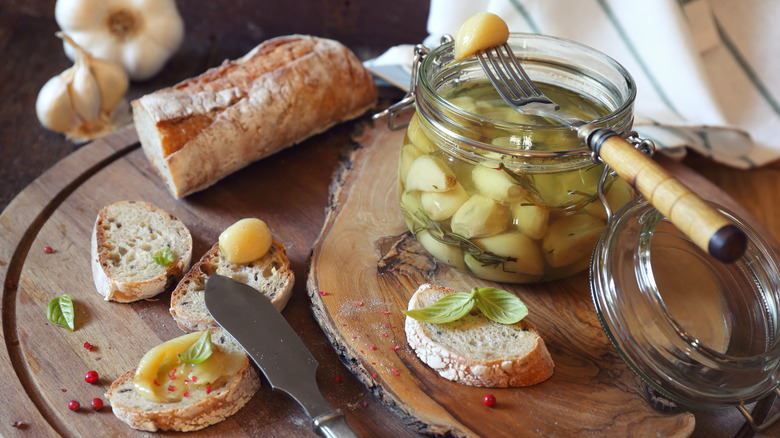
Not only does the confit culinary technique yield deep, robust flavor, but slow-cooking garlic in fat stunts bacterial growth by creating an oxygen-proof barrier, facilitating a long shelf life if executed correctly. Due to its environment with little oxygen, little sugar, and little acid, bacteria can grow and cause foodborne illness. You should ideally keep it refrigerated to avoid the very small chance of botulism. First allow your simmered garlic to cool to room temperature, then transfer it to a sterilized canning jar, pouring the cooking oil on top to fully submerge and seal. To stay ultra safe, use up garlic confit within seven days – but the good news is that there's no shortage of ways to use it. To turn your confit garlic into a ready-to-use paste or spread, simply blend, whip, or mash the results using some of the oil, plus a dash of salt and vinegar or lemon juice, then store in a sterilized jar with oil poured over the top.
Garlic confit paste makes a fabulous, flavorful addition to eggs – just add a tablespoon to the pan for fried or scrambled eggs. Slather chicken breast in it pre-roast for savory, crispy skin, toss a spoonful into a pan of sauteed veggies, fold it into mashed potatoes, or use it as a sandwich spread. Pro tip: A swipe of garlic confit paste also makes a knockout pizza topping, especially paired with a glass of chilled sauvignon blanc. Pizza night never looked so appealing. You can also add in any other accouterment of your choice to alter the taste, if desired, such as red chile flakes, bay leaves, fresh thyme, rosemary, or whole peppercorns.