

Why 'Market Price' Is A Big Red Flag At Seafood Restaurants
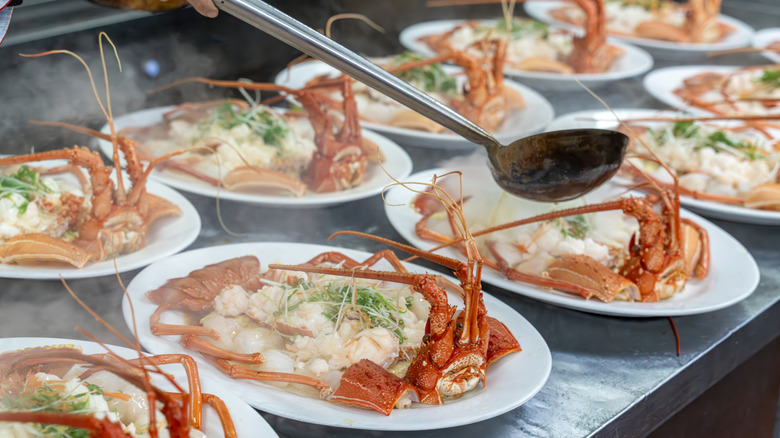
If you are a fan of ordering seafood at restaurants, you probably already know what market price is and have stumbled across it before on menus. Traditionally, you would see this apply to lobster or crab, but seasonally available fish like Dover sole and bluefin tuna also qualify. Instead of listing a fixed price in dollars and cents, restaurants use "market price," "MP," or "MKT" so they do not have to constantly reprint their menus. The market for wild-caught seafood is volatile and fluctuates seasonally, sometimes even weekly. But an unscrupulous restaurant could use this volatility to overcharge, which is a red flag to watch out for.
Market price is hard to predict. If the lobster boats pull in more lobsters than expected one week, supply might outweigh demand and prices go down. In a month's time, the haul could be much less, demand could increase, and prices could rise with it. Other factors — such as where they have to fish to find seasonal seafood offerings along with the cost of bait, fuel, labor, and other incidentals — can also be reflected in market price. But that does not mean the price you pay at a restaurant should be unreasonably high.
Market pricing was on our list of red flags to look out for at seafood restaurants. If you are not aware of current market prices (and most of us aren't), a restaurant could potentially take advantage of that by charging even more. People expect lobster or other luxury seafood items to be expensive and may not even question a high price.
Market price is not always nice
Fluctuations in the price of lobster and other seafood are real — but typically seasonal. However, the day-to-day cost should not vary enough to change the price too drastically. What you pay today should be close to what you pay tomorrow. For most seafood that is not caught daily, the variance should be so minor that weekly price changes are unnecessary.
If you see multiple items on a menu listed as market price, especially non-seafood items, that is a definite red flag. Beef and pork, for instance, rarely have legitimate reasons to be listed as market price. These meats are farm-raised, and restaurants typically buy them in bulk. They can plan their menus and pricing well ahead of time. Exceptions would include imported or rare meats, such as Wagyu beef, or special cuts like a tomahawk steak.
Some diners have ordered market price items and later been stunned by their bill at the end of the night. However, you can avoid this by being prepared. One tactic would be familiarizing yourself with market price. You could contact a local fish market to find out what lobster costs that day. You can also ask your server the price of any item listed as market price. Many diners feel reluctant to ask, either out of embarrassment or a feeling that they would not be able to afford it since it is not listed. Any server should be happy to tell you what the cost will be. Market volatility works both ways. Lobster may be cheaper than you expect, but you won't know until you ask. Once you know the price, then you can focus on dishes you want to avoid at seafood restaurants.