

The Unexpected Way To Reuse Vintage Tea Tins In The Kitchen
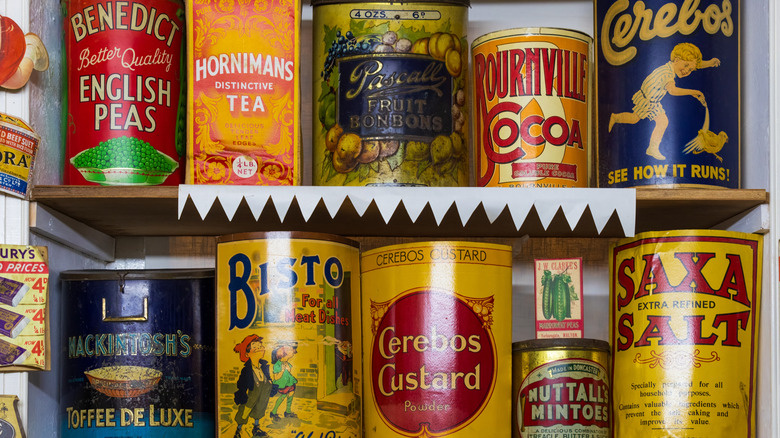
If you open your kitchen cabinets and want to run away screaming from the tumbling and entropic heap of half-used packages — and you're starting to consider dropping a whole paycheck at The Container Store to finally fix your life (for real this time) — Wait! Let us share with you a far cheaper and more whimsical solution: vintage tea tins. They're rigid, lidded, stackable, and usually small enough to fit neatly into a cabinet without displacing essentials. Plus, they're cute. While they're too compact to store bulk grains and beans in a meaningful way, they're perfectly sized for what might be called pantry detritus — all the loose, lightweight ingredients that don't have a stable home.
Most kitchen cabinet chaos doesn't come from large-footprint, carb-based staples like rice and flour. It comes from the small stuff: The half-empty bags of raisins slumping into disarray, your collection of emotional support Taco Bell hot sauce packets that mysteriously multiply in a closed drawer. Individually, they're harmless, but collectively, they create visual noise and physical disorder. These items are always awkwardly sized and rarely self-contained. They work well to get their contents from producer to buyer, but after that, the form fails. When the dried ingredients that come in crinkly pouches can't reseal, their contents get stale, they spill and potentially attract vermin, and, collapsing into chaos, lose their utility.
When your cabinets are such a mess you can't even see what you have, good food goes to waste because you don't have the ability to take inventory at a glance. Instead of spending money on more new junk, like plastic organizers or acrylic dividers, you can drop your cabinet's mishmash into an adorable, functional metal container that feels cheerful every time you look at it.
Cottage-core cabinets
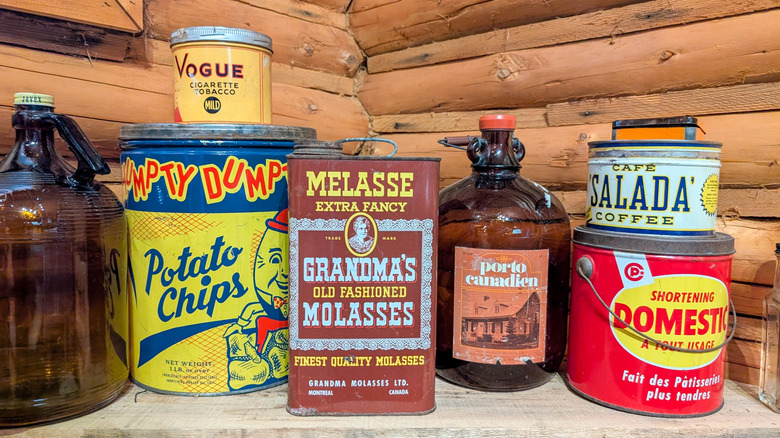
The firm sides of vintage tins keep soft packaging upright instead of sagging. Their lids trap aromatic compounds, so you can store more pungent ingredients like dried mushrooms or bonito flakes without them imparting their flavors on everything else nearby. Because they're uniformly shaped, they create vertical order where there was once an inscrutable pile of tangled sacks. If you use matching tins, your cabinet will take on an intentional look; if you mix brands and styles, the variation will still cohere, coming across as quirky but collected.
Their use can also extend beyond the dry pantry. In the refrigerator, a tin can corral tubes of tomato, wasabi or anchovy paste, or other slim items that always roll to the back of the shelf. In a baking cabinet, they can hold extra tea bags and small yeast, gelatin or spice packets that would otherwise become buried. There's also an important material advantage. Unlike many modern organizers, vintage tea tins aren't plastic. They're durable and reusable. As they age, they develop character, a lived-in patina that only makes them more likable, but won't make them less functional, as they retain their structure. You can label them, repaint them, or leave them as they are. Either way, they will introduce a charming level of sustainable order to your kitchen life.
One safety note, and this goes for any "old" objects you're bringing into your home: Some vintage homeware contain lead. Not always, and you cannot tell by looking at them, so whether you're just starting your collection of vintage tea tins, or you've been antiquing for years, you need to get a home lead testing kit. They're cheap and not a big deal, just a swipe of a q-tip, and highly worth it.