

The Unexpected Thing That Happened To Bee D'Vine After Shark Tank
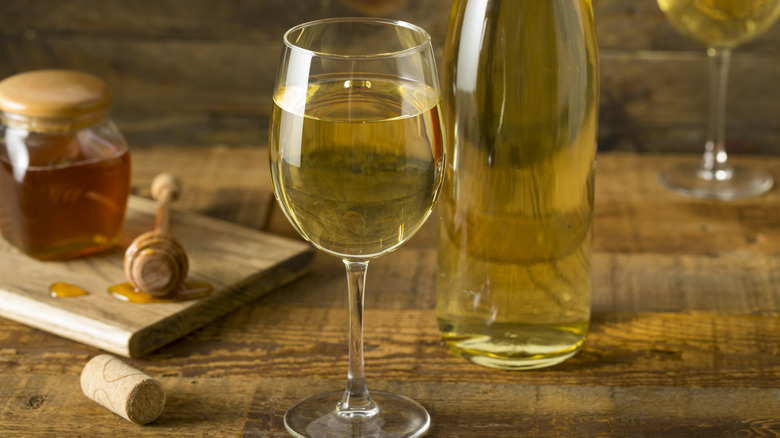
If you're a fan of the cultural phenomenon that is "Shark Tank," you probably remember Bee D'Vine from a few seasons ago. Ayele Solomon pitched his honey wine brand to five sharks and walked away with a handshake deal with four of them. While getting four sharks on board is a rare occurrence in itself, there were more unexpected twists in store. For reasons that were never disclosed, the deal with the sharks fell through. The brand, however, has managed to survive. Companies enter "Shark Tank" hoping to get their hands on rocket fuel; Bee D'Vine ended up on a roller-coaster instead.
While we wouldn't describe it as one of the best "Shark Tank" food and beverage products ever, Bee D'Vine did make an impression. Inspired by a type of honey mead from Solomon's native Ethiopia, it's made by combining raw honey and water, and letting the mix age for more than three years. The result is a sweet, clear drink that shark Lori Greiner said was the first white wine she liked, even calling it "a dream come true". The environment-friendly angle of the pitch — raw honey could be sourced from forests around the world, which would aid job-creation and conservation efforts — also struck a chord. Mead fell out of popularity over the centuries, but it is making a comeback.
Greiner was joined by Mark Cuban, Robert Herjavec and Daniel Lubetzky to make an offer worth $750,000 for 40% equity. Solomon accepted, and even got the judges to break out into an Ethiopian jig. That made-for-TV moment didn't quite turn into the happily-ever-after that was promised.
Five years later, the brand is still buzzing
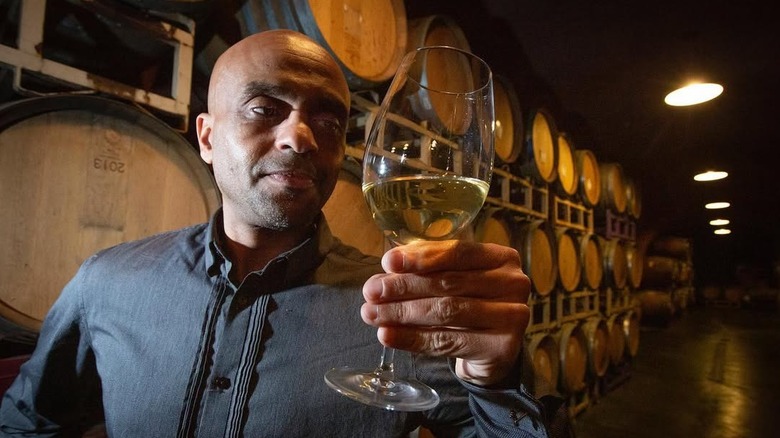
According to Shark Tank Blog, a website that keeps track of the businesses rolling in and out of the show, the "deal with Mark, Lori, Daniel, and Robert never closed." Nearly half-a-decade after appearing on the show, Bee D'Vine is still buzzing, and has 11 varieties of honey wine listed on their website. "Crafted from 100% raw honey and pure spring water — no grains, fruits, or additives — endlessly smooth," the introduction on the website reads. There's also confirmation that they continue to be an eco-friendly brand: "No irrigation. No pesticides. No landscape upheaval. Our process champions forest conservation, bee welfare, and community livelihoods."
While it's quite dramatic for four sharks to buy into an idea — and for the deal to subsequently fall through — data suggests that the latter is more common than you might imagine. A statistical breakdown of the first 14 seasons of "Shark Tank" showed that only around 50% of the handshake deals actually go through. As with any investment deal, there are many steps between the high-fives on TV and a contract being signed — from due diligence to actual contract negotiations.
Having said that, an investment on Shark Tank is not a guarantee of success either. Here's what happened to Zipz Wine from Shark Tank Season 6. Having made a deal with Kevin O'Leary, their growth skyrocketed initially. But the business model didn't hold up long-term and the business stopped selling wine in 2016.