

9 Types Of Dosa, Explained
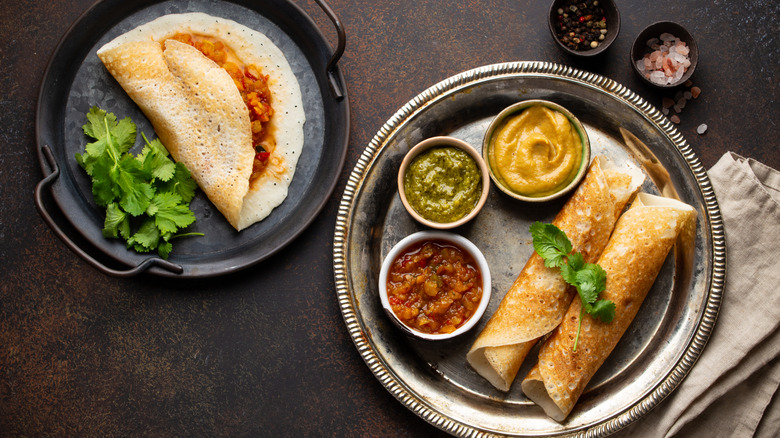
Comparing dosa to the Indian version of a pancake is a serious and reductive mistake, but one often made even by South Asians. Then again, there are so many variations of dosa from different regions and households that one can't place too many definitions around this food group.
Dosas are typically prepared from a batter of rice and lentils, which may or may not be fermented. This batter sometimes contains spices such as cumin seeds, fenugreek seeds, or chile peppers, but that is by no means the norm. And while a dosa stuffed with mildly spiced potatoes can be a filling breakfast, a thin dosa with chutney can be an ideal snack. Recipes get as creative as this one for coconut shrimp dosa, and for even more protein, look no further than egg dosa, one of India's most delicious egg dishes, which is worth trying.
Living in Mumbai for the better part of each year, there's only one place my family is willing to stand in line for half an hour every weekend, and that's Benne, a restaurant that specializes in serving a few simple foods from Bangalore that are packed with flavor. One of us usually ends up ordering a dosa, and the joy from our meal lasts long after we wipe the last of the ghee and butter off our fingertips. To my delight, Shriya Narayan, one of Benne's co-founders, was willing to share some of her professional knowledge to augment my own experiences cooking and eating dosa. Buckle up — or rather, unbuckle your belt a notch — because things are about to get seriously mouthwatering.
Paper dosa
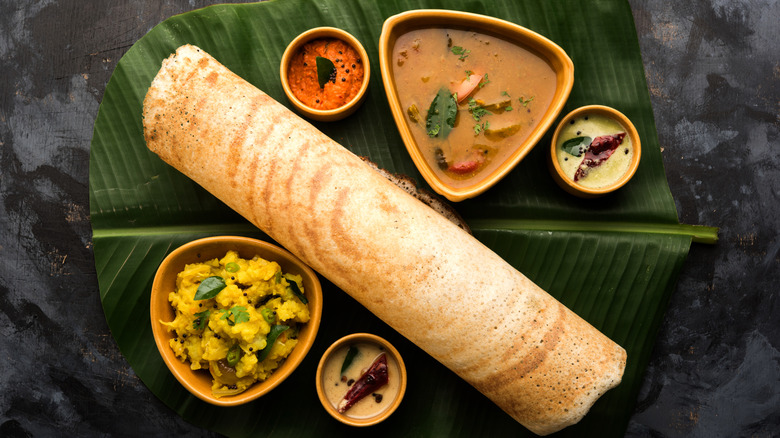
"Dosa varieties are hard to name and number because they're like pancakes in the west or rice dishes in India," shared Shriya Narayan. That said, one of the most recognizable varieties is the paper dosa. Paper dosa is very thin, very crispy, and very Instagrammable. You'll often find it on restaurant menus, but it may not look the same when prepared at home. Why? Simply put, a paper dosa can span two place settings at a restaurant table, so you'd need to pull out a proper griddle to get your homemade version up to par. But don't fret; you can still make paper dosa in a smaller pan, and it's actually one of the simpler dosa varieties to make. To achieve the perfect dosa texture, you need the right pan, so make sure you have a well-seasoned cast-iron pan ready to go.
A few common ingredients in paper dosa are parboiled rice (also known as idli rice), urad dal, chana dal, fenugreek seeds, salt, and water. Poha (or beaten rice) may be added to make the dosa fluffier, while rava can be included to make it crispier. The rice and dal are soaked separately for several hours, then blended with the other ingredients and left to ferment overnight.
Finally, this batter is cooked in a pan until one side is thin and crispy. The resulting dosa is rolled or folded before serving. Paper dosa is often eaten alongside sambhar and coconut chutney, and its relatively simple flavor allows accompaniments to shine.
Masala dosa
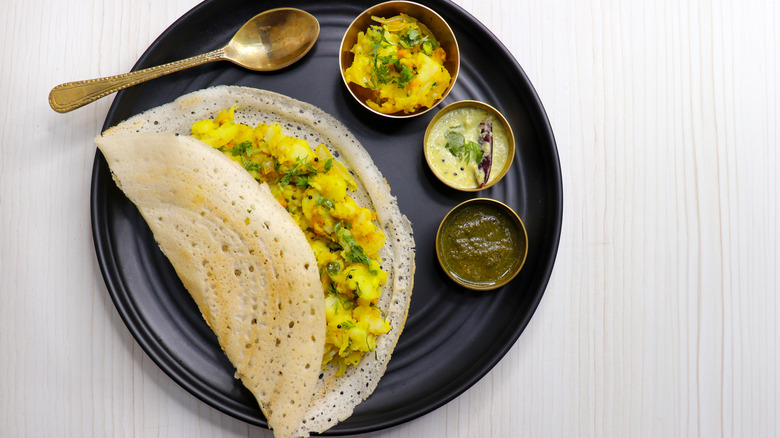
Dosa varieties often overlap, which is largely why they are impossible to quantify. There's no clearer example of this than masala dosa. This category can include dosa varieties like rava and benne (described later in this article). Mysore masala dosa — with its generous helping of red chili chutney — is a crowd pleaser; folks gobble it up so happily that there's often no need for a restaurant to offer any other kind. Regardless, the hallmark of any masala dosa is one hearty, filling element that Indians can't get enough of: potato.
Let's back up for a moment. The Hindi word "masala" usually refers to a mixture of spices — for instance, in garam masala, chaat masala, or one of several other Indian spice blends you should add to your recipes. Colloquially, masala can also mean riveting or interesting, in the same way that we might call gossip spicy in English.
When it comes to masala dosa, I find both definitions to be true. This dosa variety is packed with flavor, and when done well, everyone at the table will be talking about it for hours. That's because in a classic masala dosa recipe, boiled potato is mashed with ingredients like mustard seeds, cumin seeds, chana dal, onions, and ginger. It is then stuffed inside the dosa or served on the side. Needless to say, Thanksgiving mashed potatoes will take a backseat after you try this preparation.
Set dosa
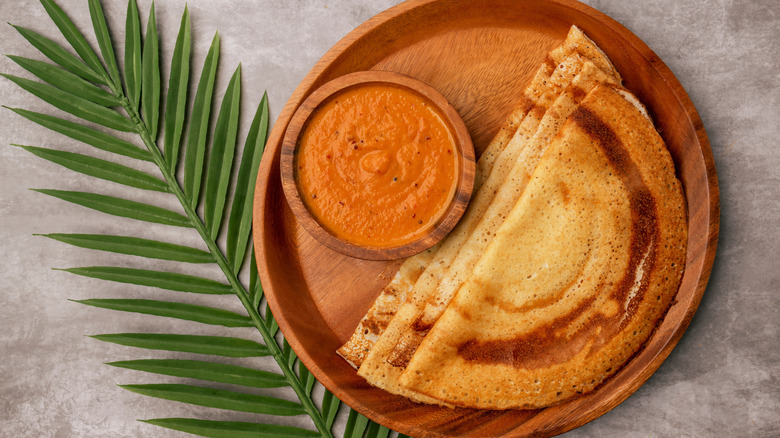
Whereas most of the other dosa varieties on this list are typically large enough to satisfy one person with a single piece, set dosas come in groups of three (hence the name). Set dosas are not nearly as gargantuan as paper dosas, nor are they as filling as masala dosas. Instead, they are light, thanks to a higher ratio of idli rice and poha to lentils. To make set dosa even fluffier, one can add sabudana (otherwise known as sago or tapioca pearls) to the batter. It is likewise essential for the batter of a set dosa to ferment properly for it to reach an ideal texture.
When it finally comes time to add set dosa batter to the pan, it shouldn't be spread very thin, as one might do with other dosa varieties. The dosa should also be covered when placed over the heat so that the steam can cook the top. Nevertheless, some folks prefer to flip this particular dosa to ensure it cooks evenly on both sides.
"With a soft set dosa, one may have saagu which is a coconut and herb based curry," recommended Shriya Narayan. Indeed, due to their pillowy and soft nature, set dosas are great for sopping up gravies, sambhar, and vegetable korma. Chutneys are excellent accompaniments too, including dry chutneys like podi, which can be sprinkled on top.
Pesarattu
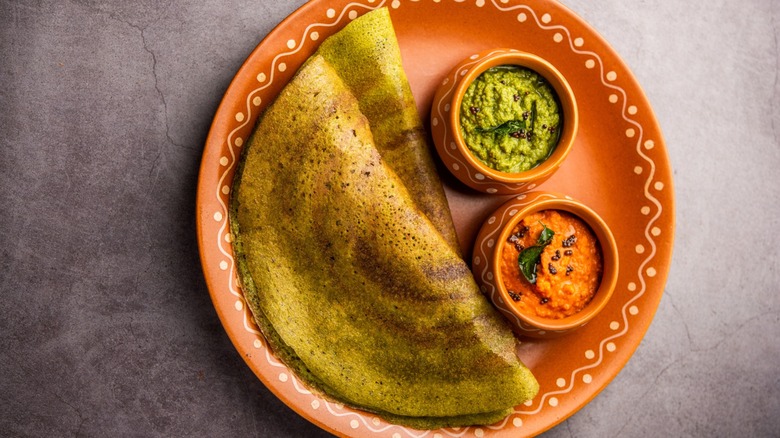
Andhra cuisine might not get as much love as it deserves, especially abroad, but pesarattu is one of the better-known dishes from the South Indian state of Andhra Pradesh. It's easy to see why, too: Pesarattu can be more flavorful than other dosa varieties because it includes green mung beans, ginger, chili peppers, and cumin seeds. Very little, if any, rice is required.
To further set pesarattu apart from other dosa varieties, its batter does not need to be fermented. This quality can make it more amenable to those who live in cold climates where fermentation is difficult, as well as to those who feel intimidated by managing microbial reactions. You will, however, need to remember to soak the mung beans for at least four hours so that they are soft enough to grind.
Pesarattu can be filled with upma, a semolina-based breakfast dish featuring spices, curry leaves, peas, and carrots. Some folks prefer serving upma on the side rather than using it as a filling. In India, pesarattu and upma are often grouped on menus under one item: "MLA pesarattu." Additionally, this dosa is delightful with fried onions or simply on its own. It is frequently served with ginger pickle and chutney. Shriya Narayan specifically recommended a white coconut chutney. The options, though, are endless. "There's no right or wrong when it comes to dosa," explained Narayan. "If you like it, it's right for you."
Adai dosa
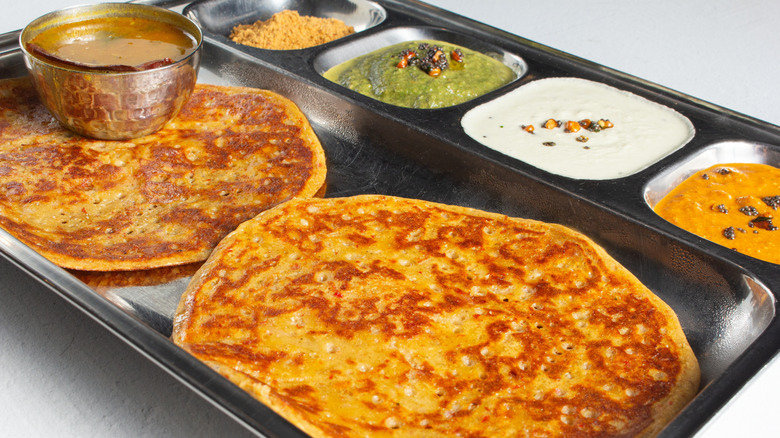
If you have access to a well-stocked grocery store or an Indian grocery, adai dosa might be in the (recipe) cards for you. Instead of utilizing just urad dal, as many dosa varieties do, adai dosa gets its robust flavor profile from a harmonious medley of lentils, the exact kinds of which vary from household to household. Urad dal is a strong contender, as is chana dal, moong dal, and toor dal. Additionally, spices like red chili peppers, fennel seeds, and cumin seeds can make an appearance in the batter, plus aromatics like cilantro, garlic, onions, and ginger.
Like pesarattu, soaking time is mandatory to soften the lentils and rice, but you'll only need to set aside four hours for this step. Alternatively, soak them overnight. This is another dosa variety that requires no fermentation; after grinding the ingredients together, letting the batter sit for as long as four hours will add flavor, but you shouldn't let it linger on the countertop any longer than that. Once the batter is complete, this dosa is cooked on both sides, which makes sense because it is thicker than most other varieties.
An adai dosa will stick to your ribs in the best way possible, so if you're looking for a nourishing, protein-packed dish to add to your breakfast rotation, look no further. In addition to chutneys, you can serve adai dosa with avial, a dish featuring vegetables, coconut, yogurt, and curry leaves. Otherwise, sambhar, jaggery, and butter are excellent candidates.
Neer dosa
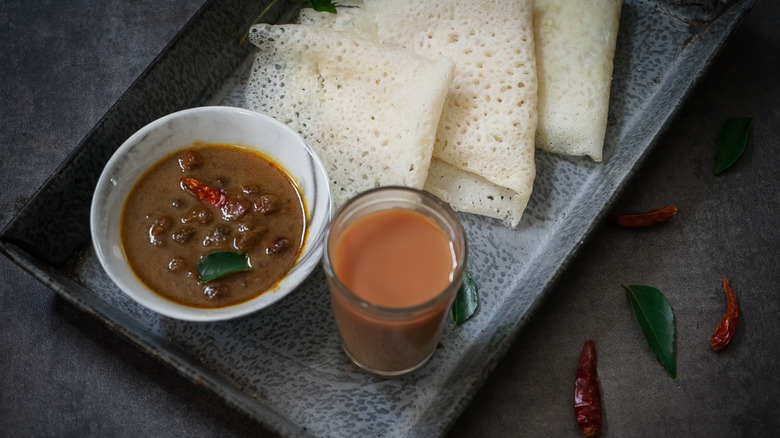
I love the simplicity of neer dosa. Yes, the short list of ingredients makes neer dosa easy to prepare, but its relative blandness also makes it an excellent vehicle for chutneys, sagus, and kurmas. Besides, my digestive system appreciates a basic meal from time to time to reset from all the oil and spices in Indian food.
Neer dosa doesn't require fermentation, but you will need to set a reminder to soak the rice at least four hours ahead of time (or overnight). Aside from rice, you'll need water and salt. In fact, neer dosa owes its name to the Tulu and Kannada word "neer," which translates to water. The absence of lentils puts the flavor of this dosa in a league of its own, while fresh coconut or coconut milk can add sweetness.
Cooking techniques also vary. For instance, instead of using the flat side of a large spoon to evenly spread the batter in a pan, you should pick up the pan and rotate it. And if your heart momentarily stops in trepidation whenever you have to flip pancakes, don't fret — when covered with a lid, steam works in such a way that only one side of the dosa needs to be in contact with the pan.
These ingredients and techniques translate into dosas that are very thin and spongy. They keep well when made hours in advance, making them doubly convenient. Just note that they like their elbow space, so don't let them touch while cooling — otherwise, they will stick together.
Rava dosa
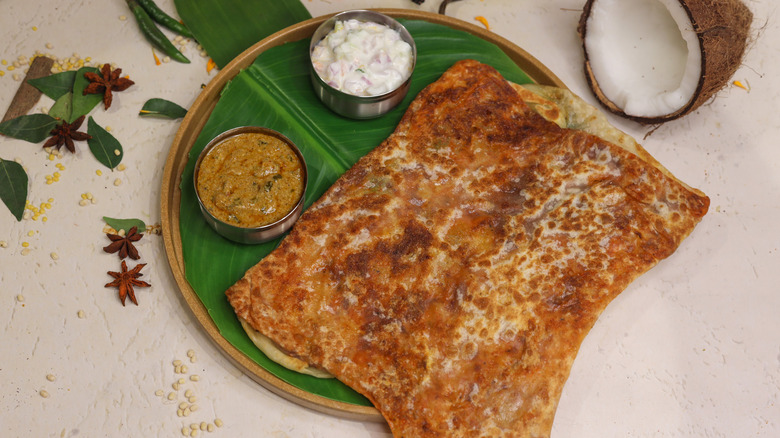
Many folks in India like to choose rava dosa over other varieties, thinking it is healthier. Rava, known as semolina or Cream of Wheat in the United States, is a byproduct of the milling process that yields what might be considered a healthier alternative to all-purpose flour. However, plenty of people would be surprised to learn that rava dosa recipes often call for refined white flour, an ingredient not usually present in other types of dosa. In addition to white wheat flour, rice flour is an integral ingredient. Health considerations aside, rava gives this dosa a more wholesome flavor. Bombay rava is generally recommended for its granule size.
Onions, curry leaves, ginger, and green chili are just a few of the ingredients you might add to the batter to give it more oomph. The batter and the resulting dosa should be thin, with small holes throughout. While this dosa does not require fermentation, a resting period of half an hour can be adequate to soften the ingredients. The dosa is then cooked on both sides.
If you have a reasonable tolerance for spice and want to make your meal even more flavorful, add a dusting of a chili-based podi on top of the finished dosa. "Podi is a personal favourite with any dosa. It's a mix of lentils, coconut, and tamarind. With ghee on top of it, it's lovely," shared Shriya Narayan. Chutneys, potato masala, and kurma are great accompaniments as well.
Davenegere benne dosa
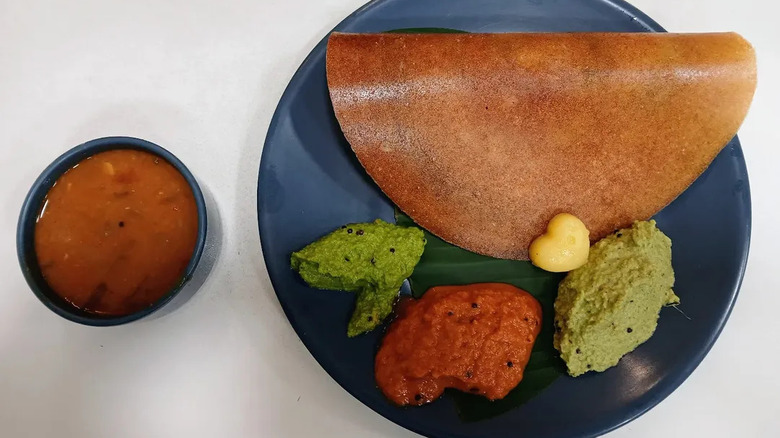
Davenegere benne dosa is the very preparation my family has fallen in love with at Shriya Narayan's restaurant, Benne. Davenegere refers to a town in Karnataka, while "benne" translates to butter in the Kannada language. Indeed, this dosa is nothing if not a vehicle for butter. Specifically, we prefer white butter, which differs from yellow butter in that it is less processed and has a sweeter flavor. In addition to butter, ghee, a type of clarified butter with caramelized notes, sometimes coats this dosa.
Parboiled (idli) rice, puffed rice, and urad dal standardly constitute the batter of this dosa. Fenugreek seeds can also be added for a boost of flavor. The ingredients are soaked then fermented. Once cooked with copious amounts of butter (and sometimes ghee), the dosas are able to become delightfully crispy.
This dosa is usually served piping hot with coconut chutney and a lightly spiced portion of potato. Because so much butter is involved in this dish, it's worth learning the right way to eat Indian food with your hands. Regardless of how much experience you have with forgoing the fork and knife, you'll want to keep a napkin on hand, too. We always need a few.
Mulbagal dosa
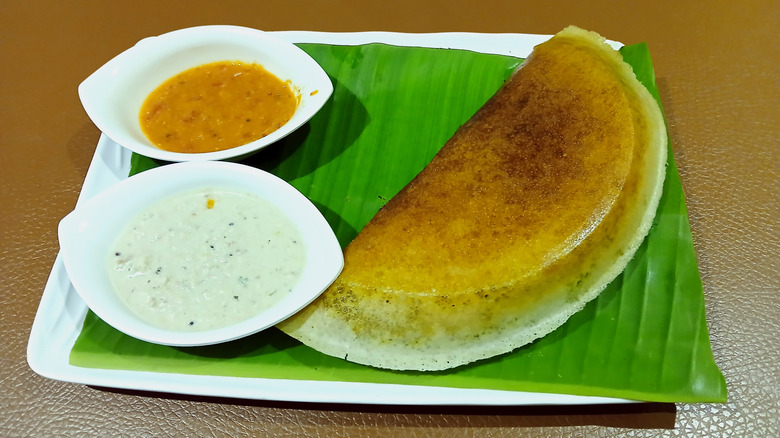
Like Davenegere benne dosa, the name of Mulbagal dosa comes from a town in the South Indian state of Karnataka. Appam, which is made with a fermented rice batter and coconut, is one of my favorite Indian foods, so it makes sense that I'd fall head over heels for Mulbagal dosa, too. Shriya Narayan agreed that these two dishes share much in common. Like appam, Mulbagal dosa also has a fluffy center, especially compared to its thin, crispy edges.
Mulbagal dosa is traditionally cooked on a small pan, setting it quite apart from large dosa varieties like the paper dosa you might get in a restaurant. It is believed to have been created in the 20th century at a hotel but can now be found nationwide due to its immense popularity. Consisting of rice, lentils, and poha, this fermented dosa batter is cooked until crispy on one side, leaving the other side fluffy. The specific oil you use can vary (many types are acceptable in Indian cuisine), though ghee is usually my first choice.
Mulbagal dosa is served with a garlicky red chutney, Narayan stated, and it could set your mouth on fire, depending on how powerful and numerous the chili peppers are. A dab of white butter can help extinguish the flames in your mouth if necessary.