

The Kitchen Floor Material No One Questioned In The 1950s, But Should Have
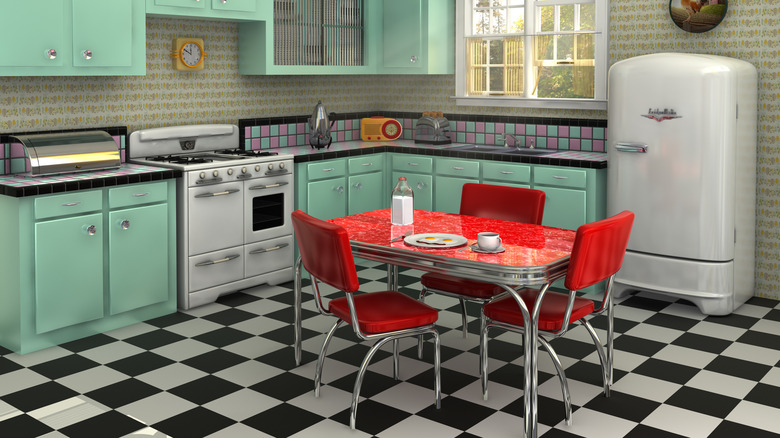
There are many kitchen design trends from the 1950s that are still considered timeless today. However, despite the fact that many vintage kitchen items were built to last longer and work harder, there are some old-school trends you should avoid because they could pose safety issues. For instance, a particular kitchen floor material that was incredibly popular in the 1950s was actually very dangerous, but homeowners didn't know it yet.
From around 1920 to the 1960s, many homes were built with asbestos floor tiles. They were popular because the tiles were durable, easy to clean, water-resistant, and available in a range of colors. Unfortunately, at that time people were generally unaware of the dangers of asbestos. In fact, Julia Child once baked with an asbestos tile to achieve extra crackly bread. However, long-term exposure to asbestos fibers during manufacturing or installation processes has been proven to cause lung cancer, mesothelioma, or asbestosis. If materials containing asbestos (a silicate mineral fiber that occurs naturally in rock and soil) are disturbed due to renovation or construction work, even decades later, breathing in the dust can cause major health issues.
By 1989, when the dangers of asbestos were better understood, the EPA prohibited the use of the material in any new construction. The ban caused outcry by the asbestos industry and was overturned on appeal in 1991, and a final ruling against the dangerous building material wasn't instituted until 2019. Home and property owners were urged to test their home for asbestos or ask for property records related to building materials, but there wasn't any large-scale attempt to confirm that this had been done. This means that many properties in the U.S. could potentially still have asbestos products in them today.
Recognizing asbestos floor tiles, and what to do if your home has them
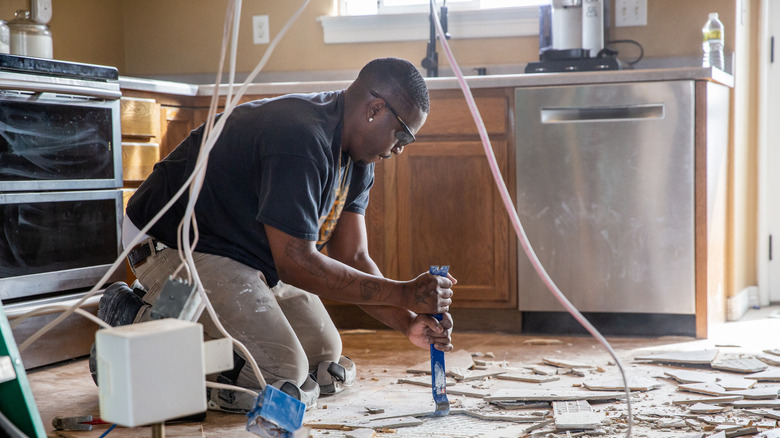
If you buy or live in a home that was built before 1960 (or if you know that renovations were done before 1989 and you don't have any records related to asbestos testing or abatement), you should consider contacting an environmental remediation specialist as this dangerous vintage kitchen design trend could be wreaking havoc in your home.
Asbestos floor tiles typically came in squares that were 9, 12, or 18 inches in size. Exposure to the elements may have caused the tiles to become discolored or appear oily over time. You may be able to identify asbestos tiles by comparing earlier pictures of the flooring to how it looks now. If any of the flooring is damaged, you can also look at the adhesive underneath. If it looks thick and black, it may be cutback or black mastic adhesive, which was a common flooring adhesive used during the time period in which asbestos tiles were installed.
Asbestos tiles are most dangerous if they are damaged or disturbed. You should never try to remove flooring tiles yourself if you suspect that they contain asbestos or if you haven't had them tested. In many cases, a professional will advise you to cover the tiles with a different flooring material rather than remove them entirely. Another option is to seal the existing tiles with epoxy or paint. You can then install another kitchen flooring material on top if you desire. However, you have to keep detailed records of modifications, including information about asbestos testing, so that future owners understand the risks.