

One Tangy Ingredient Gives This Classic Italian Sauce A Gourmet Edge
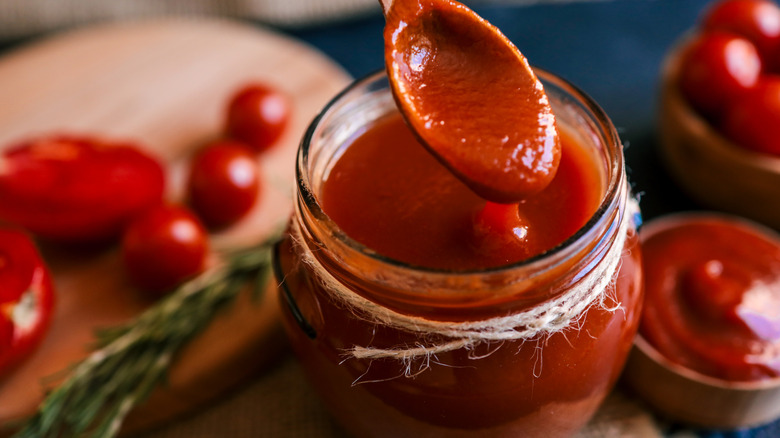
Italian cuisine is among the most famous in the world, and for good reason. Iconic dishes like pizza and pasta are fan favorites no matter where you are in the world. And these two categories of Italian food in particular showcase the most classic Italian sauce, red sauce. Red sauce can be a stewed tomato sauce or a simple marinara sauce. While traditional recipes uphold strict standards that ban certain ingredients, an unconventional yet gourmet upgrade to Italian tomato sauces is balsamic vinegar.
Balsamic vinegar stands out from the other vinegar varieties in the way it is produced using actual grapes and a longer aging process. Consequently it has an almost black hue and a flavor as sweet as it is sour. While we tend to use balsamic vinegar into vinaigrettes for our salads, you'd be surprised at the unique ways this complex vinegar can be used. And tomato sauce is one such recipe that will benefit from its sweet and tangy profile.
Tomatoes are, themselves, sweet and tangy, but when we cook them into a sauce, they are transformed into a savory, umami-rich reduction. So, the balsamic will help bring out the inherent flavors in raw tomatoes while also complementing the new depth of cooked tomatoes and the savoriness of common sauce ingredients like garlic and herbs. Plus, balsamic is an Italian-born ingredient upheld by the same DOP seal as San Marzano tomatoes, parmesan cheese, and mozzarella, common ingredients on pizzas and pastas.
How to incorporate balsamic vinegar into tomato sauce
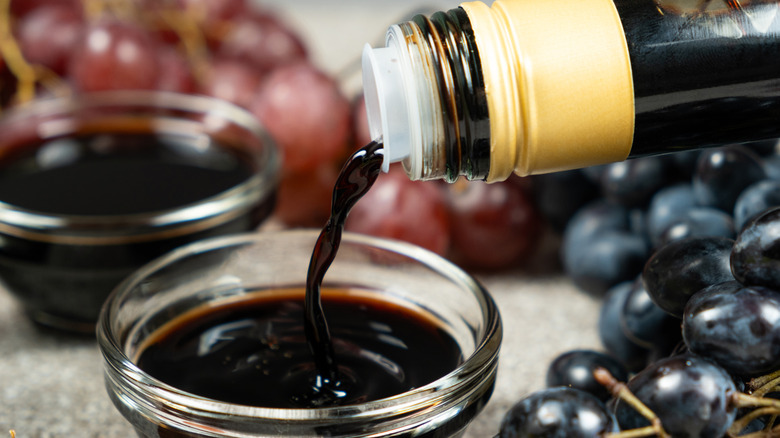
Whether you're making this quick tomato sauce or marinara sauce from scratch or just doctoring up a jar of store-bought pasta sauce, balsamic vinegar will bring brightness and depth of flavor. The dash of acidity that balsamic offers is the antidote to a bland marinara sauce, and it's certainly better than the faux pas of adding onions! It's easy to incorporate balsamic vinegar into tomato sauce, but when to add it depends on the type of flavor you're looking for.
A general rule of thumb is to add 1 to 2 tablespoons per every 2 cups of sauce. But you can start with a few teaspoons if it's your first time trying it. If you want to mellow the tanginess of the balsamic, add a couple of tablespoons at the same time you add your crushed tomatoes, simmering for 15 to 30 minutes to fully meld the flavors. If you're making a more involved tomato sauce with sautéed veggies to start or even a meaty Bolognese, you can use the balsamic vinegar to deglaze the pan before adding the tomatoes and cooking liquid. If you want to add balsamic to store-bought sauce, add it to a pan with the sauce to heat up together, stirring to combine. For a sharper tanginess and a more balsamic-forward flavor, you can wait to add the balsamic vinegar till the end of the cooking or heating period.