

You Might Want To Think Twice Before Ordering Eel At A Seafood Restaurant Again
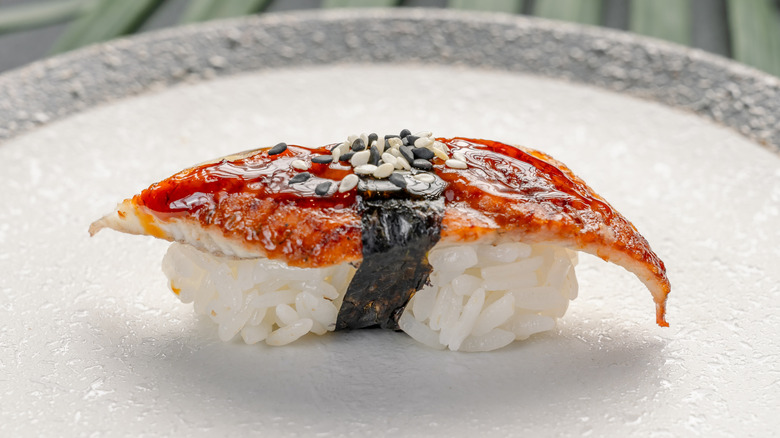
Eel is far from the most common variety of fish to pop up on the menu at the majority of U.S. seafood restaurants, but it is a mainstay at sushi joints. Unagi — the Japanese word for eel — is a common protein found in nigiri and maki, typically cooked and coated in the traditional sweet and savory eel sauce made with mirin, sugar, soy sauce, and sometimes sake. Despite its prevalence in Japanese cuisine, however, you might want to trim that unagi roll from your order.
The reason eel is typically served cooked even in sushi is that eating raw eel is dangerous, as eel blood contains a toxin called ichthyohemotoxin. Fortunately, cooking neutralizes this toxin, making it perfectly safe to eat, so that fear of toxicity is not why eel is better avoided at the sushi counter. No, the real reason eel is one of the dishes you should never order at a seafood restaurant comes down to questions of sustainability and environmental degradation.
Wild eel populations around the world are in trouble. Overfishing, habitat loss, climate change, pollution, and disease have resulted in severe drops in freshwater eel stocks across species and regions. Japanese and American eels are listed as endangered, and European eel populations are in even worse shape, being listed as critically endangered. In spite of these populations sitting on the brink of collapse, some are still illegally fished, though the majority of eel sold these days comes from aquaculture. Unfortunately, eel farming is not without its own severe issues.
Eel aquaculture is an ineffective solution
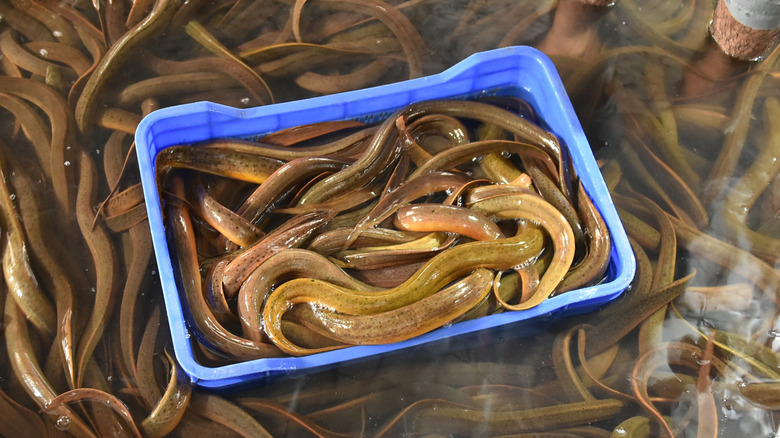
When wild foods begin to decline, it is a natural solution to attempt to farm them, and eel farming is big business, but the negative ramifications of eel aquaculture are both notable and varied. Pollution is a significant problem, both from the operations' effluent and from the use of chemicals — including banned chemicals — in the farms. Additionally, being carnivorous fish, eels rely on fish protein, meaning that each pound of eel requires roughly 2.5 pounds of wild-caught fish to produce. The cramped conditions also create issues with disease and parasites, which can spread from the farms into wild eel populations. The most severe issue, however, is that the eels cannot yet be bred in captivity, meaning the industry is 100% reliant on wild stocks.
Freshwater eels travel out to sea to spawn, laying their eggs in places like the Sargasso Sea, in the case of American and European eels. The eggs hatch amid the dense vegetation of this part of the ocean, and the small translucent young drift back toward their freshwater habitats. With the current state of eel farming, however, many of these young are captured at the mouths of rivers and turned over to a life in aquaculture instead of being allowed to return home and continue their natural life cycle. In essence, eel aquaculture is not so much a form of farming as simply raising wild fish in captivity. Each eel grown in a farm is one removed from the wild, preventing it from ever completing its own spawning journey. The many threats to freshwater eels have led to population collapses of as much as 90% over the past few decades alone.
How to enjoy eel-like sushi without the environmental guilt
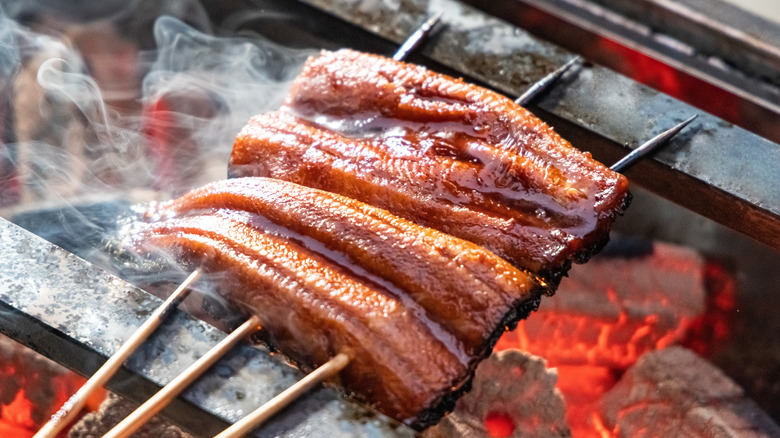
After seeing the facts about the state of eel populations and the effects of eel farming, it is clear that you won't be finding it on any sustainable sushi lists anytime soon. There are scientists working on cracking the complex code of the freshwater eel breeding cycle, creating an environment in which they could induce eels to reproduce in captivity, but they aren't quite there yet. That technology would change the face of eel aquaculture entirely — and potentially allow the species to rebound in the wild — but until then this popular type of seafood is better left off the menu.
Eel being removed from your plate does not mean, however, that you must forego the style and flavor of the dish. Much of what makes eel sushi so wonderful is the umami rich condiment that coats the fish, and that sauce, as it turns out, is delicious on plenty of other foods as well.
Smaller filter-feeder fish like sardines and herring are often found among the more sustainable fisheries, and can make a great alternative to eel. You might need to cook it yourself, but charcoal-grilled herring slathered with that same delightful sweet-and-savory sauce will certainly satisfy any unagi craving that you might have. You can even stack it on some simple homemade sushi rice to complete the eel nigiri experience, if you want. Or, for an even more environmentally-friendly meal, opt for eggplant, a common substitute for eel in vegan sushi recipes. Eel might not be a sustainable seafood order, but there are plenty of other avenues to that same gustatory experience.