

This Is Why We Actually Panic-Buy At The Grocery Store Ahead Of Storms, According To Science
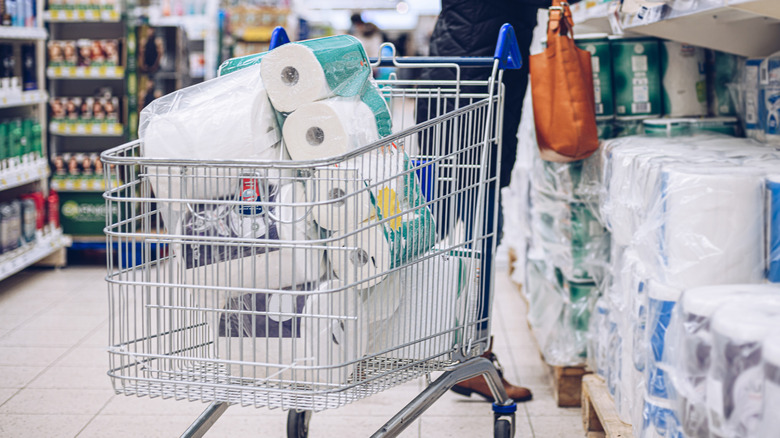
Think back to 2020. Grocery stores looked like they'd been hit by locusts. Toilet paper? Gone. Fast forward to 2021 and suddenly everyone was stockpiling jerrycans of gas. Then a port strike happened, and boom — panic buying returned again. But the thing is, none of the stuff being bought in bulk was actually running out. There was no real shortage. Yet thousands of shoppers have recently gone into full-blown survival mode in preparation for 2026 winter storms ... again.
Research reveals the psychology behind this phenomenon. You see, when things feel uncertain, our brains skip right past rational thinking and head straight to the worst case scenario. We immediately think: What if absolutely everything goes wrong? According to behavioral finance professor Hersh Shefrin at Santa Clara University, talking to USA Today, that's how we go from, "Maybe I need some extra supplies" to "The apocalypse is upon us" after two seconds in the toilet paper aisle.
Fear is just one of many psychological factors that make up this perfect storm of scarcity. There's also the social-contagion aspect, per Joseph Devlin, co-founder of the London-based Applied Consumer Neuroscience Labs. When you see someone else's overflowing cart in the grocery store, your brain short-circuits. If they're buying that much, maybe you should too, right? One person's worry infects the whole store. Even if you've no intention of buying ten packs of mega-sized 3-ply, you find yourself snagging them anyway.
Panic buying is a self-fulfilling prophecy
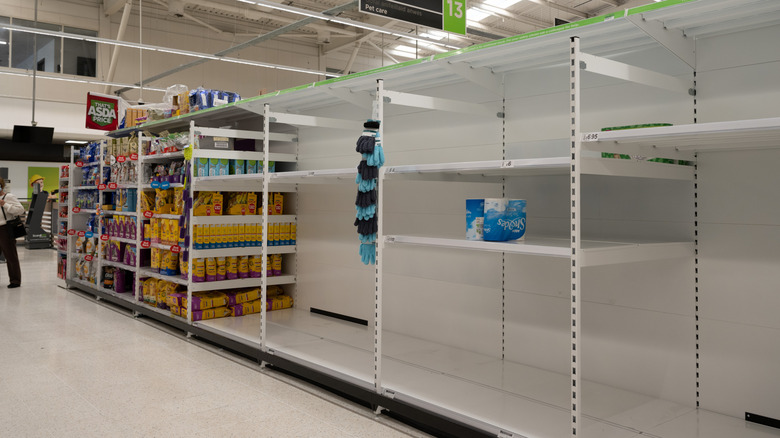
Here's the cruel irony: Panic buying actually creates the shortages people are afraid of. When thousands of shoppers hit stores simultaneously and buy way more than usual, they outpace what delivery trucks can bring in. Those trucks show up to find bare shelves and the instant goods are restocked, they vanish into people's basements and garages again as the next wave of panicked buyers floods in. The supply chain gets crushed under demand that spikes way beyond normal consumption patterns.
The real damage spreads beyond just empty shelves, though. Store employees work themselves ragged (or, during COVID-19, became sick themselves) trying to stock up. Regular shoppers — the elderly, healthcare workers, families — can't find basics because everything's been hoarded. "When they do go to prepare, they may find out that their resources, their food items, are not available, so there's nothing left for them to purchase," said LaMonika Jones, director of D.C. Hunger Solutions at the Food Research & Action Center, in Grist Magazine with reference to 2026 winter storm prepping.
Empty shelves everywhere trigger more fear in more people, which sparks additional buying. It becomes this vicious cycle where collective behavior manufactures a crisis that wouldn't exist otherwise. Most items people panic-buy, like toilet paper, are made right here in the United States. There's no genuine supply chain disaster. People just convinced themselves there was one.
Instead of panicking, here's what to do instead
Before you rush to the store to stock up for over a month's worth of goods, stop and ask yourself some real questions. Will this thing actually disappear? For how long? Most everyday stuff — including that toilet paper everyone loses their minds over and store-bought pasta — gets manufactured domestically and moves through regular supply networks without interruption. If you're buying something that genuinely travels from overseas, sure, grab a couple extra weeks' worth. But buying three months of pasta? That's the panic talking.
What actually helps is to skip emergency shopping trips fueled by anxiety. Shop when you're calm. Make a list and stick to it. Sounds boring, but boring decisions are solid decisions. It's unlikely you won't be able to leave the house for a month. Also, maybe turn off the news for a bit. Constantly seeing footage of empty shelves doesn't give you useful information — it just winds you up tighter. The retail world has actually learned from previous crises, as well. Most grocery stores now keep bigger backup supplies than they used to, and logistics teams move heaven and earth to restock when things get weird, so rest assured that you can shop normally even while your neighbors are getting heated about it.
Think of restraint as a community service. Waiting a few days to buy emergency canned goods doesn't hurt you. Leave some stock for elderly neighbors and shift workers to get what they need. And trust the supply networks, too — they're tougher than they look. They just need people to be regular shoppers instead of doomsday preppers.