

Do Pickles Really Need To Be Refrigerated?
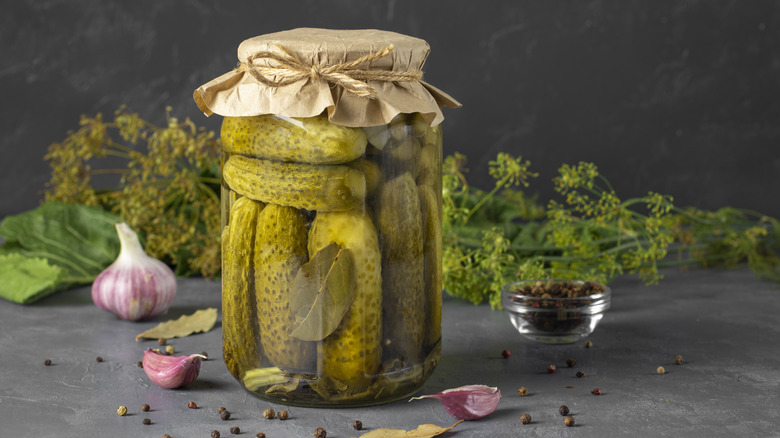
Food storage rules can be more complicated than you think, and not paying attention to details can put you in a pickle — literally. As a preserved food, you may think cucumber pickles can be left at room temperature for as long as you like, but think again. To avoid winding up with off-tasting pickles that spoil or make you sick, stick them in the fridge immediately after opening.
Different types of pickles may have different shelf lives, especially when it comes to canned pickles versus "fridge" pickles. Canned pickles, like the kind you buy at the store, have gone through a water bath sterilization and canning process to make them sterile and shelf-stable while sealed. To save space, this is one food you shouldn't refrigerate, as these pickles can sit out at room temperature for up to a year past the "use by" date. They'll taste best when eaten within a year of buying (or canning, if you preserve your own pickles), but they remain safe to enjoy for longer.
As soon as you pop the seal on the jar, however, the clock starts ticking. You can store an opened jar of pickles on the counter for two hours max, and even within this period, they may lose some of their crunch. After that, you must refrigerate them to ensure no harmful bacteria or mold grows. An open jar of pickles will last in the refrigerator for about three months before degrading in quality and eventually spoiling.
How to store fridge pickles and tell pickles have gone bad
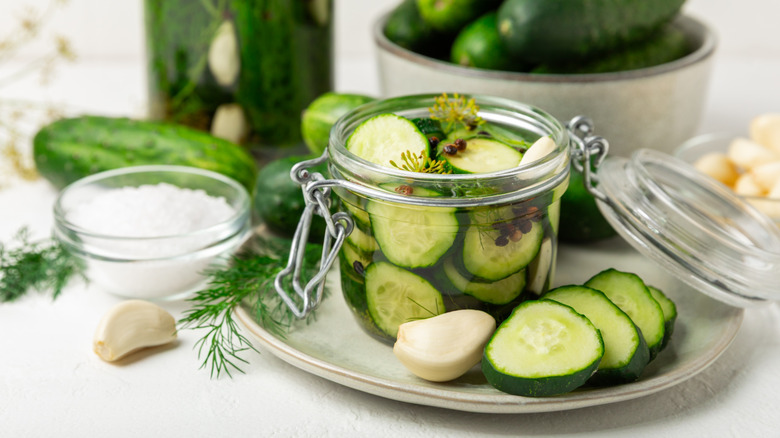
If you follow a classic dill pickle recipe and don't feel like going through the canning process, you'll have made some fridge pickles or quick pickles. Even though these types are also soaked in brine, which helps them last a while without growing bacteria, fridge pickles don't keep as long and can't be stored outside the refrigerator. You have three to four weeks to eat these homemade refrigerated pickles before they start to go off. And if you buy pickles in the refrigerated section at the grocery store, they should be treated just like homemade fridge pickles.
While storage rules for canned and fridge pickles differ, they show the same red flags once they start to go bad. As opened pickles approach the end of their shelf life, the brine often turns from clear to cloudy, and the liquid (or pickles themselves) may change in color. The pickles will also lose their crunch and turn soft and may even become mushy.
Serious signs of spoilage include bad odors, visible mold, brine that becomes bubbly or "fizzy" when it originally was not, or a bulging container or lid. The latter two symptoms are signs of microbial growth and bacterial activity, which causes carbon dioxide to build up in the container. Notably, both opened and unopened pickles should be tossed if they show these alarming signs, even canned pickles that haven't been unsealed yet.
Follow these tips to help your pickles stay good for longer
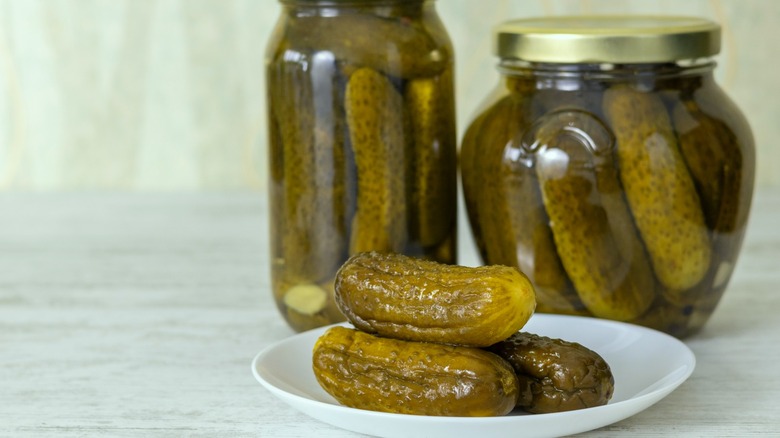
Canned pickles are resilient soldiers when it comes to shelf life, but they're not immune to poor storage conditions. Unopened jars should be stored in a cool, dark place away from heat and sunlight, including appliances that create heat such as stoves, radiators, and heating vents. These factors can damage the flavor and texture or even impact their longevity. If your home gets hot in the summertime or your air conditioning breaks down, you may want to put unopened jars in the fridge.
To get ahead of spoilage, watch out for the telltale signs your canned goods have gone bad. Routinely inspect your canned pickles for cracks or dents in the storage vessel, loose or bulging lids, and other indications that the jars have been damaged or unsealed. If you find a pickle jar that appears to have its seal compromised, do not eat the pickles inside, even if they look and smell unspoiled.
To help all types of pickles last longer after opening, keep them fully submerged in their brine with no parts sticking out, and fish them out of the container using clean utensils or freshly washed hands so you don't introduce foreign substances and bacteria. Always make sure to tightly seal the container after each time you open it, too. With these tips, your pickles should stay fresh and perfect to crunch on for as long as they're supposed to.