

Avoid Cooking These 5 Foods In A Glass Dish
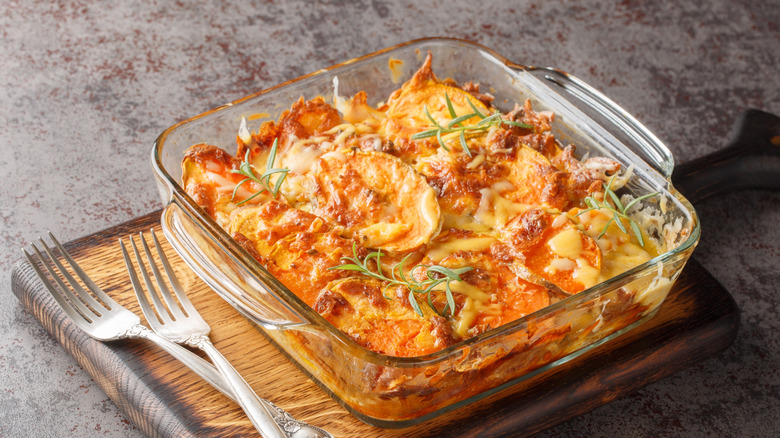
At some point or another, you've probably fantasized about having access to a fully equipped kitchen, with specialized dishes for any recipe you might want to create. The reality is that we're limited by what we have access to, and, for the most part, each item of cookware will need to be used for a variety of situations. While you might think that as long as your dish is labeled as oven-safe, you're good to go. Knowing when to choose metal or glass pans really does make a difference. It's not that one is better than the other, but each has its strengths and weaknesses. A couple of things glass shouldn't be used for are broiled dishes and baked sweets.
In general, glass dishes are great for things like casseroles. They're slow to heat up, but keep things warmer for longer when they come out of the oven. They're also non-reactive, so if you're working with acidic foods such as tomato, reach for glass. Glass does have its downsides, however. It's not great for browning or cooking at very high temperatures, which limits what you can make in it. Here are some foods you should avoid cooking in glass dishes.
Broiled dishes
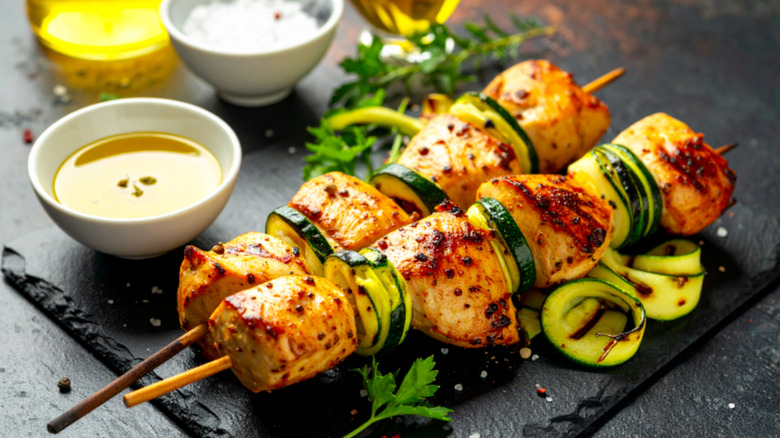
We're getting this one out of the way first, as it will probably come as a surprise to many people. Even if your glass dish is labeled oven safe, it's not designed to withstand very high temperatures. The maximum temperature a glass dish can withstand varies by manufacturer but is often around 425 degrees Fahrenheit. Broilers typically operate at over 500 degrees Fahrenheit, so don't use that Pyrex dish for broiling, as it could shatter.
It's not just the high temperatures, but also the direct heat, compared to the gentler radiant heat of an oven. This direct heat is what gives a grill-like finish to fish, vegetables, or this broiler pollo asado, but it is too much of a temperature change for your glass dish.
What about those recipes that call for finishing a casserole or mac and cheese under the broiler to get a crispy top? Well, this is where the differences between glass, stoneware, and ceramics come into play. Ceramic and stoneware can handle higher temperatures than glass, and some brands even mark their dishes as broiler-safe.
Roasted vegetables
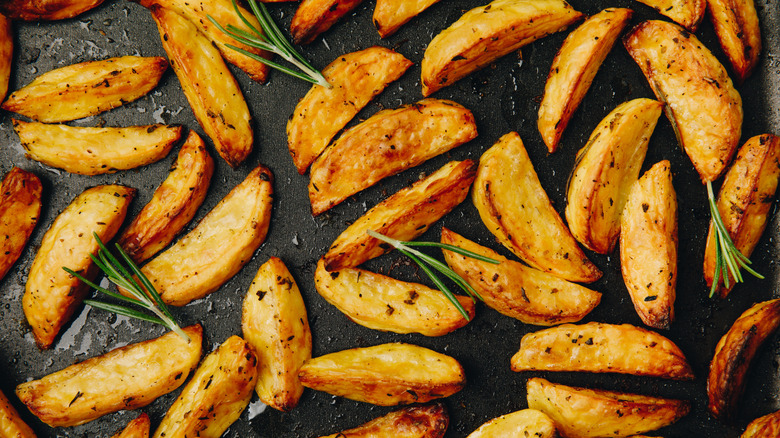
One of the easiest ways to transform vegetables is to roast them. With nothing more than a drizzle of oil and some time in the oven, you're rewarded with crispy-skinned potatoes, sweet potato fries, or cauliflower steaks. They don't hold quite the same appeal, though, if you can't get that browning or crunchiness on the outside — and that's the risk of using a glass dish. A classic roast potato relies on contact with a very hot surface to caramelize the outside, but glass just doesn't transfer heat efficiently enough to get the job done.
A crunchy finish also needs good air circulation to help moisture evaporate, which is why crowding the pan can result in steaming rather than roasting. Glass dishes tend to have higher sides than metal baking trays, blocking the airflow and trapping steam, ruining any chance of crispiness.
That's not to say there's no place for vegetables in your glass dishes. There are times when you want soft and unctuous — for example, when making roasted peppers or creamy roast eggplant. Tomatoes can and should be roasted in a glass dish. Cooking acidic foods in metal will often give off odd flavors, whereas glass is nonreactive.
Bread
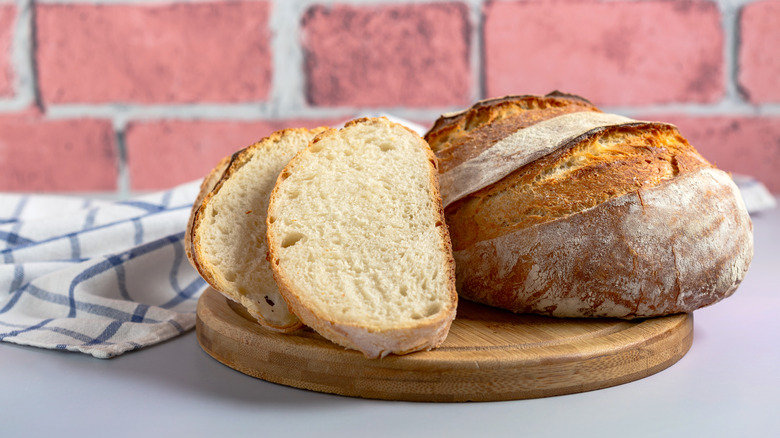
Making your own bread at home is a labor of love, and one that often comes with a lot of failed attempts — especially if you're aiming for sourdough or other artisan loaves. To give yourself the best chance at success and avoid the tears, it's essential that you choose the right equipment. For a crusty loaf of bread, avoid using glass dishes.
If we've learned anything so far, it's that glass will not give you that crunchy base that's a vital element of bakery-style bread. And it's not just the base that you need to worry about. A good sourdough loaf needs to be baked at high temperatures to achieve a solid crust all over. For home bakers, this means starting at 485 degrees Fahrenheit or higher, with the rest of the bake done at 450 degrees Fahrenheit. This puts your glass dish at risk of shattering.
There are some instances when a glass dish can be used to bake bread, though. While glass isn't the choice for cornbread with a crispy crust, you can use it if you prefer the style that's moist from top to bottom. Likewise, a glass baking pan can be used for quick breads like zucchini loaf, where you're not necessarily looking to develop a crust.
Dry roasted foods
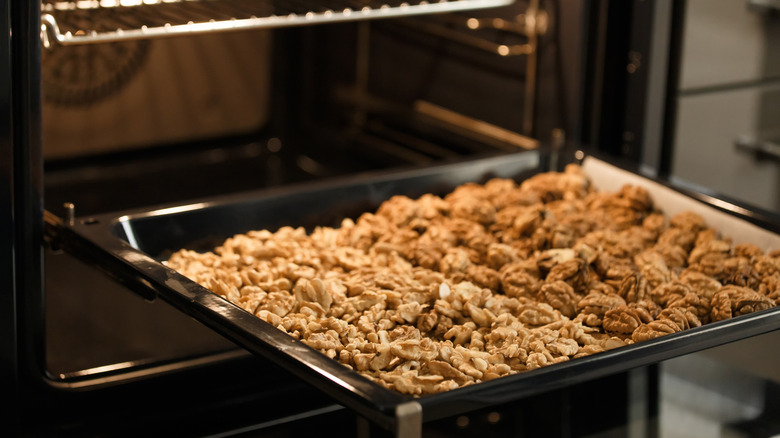
As mentioned, one downside of using a glass dish rather than a metal one is that it can break. Even if you do all the right things like avoiding high temperatures and direct heat, something as seemingly innocuous as dry roasting can be a reason for your glass dish to shatter.
Glass relies on oil, water, or other liquids to transfer heat across its surface efficiently. When you add something like a whole chicken or a piece of meat to a glass pan, the uncovered parts of the surface will heat unevenly, creating hot spots that can cause cracking. The solution is to make sure you add enough oil or water to coat the entire pan, not just the bottom. This needs to be added before the pan goes in the oven. Adding cold liquid to the dish during cooking can cause thermal shock.
This means glass shouldn't be used when you can't add any liquid to the dish. Toasting bread for croutons, roasting nuts or seeds, or reheating pastries all require a metal tray.
Sugary baked goods
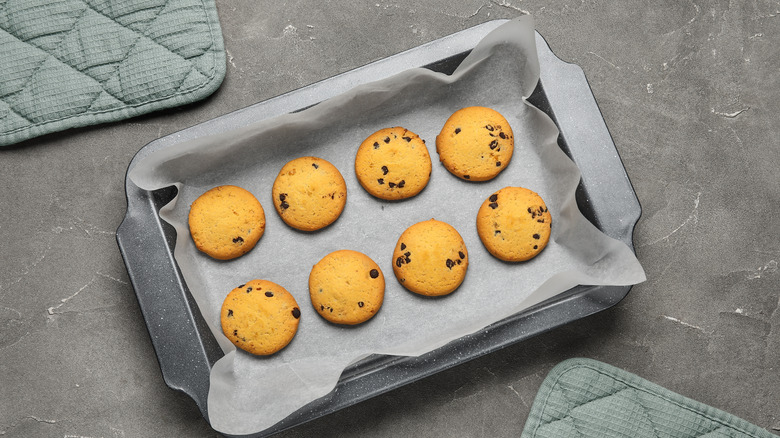
Cookie sheets are made of metal for a reason. The hot surface plays a very important part in the process, and that's to start cooking the bottom of the cookies as soon as they go into the oven. Place your cookies on a glass dish, and instead they will first be heated by the hot air from the top and sides, at which point the sugar begins to melt. By the time the glass is hot enough to set the cookies' bases, they will have spread.
Add to this the potential hot spots from cooking dry foods in glass, and you'll end up with unevenly baked treats. Even if you are baking something that covers the whole pan, such as a tray of brownies, you might find that inefficient heat transfer causes the batter to melt rather than set, resulting in a denser dessert.
Whether you should bake a pie in a glass dish seems to be up for debate. While some people want the texture that metal pans provide, others like the ability to see the progress of the cooking through the glass. If you do opt for glass, be careful to remove the dish from the oven a little before it's reached ideal doneness. Although glass is slow to warm up, it retains heat long after it comes out of the oven, and your pie will continue cooking on the counter.