

This Is Why Good Breweries Always Rinse The Glass Before Pouring And Serving You
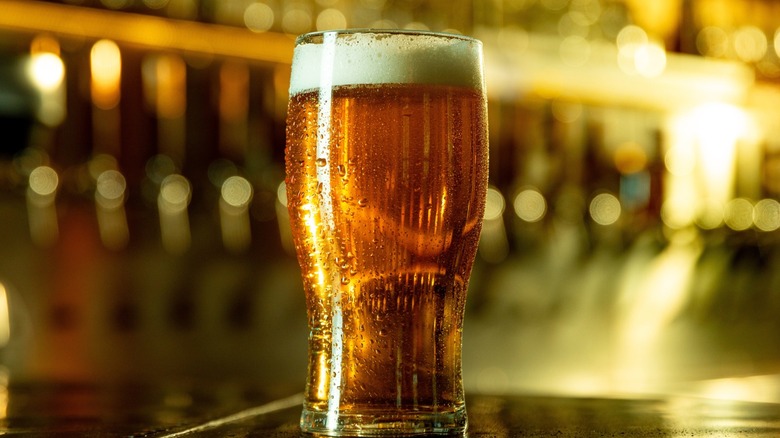
No one wants to drink from a dirty glass under any circumstance — but when it comes to beer, there's clean, and there's "beer clean." If you've ever noticed a bartender spritzing the glass with a little cold water just before they pour and serve your drink, that's what they're doing. Take it as an indication that you're in good hands with a bar, restaurant, or even one of the best breweries in the U.S., as they clearly care about upholding industry standards. And this isn't some hoity-toity practice followed only by small craft beer artisans. It even has its own day — "Beer Clean Glass Day" — which occurs every fourth Saturday of April and is spearheaded by the renowned Cicerone Certification Program. So, why is this extra rinse necessary? Isn't the glass already clean?
The short answer: probably not. That's where the concept of "beer clean" comes in. That extra rinse after washing ensures the glass is free of any impurities that may not be visible to the naked eye. These include residual detergent, sanitizer, oils, particles, and dust, all of which can negatively affect the aroma, flavor, consistency of the body, and even the look of the beer.
But wait, there's more. Coating the inside of the glass decreases friction when the beer goes in, leading to a smoother pour. This, in turn, ensures you get a good head of foam in your beer, improving its flavor and aroma. It also cools the glass some, which is helpful if it recently came out of a dishwasher.
How to tell if your glass is beer clean
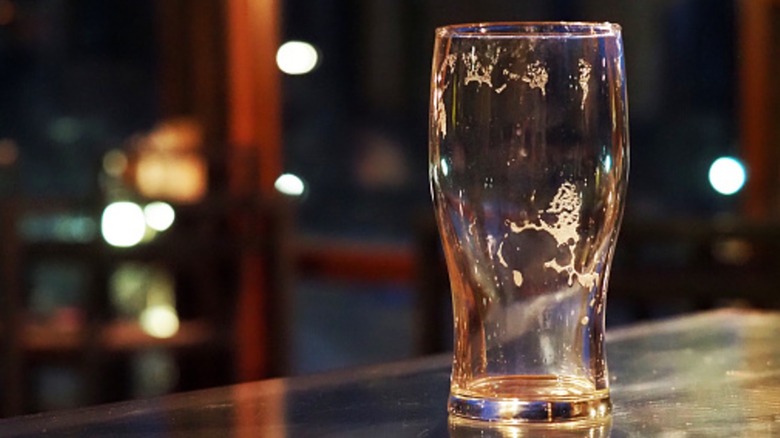
While most folks don't go to the trouble of making glasses "beer clean" at home, if you are having beer at home, you should at least always pour your beer into a glass. If you're enjoying your pint out, there are several ways to gauge whether your glass is "beer clean." One way is to check the foam: Not only does a "beer clean" glass give a good head, but that head lasts longer instead of dissipating quickly.
Once you've finished your beer, look for lacing all the way down the sides – but not bubbles. Sticking bubbles on the sides of the glass means debris or dust, which CO2 from the carbonation process has attached to. Any bubbles should rise to the top, leaving your beer uniform and smooth. You can also ensure your glass is "beer clean" before pouring your beer using the sheeting test: Fill the glass with cold water, taking note of how it reacts as you pour it out. If the water coats evenly, like a sheet, you're golden, but if it beads up or collects unevenly in different parts of the glass, it's not "beer clean."
You can also use the salt method. Rinse your glass with cool water and add a little salt to the inside. If the salt coats the sides evenly, it's "beer clean," but if it sticks in some areas more than others, your glass is still dirty. And if it is "beer clean," be grateful — thank your bartender for your deliciously frothy, hop-infused libation, which has been made all the better by their upholding of this standard.