

Why Seafood Restaurants Seem To Struggle More Than Other Chains To Stay Afloat
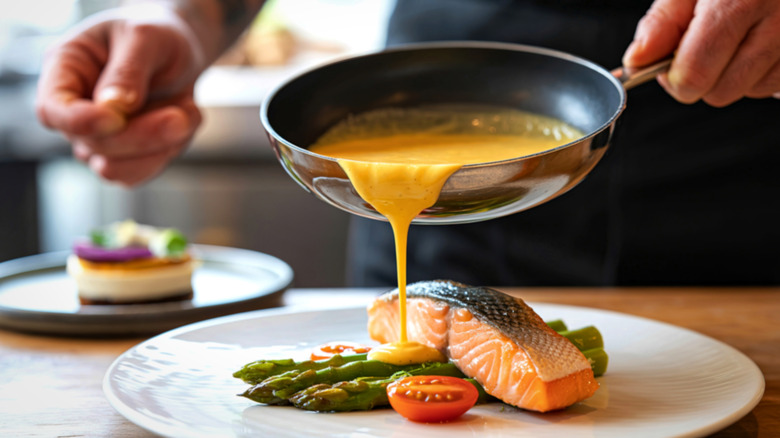
With Red Lobster going bankrupt and Joe's Crab Shack shutting down a majority of its 150 locations, it's hard not to wonder why seafood restaurants have a difficult time staying afloat. Is there something specific that makes margins more difficult for seafood restaurants than other chains in general? We sat down with Franklin Becker, chef and owner of a Manhattan seafood restaurant called Point Seven, who gives us an answer.
Previously, when we had spoken to Becker, he had pointed to the rising cost of seafood. Oysters have become quite expensive, for example. Along with ingredients from the sea and oceans, such as crabs, shrimps, and lobsters, becoming costlier, the cost of labor is generally rising in the restaurant industry.
Regardless of these rising costs, as Becker points out, "[Seafood] chain restaurants tend to have a price ceiling and that is the issue." Thus, when Becker tries to raise the price of his seafood dishes at Point Seven, it might deter his clientele, as they could see his seafood dishes as being overpriced. So, when food costs continue to rise, but menu prices can't, a seafood restaurant's margins tend to shrink.
With dwindling supplies and rising costs, smaller restaurants face a lose-lose situation
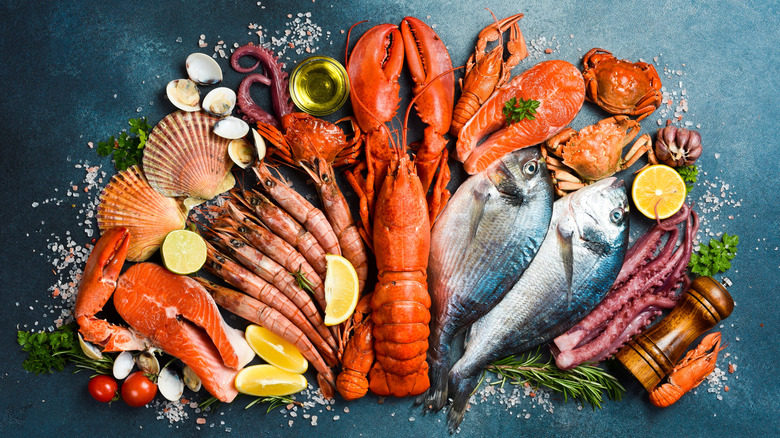
What do seafood restaurants do, then, to try to stay afloat? Becker tells us, "... they look for sources in other parts of the world or towards farmed species and truth be told, they are mostly inferior-quality products." To keep menu prices competitive and attractive to clientele, restaurants may make a compromise on the quality of the ingredients they source. Even then, Becker states that "Smaller restaurants do not have buying power." This means they lack the leverage that bigger chains have, which also means less access to better prices and higher-quality ingredients.
While seafood restaurants seem to struggle more than other chains to stay afloat, many challenges they face are not unique to them. Beef prices, for example, have surged in recent years, and mid-priced steakhouses — like Outback Steakhouse — face a similar challenge of operating under a price ceiling. On top of this, consumers feel it's just become too pricey to eat out. One Redditor remarks, "You would think that with restaurants charging so much they would be making a lot. Not the case, the margins are still very slim ... issues in society to blame, not the restaurants. Keep supporting them when you can afford it."