

9 Bedtime Snacks Nutritionists Actually Recommend
Late-night snacking has had a bad rap for a long time. When pop culture takes a stab at this (very) human thing, it often portrays the scene as pernicious or, at best, distasteful. Combine that with regular condemnation by diet culture and accusatory media headlines that frame after-dinner eating as a moral failing, and it's easy to see why most of us want to steer clear. But evening eating habits aren't sinful or gluttonous. Nor are they always harmful. In fact, sometimes having a snack before bed can offer big benefits for how we sleep.
As in all of life, there are, of course, some caveats. Unattentive consumption of extra sugary or salty things may take the grumble from your belly, but they won't leave you nourished or set you up for a successful night's rest. Instead, the best bedtime snacks strike a careful balance. They're satisfying without overstimulating, fulfilling, but not heavy. If you're someone working a late job schedule or are simply just trying to stop feeling hungry before you sleep, there are copious foods that contain ideal nutrients for promoting relaxation, stabilizing blood sugar, and even encouraging the production of sleep-healthy hormones.
Whether your goal is better sleep, improved digestion, or simply fostering a different relationship with nighttime eating, your choice in pre-bed snacks will make the difference. To help make that choice a bit more peaceful, we asked several nutritional experts what they recommend as the best snacks to have before bed. Collectively, our experts agree that protein and carb-based pairings, along with those rich in sleep-supporting compounds like magnesium, melatonin, and tryptophan, are the bedtime snacks that dreams are made of.
Tart cherries
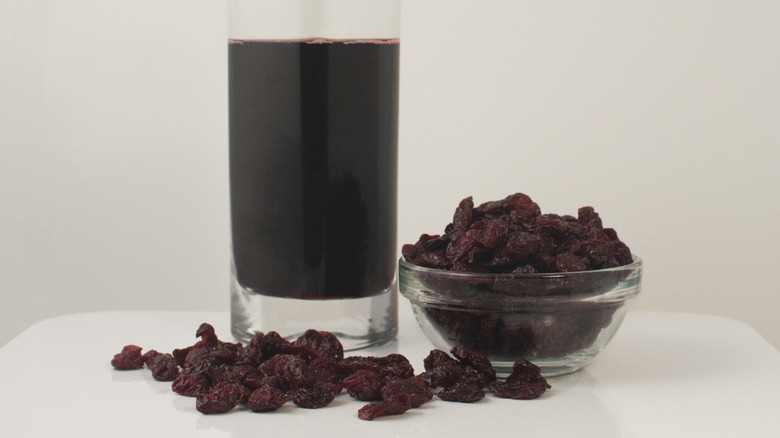
By and large, tart cherry is the most touted pre-sleep snack out there, so popular that three of our four experts pointed to it. "Cherries have long been enjoyed as evening preserves or tonics in parts of Eastern Europe and Central Asia, often served simply or lightly warmed," said Serena Poon, a certified holistic nutritionist, longevity wellness advisor, and founder of Serena Loves. Cultural influences considered, there are also many factors that make cherries nutritionally suited for the job.
"Tart cherries are one of the few natural food sources of melatonin, containing approximately 13 nanograms per gram, plus sleep-promoting tryptophan, and anti-inflammatory anthocyanins," said dietician and founder of Nuanced Nutrition, Devon Golem. Since research suggests that sleep deprivation can negatively impact mediators of inflammation in the body, consuming anti-inflammatory foods that simultaneously promote good sleep, like tart cherries, may create a positive feedback loop. Golem noted that modern research around these sleep benefits has been specifically tied to the Montmorency and Jerte Valley varieties, so if you can find these, the more the better.
There are a number of ways to get your tart cherry fix in before bed, but whether you're eating the dried fruit or consuming tart cherry juice, keep an eye peeled for added sugar, said culinary nutrition expert and registered dietitian Kristy Del Coro. Avoid dried sweet varieties, like Rainier cherries. "Eating walnuts along with the tart cherries also helps slow the digestion of the carbohydrate from the fruit and mitigates any potential glucose spike," said Del Coro.
If dried cherries are the snack of choice, Poon recommended ½ to 1 cup of them, 60 to 90 minutes before bed. For juice, 4-6 ounces does the trick. Golem advised roughly the same amount (1 cup of cherries or 8 ounces of juice) about one to two hours before sleep.
Pistachios, walnuts, or pumpkin seeds
If you've somehow missed out on clocking it as a specific supplement trend in recent years, you might be wondering why melatonin is such a big deal for sleep. Melatonin plays a key role in syncing your body's functions with your circadian rhythm. Put simply, melatonin is "the hormone that helps regulate the sleep–wake cycle," per Serena Poon. Thus, foods high in melatonin are a great pre-bedtime option.
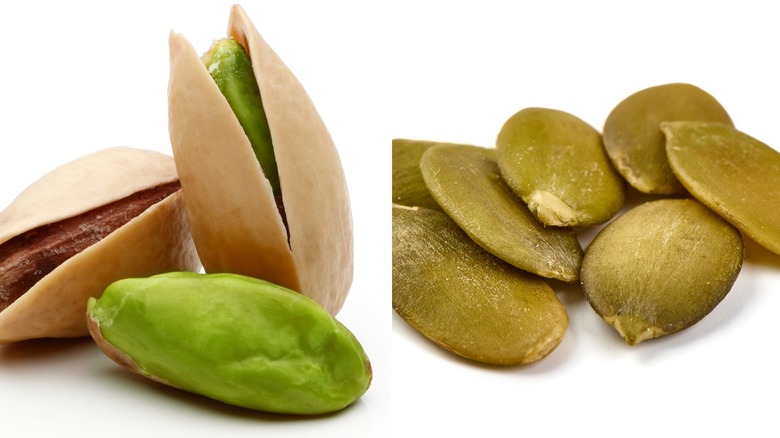
"Pistachios are a nutrient-dense snack [and] naturally one of the higher-melatonin-containing nuts," said Neha Shah, nutrition practitioner, holistic health expert, and content creator at Diaspora Nutrition. While research is still limited, studies do exist in support of this opinion, lending credence to Shah's suggestion. By some accounts, pistachios contain up to 23 milligrams of melatonin per serving. Shah endorsed keeping things in moderation, suggesting about 1 tablespoon an hour before bed.
If pistachios aren't for you, there are other options: "Walnuts are among the richest food sources of melatonin (3.5 to 4 nanograms) plus omega-3s and additional magnesium," said Devon Golem. To keep from things becoming too heavy, Golem calls for keeping the serving size around 90-130 calories, or 10ish walnut halves. According to Kristy Del Coro, there is an added benefit to pairing walnuts with cherries, a banana, or other fruit. They help "slow the digestion of the carbohydrate from the fruit, and mitigate any potential glucose spike from the naturally concentrated sugar," Del Coro detailed.
That magnesium mentioned earlier? It's a boon for quality shut-eye, and it can be found in pepitas, too. "Pumpkin seeds are rich in magnesium, zinc, and tryptophan," said Serena Poon. These nutrients are crucial in muscle relaxation, a key part in determining how we sleep.
Yogurt, paneer, or cottage cheese
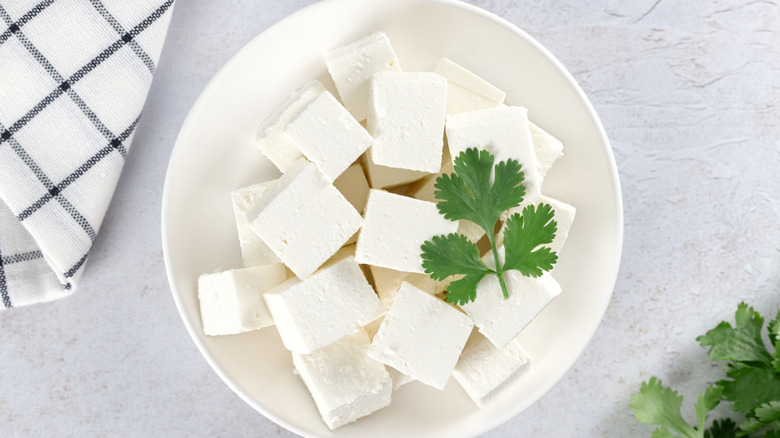
For our nutrition experts, dairy is one of the best propositions for a pre-bed snack. Keep in mind, however, that none of them would suggest running to the freezer for a scoop of midnight ice cream. Instead, your best bet is low-fat, high-protein choices that are rich in casein, which digests slowly.
Neha Shah said paneer cheese is ideal for this. "That slow release of amino acids can support overnight muscle repair and help prevent late-night hunger spikes that disrupt sleep." As for quantity, about ¼ to ½ cup will do. Paneer cheese is loaded with protein (25 grams of it per 100-gram serving), but it's also calorically dense (321 calories for the same amount), so it can feel a little heavy in some cases. If you're finding the cheese to be too much, consider Shah's other suggestion and go for a scoop of plain cottage cheese.
Alternatively, per Devon Golem, Greek yogurt offers a balance of nutrients that is tough to beat for an evening nosh. "Greek yogurt delivers tryptophan and calcium," she says, the latter of which is a building block for converting tryptophan to melatonin. In addition to supporting the development of sleep nutrients, the high-protein content of Greek yogurt (up to 20 grams per 1 cup) can help you feel full as you fall asleep. For the best tryptophan absorption, Golem advised eating this snack no less than an hour before bedtime.
Kiwi
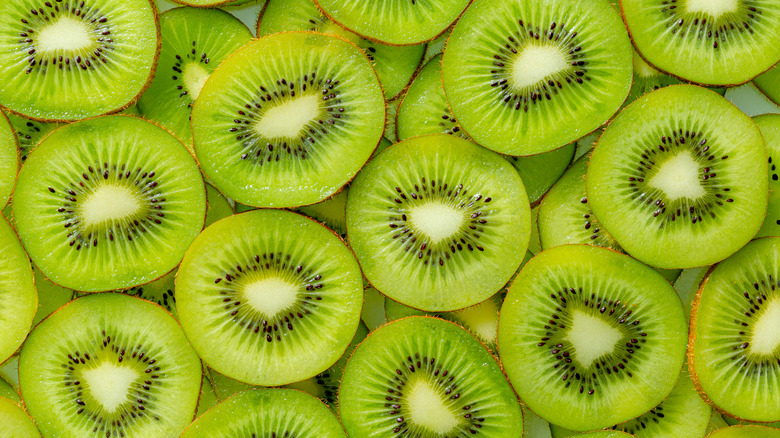
Before you can reap the benefits of melatonin, there are a few things that need to happen first. Chief among those things is the creation of serotonin, which is required for your brain to make melatonin and thus regulate the sleep-wake cycle. Tryptophan-containing foods are one way to jumpstart your body's creation of serotonin, but a nutritious and tasty shortcut is eating serotonin-rich foods, like kiwi.
"Kiwi is a surprisingly effective nighttime snack thanks to its combination of antioxidants, folate, and compounds that support serotonin activity," says Serena Poon. "One kiwi, eaten 30 to 60 minutes before bed, is typically sufficient." Folate is particularly important; it's been demonstrated that low levels of folate can aggravate restless leg syndrome in some people, exacerbating what can be a common and uncomfortable sleep issue. Having a nutritious dose of it may improve conditions.
Devon Golem concurred with Poon, citing clinical trials in the journal Nutrients (2023) as to why kiwi is such an effective before-bed snack. "Consuming kiwifruit before bed improved sleep onset by 35%, duration by 13%, and overall sleep efficiency," said Golem. Although she recommended up to two kiwi fruits a night (including the peel), Poon suggests that eating one raw kiwi is plenty. Given that kiwi is high in fiber, consuming more than one before you sleep may put you at risk of feeling too full to rest easily.
Almond butter
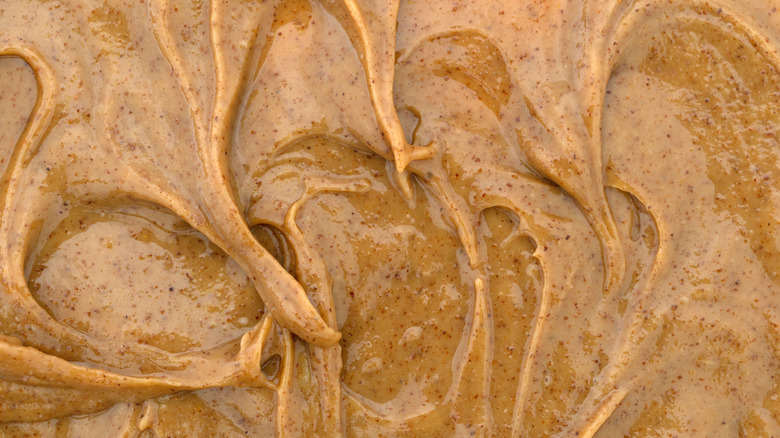
If you're anything like this writer, then you may already have a late-night snack of choice, and it looks something like a spoon stuck straight down into a jar of whatever nut butter has managed to survive between grocery runs. Suffice it to say, it's good news when nutritional experts confirm that this is actually a useful ritual before you knock off.
"A small amount of nut butter adds healthy fats that help keep blood sugar steady," Serena Poon told us. Devon Golem affirmed: "Healthy fats prevent overnight blood sugar crashes."
Golem gave a specific nod to almond butter as a particularly smooth choice for the circumstances, noting that it "provides tryptophan, protein, and magnesium (76 milligrams per 2 tablespoons) — supporting GABA production and muscle relaxation." What's GABA? Scientifically, it's called Gamma-aminobutyric acid, and it's a neurotransmitter. Practically, GABA slows your brain down in a way that induces calm, and so it's widely regarded to benefit your body's sleep cycle.
Once again, if you're anything like this writer and took said comments from said experts as an approval to dig that spoon as deep into the jar as you'd like, now's the time to reel it in. "Almond butter is calorie-dense and easy to over-consume," reminds Golem; Poon, alternatively, said to stick with around 1 tablespoon. Once again, that one to two-hour window before bed is the sweet spot you'll want to hit. If you're having etiquette problems eating right off a spoon, we get it. In Golem's opinion, a whole-grain cracker can be the perfect "tryptophan transport," so long as you make sure to avoid high levels of sodium, and shoot for options that offer around 100 grams of complex carbs.
Steamed edamame
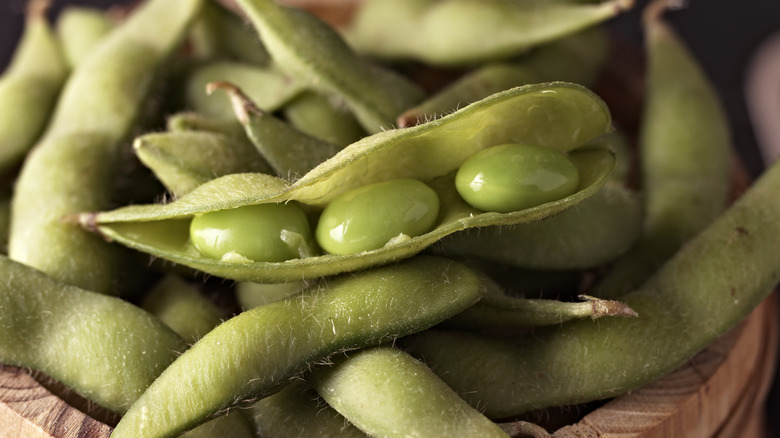
By now, it should be clear that tryptophan is a must-have ingredient for any food to be considered among the ranks of the best snacks to have before bed. Unless you're consuming food and drinks that are already lush in serotonin or melatonin, the amino acid tryptophan is necessary for the eventual metabolization of each. Although the average daily intake of tryptophan is around 0.8 to 1 gram, we can tolerate up to 4.5 grams per day. A cup of boiled edamame can yield 197% of our recommended daily intake at 416 milligrams. Looking to count sheep? Start by counting how many edamame you can put away.
Once again, edamame is a bedtime snack that proves its worth in more ways than just this one aspect. While Kristy Del Coro clarified that there are many types of legumes that can facilitate tryptophan uptake to the brain, "chickpeas and edamame also contribute magnesium and potassium." Both of these chemical elements have been proven to demonstrate positive impacts on sleep hormones, and this may be due to the natural way in which either element acts as a muscle relaxer.
According to Devon Golem, "1 cup in pods (189 calories shelled) falls perfectly in range" of what you'd look to eat about one to two hours before bed. Keeping that in mind, it's best to avoid roasted or heavily salted packages. "Excess sodium causes water retention and nighttime bathroom trips. Eat warm or room temperature," said Golem. As a further note, some with sensitive digestion may feel gas and bloating from the young soy bean's oligosaccharides, so if your sleep is troubled in this way, you may want to consider a different snack.
Bananas
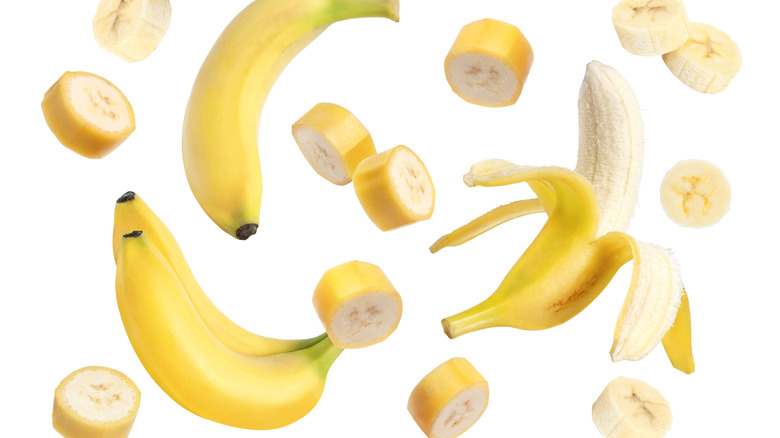
If potassium is beneficial for sleep, then it follows that bananas — known for being rich in the stuff — are also great for catching Zs. This is mostly true, but Kristy Del Coro advised a word of consideration before peeling a whole bunch. "If you have any concerns about your blood sugar," said Del Coro, "it may be better to avoid higher glycemic fruits." Her reasoning is the risk of running blood sugar spikes while sleeping.
With that in mind, most experts seem to agree that bananas have just the right amount of good stuff to serve your night snacking and sleep interests. "Bananas pack natural melatonin, magnesium, potassium for muscle relaxation, and vitamin B6 to convert tryptophan to serotonin," says Devon Golem. One medium banana, no less than one hour before sleep, and you're on your way to hitting the sack happy. However, Golem isn't without her concerns as well. "Some find [bananas] constipating, others experience the opposite," she says. Echoing Del Coro's sentiments, she also notes that for some, it may also be too high a dose of sugar (14 grams) before bed.
For Serena Poon, bananas provide an opportunity to double up on some of the other bedtime snacks that have been recommended, such as nut butter. Consider combining that almond butter or seed-and-nut pack with bananas to merge complex carbs and balance blood sugar.
Golden milk

A bedtime snack doesn't have to be exclusively food, as golden milk lattes go to show. "A warm cup of turmeric milk with a small pinch of nutmeg is a time-tested traditional bedtime ritual that stems from Indian cultures," said Neha Shah. Between the spices and the calming effects of warm milk, there are many components to make this option the perfect nightcap.
Nutmeg, as Shah pointed out, is a natural sleep aid that has traditional medicinal uses, from treating insomnia to relaxing the nervous system. Plus, there's scientific evidence. "[Nutmeg] contains compounds like [trimyristin] that have a calming effect on the brain, helping the body 'switch off' at night," said Shah. Along with another compound called elemicin, these two components of nutmeg work to heighten the existence of GABAs, the side effect of which is better sleep.
Besides the relaxing effects of nutmeg, other common ingredients in golden milk, such as cinnamon and turmeric, have anti-inflammatory properties that make sleep easier to obtain. One study has even shown cinnamon is an effective treatment for insomnia in rats. As for how to consume this Ayurvedic evening bevvie, Serena Poon offered some simple advice. "This is best enjoyed 30 to 60 minutes before bed, in a small serving of 6 to 8 ounces."
Bone Broth

Bone broth occupies an interesting position in the world of pre-sleep snacks. It has the look of a beverage, and obviously, it's consumed the same way. All the same, its savory profile and nutritional composition feel like something very similar to a solid food. "Bone broth contains glycine, an amino acid involved in calming neurotransmission and temperature regulation," said Neha Shah, "both relevant for sleep onset and depth."
Recently, glycine has become a wonder supplement of sorts for high-performance recovery. A 2024 review in the journal Sports reported that studies using 3 grams of glycine before bed improved sleep quality and next-day sleepiness or fatigue.
With that in mind, it's important to note that the amount of glycine in bone broth varies wildly depending on the animal it's sourced from, the brand that's producing it, or whether you've made it from scratch. Yet, bone broth can be hydrating, as Shah noted. Hydration can have outsized impacts on the quality and quantity of your sleep, so the transfer of electrolytes that bone broth provides serves a secondary purpose alongside glycine. To make the most of this unique bedtime snack, Shah recommended no more than ½ to 1 cup at dinner, as any more can result in the need to excrete liquids late at night.