

You Can't Fix This Classic Soup Mistake With A Potato: Here's Why
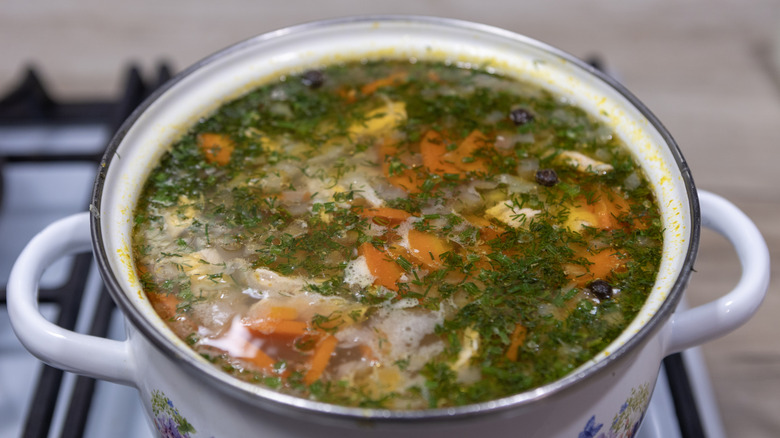
You taste the soup, and it's aggressively salty — this moment hits hard. Guests are coming, the table's ready, but you're considering takeout. Then someone suggests the potato trick: throw one in, simmer for 30 minutes, and it absorbs all that salt. It's a solution that's been repeated so often it feels like fact. Unfortunately, it's not.
This remedy sounds believable because potatoes do absorb liquid while cooking. Bland, starchy food pulls salt from the broth the same way it pulls flavor — it's because of this that the trick has been whispered between home cooks for generations. Truth is, the salt reduction a spud can do for your soup is so small, you hardly notice a difference. It definitely soaks up some of the liquid, but your soup doesn't taste any better. You do have a cooked potato to show for it, but that's about it. The reason this myth persists is simple: people want to believe in an easy fix. A single ingredient that saves dinner sounds perfect, but reality is messier.
How to actually desalinate your soup
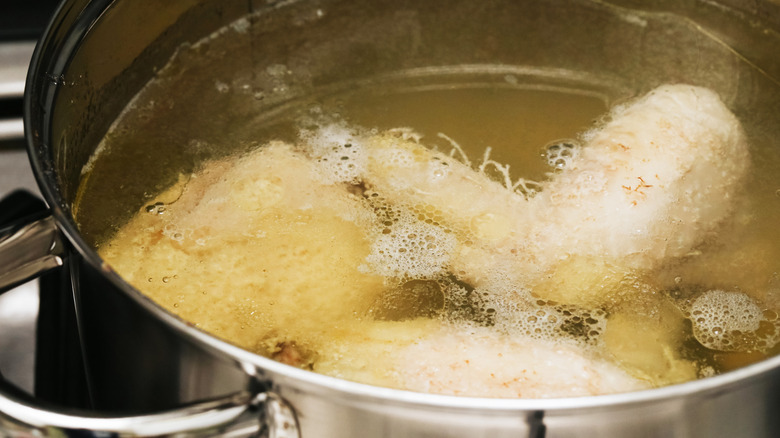
The good news is real, spudless solutions do exist. Not only that, they're much more straightforward than the potato trick. The most obvious approach is to simply add more liquid to drown out the salt. Plain water works in a pinch, but the downside is you also dilute much of the flavor. As such, add a splash of unsalted broth instead (for cream soups, use extra cream or another dairy product, such as milk or yogurt, to preserve the richness). Go slow, adding small amounts, tasting, and adding more if needed. No need to stress about ending up with more than you can eat — soup is totally freezeable.
Another tactic you can use is bulking up the soup with more ingredients. Throw in pasta, rice, or beans if you have them; these additions absorb salt while making your meal heartier and filling. Acids, such as lemon juice, can also be used to mask saltiness and make the soup taste balanced again. Vinegar works similarly, as well as tomatoes.
In all honesty, our best tip is to learn how to avoid oversalting altogether. It's as simple as tasting as you go, and being mindful of sodium-containing ingredients, such as broth, bacon, and ham. Sure, you have so many things to worry about already when you're making a creamy chicken gnocchi soup that's Olive Garden-perfect, but trust us — it's worth it to not end up with a ruined pot of soup.