

The Cheap Freezer Staple That Can Make Pasta Dishes Better For You
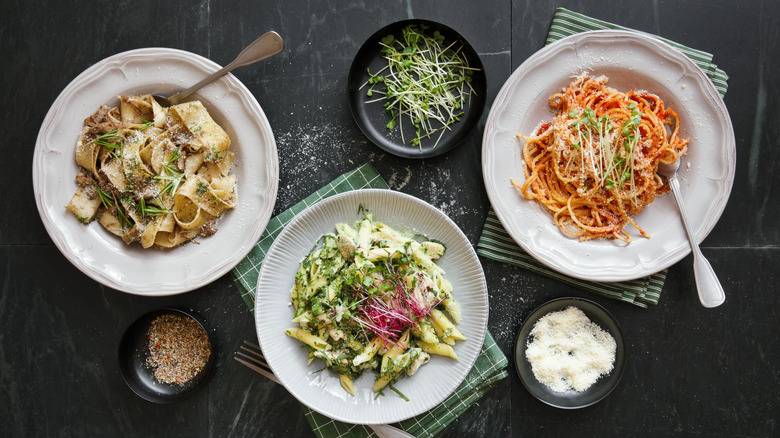
As long as the sauce is good, your pasta dish is already halfway to greatness. It's the very thing that brings those tender, starchy noodles to life, flavors clinging to every strand, cheese melting into each mouthful. What's even better is that you can improve your nutritional intake by using readily available ingredients like a standard bag of frozen vegetables. In twenty breezy minutes, it will be your secret to an effortlessly good and good-for-you weeknight dinner.
Truly, pasta sauce is one of several clever ways to use frozen vegetables in your cooking. Frozen immediately upon harvest, these veggies' freshness is literally frozen in time, casually sitting in the freezer until your pasta sauce needs a base. That's how you bring summer flavors to a winter night, or whip up a spring pasta in the middle of fall. The core flavors are still there, as bright as the day they were picked, so expect nothing less than pure vibrancy in your sauce.
Already cleaned and chopped, frozen veggies are good to go straight from the bag, so you don't have to go through the tediousness of peeling and slicing. This convenience requires no trade-off. Not even nutrition-wise. In fact, frozen vegetables might be more nutritious than fresh. Considering they were picked and frozen at peak ripeness without going through rough transport conditions, the veggies remain nutrient-dense with an abundance of vitamins and minerals — even with a minor decrease during the blanching process.
Homemade pasta has never been easier
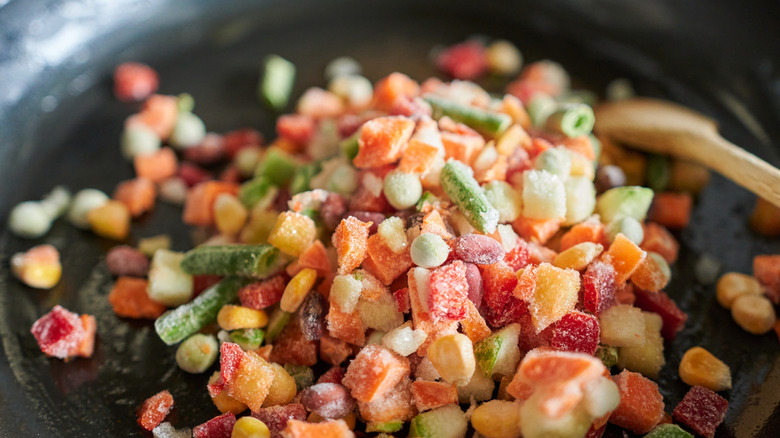
If you know how to make pasta sauces with fresh veggies, you can make them with frozen ones. However, note that not all frozen veggies are created equal. Some thrive more than others, particularly those that are naturally sweet, such as spinach, peas, and green beans. Already, these are mighty fine options for a green sauce pasta, with a creamy, earthy base made by blending those ingredients with olive oil, minced garlic, and shredded cheese. Alternatively, pair the frozen peas with any fresh herbs you've got and a few squeezes of lemon juice. Or keep everything whole and roast frozen vegetables as a switch for fresh in our pasta primavera recipe. It would be remiss not to consider frozen corn. Compared to fresh ears, which require shucking off kernels, it only needs a bit of simmering before blending with shredded cheese or heavy cream. Match it with sun-dried tomatoes or pancetta for a restaurant-worthy experience.
Another way to use frozen veggies for a pasta sauce is with other types of vegetables, including canned and fresh. With a simmering pot of canned tomatoes, frozen onions and carrots, and some fresh celery, you just to need to blitz everything together a tangy, rich tomato sauce. Kept in a jar, it's a great shortcut for future pasta dishes, like a decadent pasta bake, or even a summery pasta salad. A white pasta sauce, on the other hand, calls for frozen vegetables like cauliflower, broccoli, and zucchini, plus milk or cream, aromatics, and seasonings. Frozen vegetables are also the easiest upgrade for mac and cheese, either as toppings or directly added or blended into the cheese sauce — or both.