

The Old-School Cast Iron Seasoning Method That Doesn't Actually Work
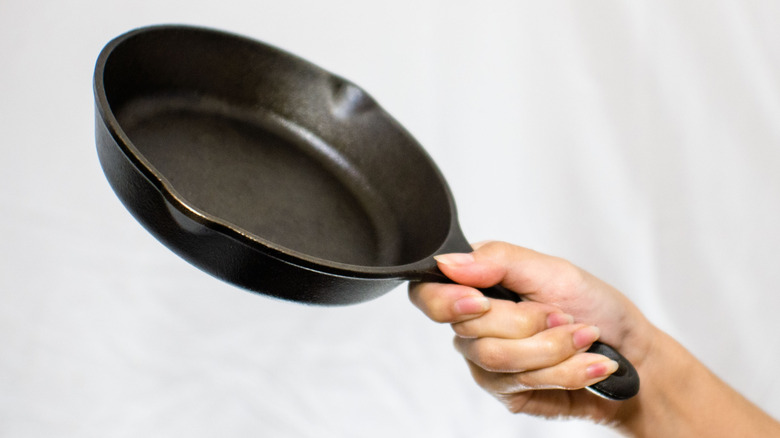
Cast iron can be tricky. It's one of the best materials for cooking a range of dishes, from sizzling steak fajitas to fire-roasted shakshuka. Cast iron pans are also pretty cheap and durable kitchen tools. But the material has its downsides too, mainly that it needs to be seasoned in order to perform correctly. There are a number of ways to do this, but there's one old-school trick that you should avoid at all costs: using saturated fats.
Seasoning cast iron involves coating the pan with a thin layer of fat (typically oil) to create a protective barrier. When the oil is heated, the fatty acids inside of it link together and bond to the iron, producing that invisible, non-stick barrier that's necessary for successful cooking. Some believe that it's best to use saturated fats, like bacon grease, but Jordan de Geus, founder of Cookware Care, doesn't agree.
The cast iron expert explained his reasoning in an interview with The Takeout, saying, "It's an old myth to season with a saturated fat (bacon fat, for example)." He goes on to explain, "From a chemistry perspective, saturated fats by nature don't polymerize (creating the seasoning layer)." According to de Geus, the reason that saturated fats do sometimes work is "because they contain some unsaturated fats, which is what is actually polymerizing into a durable layer."
How to properly season cast iron
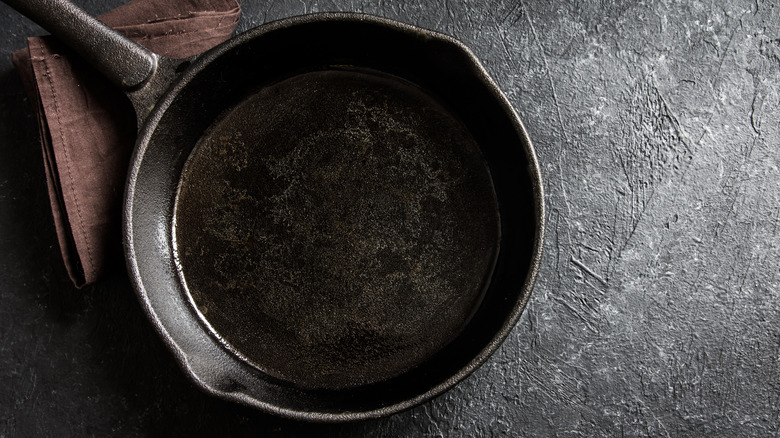
It's not the end of the world if you use saturated fat to season cast iron, it just isn't very efficient. Instead, the best oils to opt for include grapeseed, sunflower, canola, or vegetable oil. These balanced, neutral oils are all made up of more polyunsaturated to monounsaturated fats, which is ideal for the polymerization process. They also have high-smoke points, and won't pass any strong flavors onto your food. Plus, they're pretty cheap and easy to find.
To season your cast iron pan, make sure it's clean and dry, then just drizzle a little of one of these oils onto the pan, smearing it all over with a paper towel. Wipe off any excess, and place the pan upside down in a hot oven (about 450 degrees Fahrenheit is ideal) for about an hour. Be sure to place some foil on a baking tray, and position it on the rack below to catch any oil drippings. Leave the pan in the oven to cool, and repeat the process as necessary.
The cast iron pan can be used as normal once the seasoning process is complete. You shouldn't need to re-season it very often once a good layer is established, but it's good practice to wipe it with oil — preferably, an unsaturated one — occasionally after cleaning to help with upkeep.
Static Media owns and operates Tasting Table and The Takeout.